
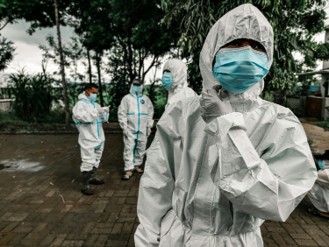
Port health authorities, state ministries of health, and the Nigeria Centre for Disease Control and Prevention have once again reactivated contact tracing machinery, screening points, and port-of-entry quarantine protocols. The directives follow fresh regional alerts over emerging viral outbreaks across West and Central Africa. Thermal cameras hum at international arrival halls in Lagos and Abuja. State epidemiologists attend emergency coordination meetings, while quarantine shelters that fell into disuse are inspected for emergency preparedness. The official posture projects vigilance and institutional resolve, assuring the public that surveillance perimeters remain secure against external biological threats.
Away from these press statements, public health architecture faces an unprecedented crisis of compliance. The country is navigating severe economic shocks, currency devaluation, and rising food costs that have eroded household reserves. Ordinary citizens view public health interventions not as shields of collective safety, but as bureaucratic disruptions to daily survival. The collective memory of rigid lockdowns, police checkpoints, and unfulfilled relief packages has left deep psychological and political scars. This erosion of goodwill runs parallel to institutional decay within the primary healthcare network. Surveillance regimes are reviving protocols on paper, yet the human and material mechanisms required to detect, isolate, and contain virulent pathogens have been degraded by neglect, fiscal contraction, and systematic underfunding.
The most acute point of failure sits at the periphery: the Disease Surveillance and Notification Officers stationed across seven hundred and seventy-four local government areas. These frontline officers are the country’s early warning system. Their job is to track unexplained fevers, sudden deaths, and anomalous cluster infections in rural outposts and border towns. On the ground, their operational capacity is close to non-existent. Most officers lack dedicated logistics budgets. They rely on their own transport or hitch rides on commercial motorcycles to reach remote communities across vast forest tracts and porous border areas.
Basic diagnostic consumables remain scarce. Primary healthcare centres frequently lack viral transport media, standard swabs, rapid diagnostic test kits, and chemical reagents. When a suspected case of haemorrhagic fever or acute viral illness surfaces in a border settlement, sample transport becomes a logistical ordeal. Samples must travel hundreds of kilometres through broken cold chains to reach regional reference laboratories. By the time confirmation arrives, transmission chains have widened beyond recall. Personal protective equipment is equally neglected. Rural clinics and district general hospitals stock minimal gloves and surgical masks, reserving protective coveralls for confirmed cases that arrive far too late. Healthcare workers, conscious of previous epidemics where doctors and nurses died from nosocomial infections due to absent gear, run from patients exhibiting acute haemorrhagic symptoms. Isolation logistics are fictitious in dozens of local councils, where dedicated infectious disease wards have been converted into administrative offices or abandoned to the elements.
This infrastructural decay is matched by a total collapse in public trust. Misinformation has moved from fringe social media channels into mainstream community discourse. Early warnings issued by health authorities are met with cynicism rather than cooperation. Citizens view official declarations through a lens of economic suspicion, assuming health alerts are manufactured by politicians to justify emergency procurement budgets and attract multilateral grants.
This scepticism is rooted in experience. During previous health emergencies, communities watched public resources vanish while promised palliatives decayed in warehouses. The economic cost of disease prevention was shifted entirely onto individuals who could not afford to take time off work or self-isolate without starving. When surveillance teams arrive in rural settlements or crowded urban markets to track secondary contacts, they encounter overt hostility. Community members refuse temperature checks, hide symptomatic relatives, and register false names on contact tracing rosters. The state cannot conduct effective epidemiological tracking when citizens believe compliance will end in arbitrary isolation in decrepit facilities. Public health messaging that relies on panic or civic duty has lost its authority.
The gap between technical competence and institutional memory exposes a pattern in public administration. Following every major epidemic, committees produce reform blueprints, international donors supply specialised equipment, and political leaders pledge permanent budget allocations to biosecurity. Once the immediate emergency recedes, fiscal commitments vanish.
The structural upgrades that survived previous crises are confined to tertiary reference institutions and national digital reporting systems. Nigeria developed sophisticated genomic sequencing facilities and integrated digital platforms like SORMAS for reporting infectious cases. Yet these advanced platforms depend entirely on data inputs from low-level primary health centres that lack uninterrupted electricity, functional computers, and internet access. The operational budget lines for sub-national epidemic preparedness have been systematically cut in state appropriation bills. Decentralised infectious disease funds, promised in the wake of the 2020 pandemic, were subsumed into general state revenues or redirected to visible construction projects that yield immediate political capital. Molecular laboratories built with donor support sit idle because state governments refuse to procure proprietary reagents or maintain backup diesel generators. The operational muscle of disease control has been stripped away, leaving only an expensive, brittle digital skeleton at the national headquarters.
Cross-border epidemic defence cannot function as an intermittent military campaign that sleeps until an outbreak occurs. Porous land borders across the Sahel and coastal West Africa mean biological pathogens ignore state boundaries. When surveillance systems fail in border settlements, no amount of screening at international airport gates can prevent secondary transmission in metropolitan centres.
Public health security requires practical reforms. State governments must institutionalise ring-fenced epidemic preparedness votes that cannot be diverted to other recurrent expenditures. The national primary healthcare development agencies must guarantee that Disease Surveillance and Notification Officers have reliable transport, functional cold-chain boxes, and adequate stocks of basic protective equipment before outbreaks occur. Rebuilding community compliance demands complete transparency in resource allocation and honest communication. The state must abandon punitive enforcement models and design support systems that protect livelihoods during quarantine. If health authorities treat surveillance as an administrative exercise while ignoring the economic survival of citizens, the next major epidemic will breach border defences and overwhelm hospitals long before an official warning is issued.