
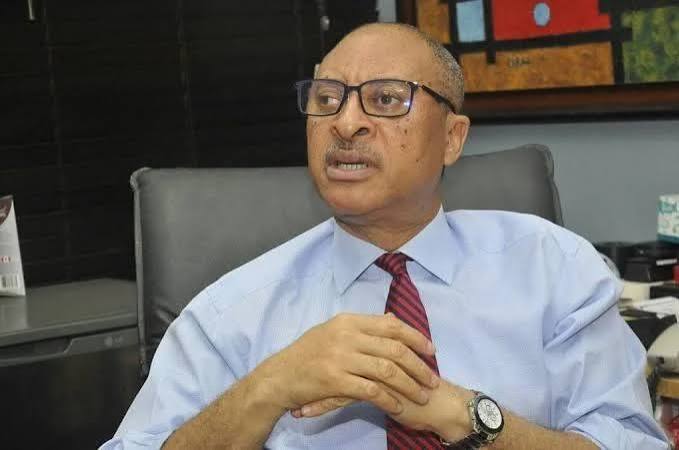
\Political economist and former presidential candidate Pat Utomi has accused the governing All Progressives Congress of tolerating lavish lifestyles among public officials at a time when most Nigerians are struggling to afford basic needs, reopening a long standing argument about the distance between the political class and the citizens it governs.
In a post on his X account on Tuesday, Utomi said it was contradictory for government to describe Nigeria as a poor country while its ministers were being paraded in luxury cars such as Maybachs, G-Wagons and Rolls-Royces, and public officials travelled by private jet. He argued that the way public money is spent should mirror the hardship ordinary people are being asked to bear.
“Your optics contradict your narrative, your lifestyle contradicts your statistics,” he said, insisting that public office is not a licence for extravagance and that those entrusted with taxpayers’ money must show restraint when citizens are told to endure difficult times.
Utomi warned that flaunting wealth while asking Nigerians to make sacrifices could deepen public resentment and harden the belief that those in power are indifferent to everyday suffering. He did not single out individual officials, framing the issue instead as one of fiscal discipline across both the executive and the legislature.
The criticism lands against a backdrop of hardship that official data have confirmed. The World Bank, in its April 2026 Nigeria Development Update, put the poverty rate at 63 per cent in 2025, meaning roughly 140 million people were living below the national poverty line. That marks a steep slide from 2019, when about 81 million Nigerians, or 40 per cent, were considered poor.
More striking is the finding that poverty kept climbing even as price pressures eased. Headline inflation has fallen steadily through 2026, slowing to 14.63 per cent in September, its lowest level in almost six years, according to the National Bureau of Statistics. Food inflation, which weighs most heavily on poor households, stood at 19.59 per cent over the same period. The gap between cooling inflation and rising poverty points to a recovery that has yet to reach most family budgets.
Utomi’s intervention follows a season of similar flashpoints. Weeks earlier, attention turned to the APC National Youth Leader, Dayo Israel, after he publicised the distribution of brand new 2026 Toyota Prado vehicles, reportedly valued at more than N150 million each, to youth mobilisers ahead of the 2027 elections. A single vehicle at that price dwarfs the national minimum wage of N70,000 a month, a contrast that opposition figures seized upon at the time.
The argument over official spending is not new, and it cuts across administrations. Successive governments have faced questions over the cost of the presidential air fleet, convoys and foreign travel, outlays usually defended as necessary for the functioning of high office. What has sharpened the debate now is the scale of the hardship running alongside it.
The governing party and the presidency have consistently defended their economic record, arguing that the removal of the petrol subsidy and the reform of the foreign exchange market, however painful, pulled the country back from fiscal collapse and laid the basis for recovery. The easing of inflation and the relative stability of the naira are regularly cited as early signs that the reforms are beginning to work. The APC has also waved off Utomi’s criticisms before, at one point dismissing him as a perennial promoter of opposition alliances that never take off. No formal response to his latest remarks had been issued at the time of writing.
Utomi himself is no stranger to confrontation with the authorities. His push last year for what he called a shadow government drew a lawsuit from the Department of State Services, which asked a Federal High Court in Abuja to declare the initiative unconstitutional, a case that underlined how sharply his style of opposition divides opinion.
The question he raised is likely to outlast the social media exchange. With poverty projected to stay near its peak through 2026 before any gradual decline, and with the 2027 campaign already taking shape, the spending habits of those in office look set to remain a live issue. Whether the criticism nudges any visible change in official conduct, or simply becomes another line of attack in the contest ahead, remains to be seen.