
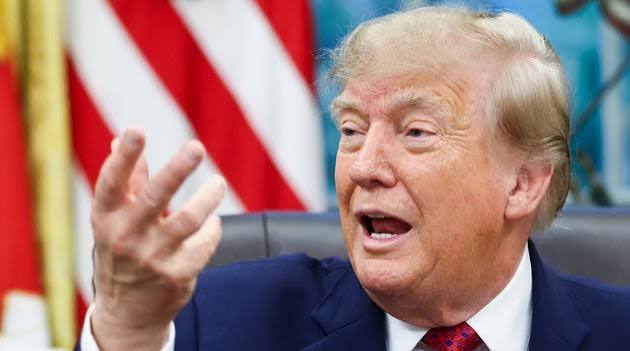
President Donald Trump has conceded that his sweeping deportation campaign was “too tough”, admitting it damaged his standing with voters just days after his Republican Party suffered heavy losses in the United States midterm elections.
He made the admission in an interview on CBS’s 60 Minutes broadcast on Sunday, his first since the elections. Asked whether his deportation policy had gone too far, Trump said, “I think it was too tough,” and added that it ultimately hurt him. He said he earned high marks for removing dangerous criminals but lost support for also deporting long-settled immigrants who held ordinary jobs as cleaners, waitresses and landscapers.
The tone marked a sharp shift. A week earlier, in a separate 60 Minutes interview recorded before the vote, Trump had struck the opposite note, insisting the raids “haven’t gone far enough” and blaming “liberal judges” for holding back enforcement. On Sunday he signalled openness to working with Democrats on immigration and to creating a path for some undocumented residents, while standing by his record on border security.
The reversal follows one of the heaviest midterm defeats of Trump’s political career. On 3 November, voters handed Democrats control of both the Senate and the House of Representatives, with the party flipping Senate seats in Republican strongholds including Texas, Ohio, Iowa, South Carolina and Kansas. Hakeem Jeffries is positioned to become the first Black Speaker of the House. Trump, who is barred from seeking a third term, accepted the outcome and said he would work with the new majority.
Exit surveys pointed to deep public unease with the crackdown. In polling by CBS News, 58 per cent of respondents said the administration’s immigration actions had gone too far, while earlier surveys found a majority believed enforcement agents were being too tough and were targeting people who posed no danger.
The scale of the operation helps explain the backlash. Immigration and Customs Enforcement recorded about 356,000 removals in the 2026 fiscal year, a pace that put it within reach of the record set under the Obama administration, while the Department of Homeland Security claimed in October that roughly 1.2 million people had been deported or removed since Trump returned to office. The figures are measured differently and remain contested, and the administration has fallen short of Trump’s stated target of one million deportations a year. Over the same period, crossings at the southern border fell to their lowest level in decades.
Enforcement tactics drew sustained criticism through the year. Footage showed agents firing tear gas in residential neighbourhoods, smashing car windows and tackling people during arrests, and several deaths during operations, including in Minnesota, became political flashpoints. Local officials filed lawsuits, and courts blocked parts of the administration’s plans, among them the deployment of National Guard troops to some cities.
Trump’s softer language sits awkwardly beside his latest personnel move. On Friday he named Stephen Miller, the chief architect of the hardline immigration agenda, as his new White House chief of staff, replacing Susie Wiles from Monday. Several analysts read the appointment as a signal that Trump intends to hold his course rather than retreat, even as he concedes the political cost. Miller said his mission was “more clear than ever”.
What the admission means in practice remains unclear. Trump has not outlined any change to enforcement, and his openness to a deal with Democrats will now be tested under a divided Congress that can block his nominees and slow his agenda through the final two years of his term. Whether “too tough” proves a turning point or a passing concession is likely to shape both his legacy and the early shape of the 2028 contest.