
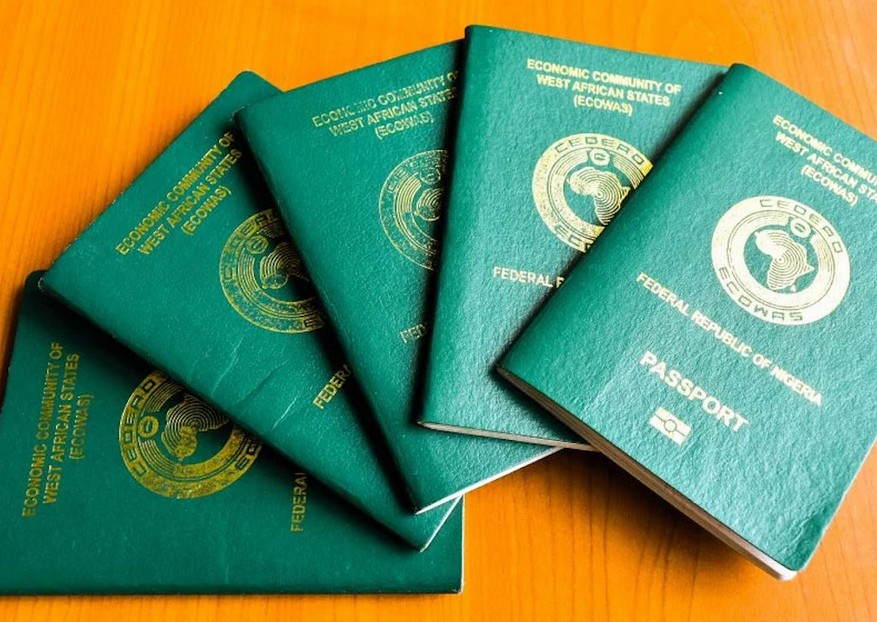
Nigeria will start printing its own international passports by May 2027, ending decades of reliance on foreign suppliers. Olubunmi Tunji-Ojo, the Minister of Interior, announced the rollout date on November 20, 2026, during a groundbreaking ceremony in Abuja for a $70m National Passport Manufacturing Centre. Sovereignty means little if a state must beg abroad for its own travel papers.
The new plant sits on 1.1 hectares at the Nigeria Immigration Service headquarters in Sauka and will produce six million electronic passport booklets each year. Engineers designed the facility to run entirely off the national grid using artificial intelligence, with plans to expand output to ten million booklets annually. Building an off-grid factory in Abuja admits a quiet truth about Nigeria’s erratic public power supply.
Iris Smart Technologies is funding and building the centre under a public-private concession supervised by the Infrastructure Concession Regulatory Commission, sparing the federal treasury any direct capital outlay. Private capital moves faster than civil servants when profit meets clear state demand. By shifting production home, the government hopes to shield passport fees from naira swings and stop sending scarce foreign exchange to overseas printers.
Domestic demand currently stands between 800,000 and two million booklets every year, leaving at least four million extra copies for export once the presses roll. Mr Tunji-Ojo wants Nigeria to become the first country in West Africa to manufacture electronic passports, capturing regional clients that currently buy their travel documents from Europe and the Americas. Turning a chronic national embarrassment into an export business is bold, provided the machines actually start on time.
For years, artificial booklet scarcity forced desperate travellers to pay bribes or wait months for renewals, while officials blamed shipping delays and foreign vendors. Kemi Nana Nandap, the Comptroller-General of the Nigeria Immigration Service, argued at the ceremony that no country can run a reliable immigration system without controlling its core supply chain. When citizens cannot get a basic travel document without knowing a big man, state authority rots from the inside.
Delivering a high-security printing plant in six months will test whether ministerial enthusiasm can survive Abuja’s notoriously slow construction habits. Adams Oshiomhole, who chairs the Senate Committee on Interior, broke the ground alongside security chiefs and insisted that factory jobs must go strictly to Nigerian workers. Promises laid in November concrete mean nothing until the first home-grown passport clears an airport scanner next May.