
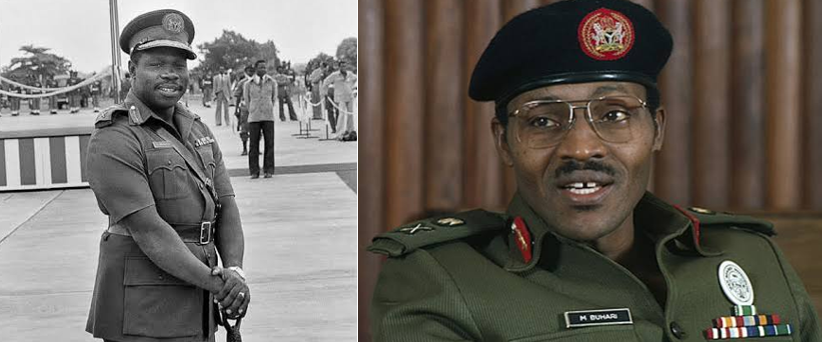
The end of Nigeria’s Civil War in January 1970 remains one of the defining moments in the country’s history. It marked the collapse of the breakaway Republic of Biafra, the restoration of federal authority and the beginning of a difficult process of national reconciliation. But a revealing account in Muhammadu Buhari: The Authorised Presidential Biography offers a fresh perspective on the final military operations, particularly the circumstances surrounding General Olusegun Obasanjo’s role in the closing stages of the conflict.
According to the biography, Obasanjo, who had been brought in to replace the embattled Benjamin Adekunle as commander of the Third Marine Commando, was absent when the decisive military operation that brought the war to an end was executed. His staff officers, however, understood the strategic plan and carried it through. Obasanjo was subsequently recalled to receive the surrender of the Biafran forces.
The account, contained in Chapter Eight, titled Brothers at War: In Pursuit of One Nation, provides an intriguing reconstruction of the final phase of the 30-month conflict, drawing on the recollections of former Head of State General Yakubu Gowon and the wartime experiences of Muhammadu Buhari, who served as a young Nigerian Army officer.
It also sheds light on the military calculations, command arrangements and battlefield developments that preceded Biafra’s capitulation on January 12, 1970.
Obasanjo’s appointment and the changing fortunes of the war
By 1969, the war had entered a prolonged and exhausting phase. Federal forces had recovered the Mid-West, secured Port Harcourt and captured large parts of the South-East. Yet Biafran resistance remained formidable, particularly around the Owerri-Umuahia axis.
The Federal Military Government was under pressure to bring the conflict to an end. The military leadership had expected an earlier victory, but inadequate supplies, ammunition shortages, logistical difficulties and foreign involvement had prolonged the fighting.
The biography recalls Buhari’s frustration with the conditions confronting federal troops at the front. Soldiers complained about inadequate ammunition, poor logistics and the failure of supplies to reach combat units. Buhari, who had served in several operational positions during the war, believed that decisions made far from the battlefield did not always reflect the realities confronting soldiers.
It was against this background that Gowon began reorganising the military command structure for what he hoped would be the final offensive.
One of his major decisions was the removal of Benjamin Adekunle, popularly known as the Black Scorpion, from command of the Third Marine Commando.
Adekunle had played a significant role in the federal military campaign, but Gowon had received reports from military officers and civilians that battle fatigue was affecting his judgement and that he was beginning to act irrationally.
Gowon considered the situation unacceptable and decided that a change of command was necessary.
He consequently moved Obasanjo from the Western Region, where he had been responsible for maintaining security in a politically sensitive area, to take over the Third Marine Commando.
Obasanjo’s assignment was clear: stabilise the military position, reduce casualties and restore momentum to the federal offensive.
The final military strategy
The biography reveals that Gowon’s plan involved coordinating the First Division and the Third Marine Commando in a major military link-up around Aba and Umuahia.
The objective was to bring the two formations together before launching the final phase of the offensive against the remaining Biafran positions.
Gowon instructed Obasanjo to liaise with Illiya Bisalla, who had assumed command responsibilities in the First Division following Mohammed Shuwa’s departure.
The plan required careful coordination between the two formations. However, events on the battlefield moved faster than the formal command arrangements.
The biography states that Obasanjo was absent at the decisive stage when the link-up operation was executed.
His staff officers, particularly Alani Akinrinade and Godwin Alabi-Isama, understood the operational concept and proceeded to implement it.
They successfully carried out the link-up from Aba to Umuahia and subsequently pushed forward towards Owerri.
This is perhaps one of the most striking revelations in the account. The decisive movement that helped bring the war to its conclusion was executed by officers under Obasanjo’s command while he was not present at that critical stage.
The account does not explain the circumstances of Obasanjo’s absence, nor does it specify where he was or why he was away. It would therefore be premature to draw conclusions about the reasons for his absence or its implications for the chain of command.
What the biography establishes, however, is that his subordinate officers understood the strategic objective and carried it through successfully.
Ojukwu’s departure and Biafra’s surrender
As federal troops advanced and the military situation deteriorated, the Biafran leadership faced the prospect of complete defeat.
On January 9, 1970, Lieutenant Colonel Chukwuemeka Odumegwu Ojukwu, the leader of the breakaway republic, hurriedly left the country by air, accompanied by members of his family and some senior officials of his administration.
His departure left Philip Effiong, his deputy and a senior military commander, to manage the final surrender arrangements.
With Biafran resistance collapsing, the rebel forces were compelled to surrender.
It was at this point, according to the biography, that Obasanjo was called upon to receive the surrender.
The sequence is significant. The officer appointed to command the Third Marine Commando was absent during the decisive stage of the operation, but returned to perform the highly symbolic responsibility of receiving the surrender of the defeated Biafran forces.
Following the surrender, arrangements were made to bring the relevant representatives to Lagos for discussions that would formally conclude the conflict.
The war officially ended on January 12, 1970.
Gowon’s ‘No Victor, No Vanquished’ declaration
The biography places considerable emphasis on Gowon’s determination to avoid turning military victory into a campaign of retribution.
In announcing the end of hostilities, Gowon declared that there would be no victors and no vanquished. His position was that Nigeria had to move beyond the divisions of war and begin the difficult task of rebuilding a fractured country.
He subsequently announced the programme of Reconciliation, Reconstruction and Rehabilitation, popularly known as the Three Rs.
The federal government released Biafran prisoners, and none were taken to court or detained beyond the cessation of hostilities. Ukpabi Asika was appointed to administer the former Eastern Region.
There were also practical efforts to restore properties belonging to displaced easterners. In the North, properties abandoned or seized during the conflict were returned to their owners, alongside accumulated rental proceeds. Mamman Daura, Buhari’s nephew, was involved in the management of some of these properties in Kaduna.
Yet the policy of reconciliation was not universally welcomed within the military. Many officers who had fought in the war believed that those responsible for the rebellion should face punishment.
Buhari himself, according to the biography, had mixed feelings. Although he respected Gowon and his commitment to Nigeria, he found it difficult to accept the idea of equal treatment after the enormous sacrifices made by federal troops.
A new perspective on the end of the war
Beyond its account of Obasanjo’s absence, the biography offers a broader perspective on the complexities surrounding the end of the Civil War.
It highlights Gowon’s central role in determining the final military strategy, the contributions of officers such as Akinrinade and Alabi-Isama, and the difficult transition from military victory to national reconciliation.
It also recalls Buhari’s own experience of the conflict. As a young officer, he served in several operational capacities, including as a Brigade Major, and witnessed the human and logistical costs of the war. He experienced the loss of colleagues, the strain of frontline operations and the frustrations of soldiers who believed that inadequate support was prolonging the conflict.
Decades after the war, the reconciliation process continued. In May 2000, President Obasanjo restored the ranks of former Biafran soldiers. Significantly, the biography records that Buhari, during his presidency, subsequently paid their benefits and gratuities.
The account also provides an interesting historical connection between the two former military officers, whose paths crossed at different stages of Nigeria’s military and political history.
For Obasanjo, receiving Biafra’s surrender became an important chapter in his military career and the beginning of a wider national prominence that would eventually take him to the presidency.
For Buhari, the Civil War remained a formative experience that shaped his understanding of military discipline, national unity and the responsibilities of leadership.
More than five decades after the conflict, the circumstances surrounding its conclusion remain worthy of historical examination. The account in Buhari’s authorised biography invites renewed attention to the officers who executed the final operations, the decisions made by the military leadership and the distinction between those who planned the final offensive and those who physically carried it through.
Its central revelation is striking: Obasanjo was not present when the decisive link-up operation was executed, but was recalled to receive the surrender that formally brought the war to an end.