
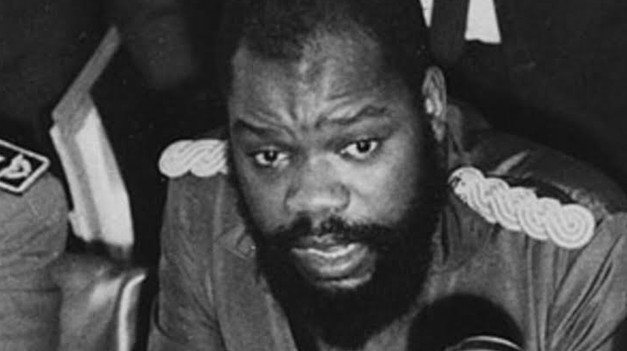
During the thirty-month Nigerian Civil War, the struggle for territorial control along the Nsukka-Enugu axis and across the Niger Delta ran parallel to an equally fierce battle over public perception. Chapter 8 of the biography of former President Muhammadu Buhari reveals how information was systematically weaponised by the Biafran leadership while being carefully managed on the federal side through an informal backchannel between frontline officers and the press. Specifically, the text details how Chukwuemeka Odumegwu Ojukwu deployed a sophisticated international propaganda network anchored by Radio Biafra, while a young Muhammadu Buhari periodically returned from the trenches in Kaduna to brief his nephew, Mamman Daura, then editor of the influential New Nigeria newspaper, on battlefield realities that were withheld from print to preserve military morale.
Modern historical accounts of the 1967–1970 conflict frequently focus on troop movements, arms embargoes, and diplomatic realignments. Yet the information environment shaped both international intervention and domestic endurance. In the late 1960s, before satellite television or instant digital verification, shortwave radio and print newspapers held near-total authority over how populations and foreign governments understood distant battlefields. For the Federal Military Government under General Yakubu Gowon, winning the physical war required overcoming a severe communications deficit against a secessionist administration that understood early on that global sympathy could compensate for material inferiority.
Ojukwu devised an information apparatus to project resilience abroad and sustain morale at home, even though military setbacks mounted. At the centre of this effort was Radio Biafra, where the veteran broadcaster Okoko Ndem emerged as a dominant voice of the secessionist cause. Broadcasting from inside the enclave, Ndem delivered accounts of battlefield victories and federal atrocities with a conviction that resonated far beyond eastern Nigeria. The effectiveness of this network was evident in how major international broadcasters treated its output. Outlets such as the British Broadcasting Corporation, the Voice of America, and Radio France routinely picked up and relayed Biafran dispatches as verified fact.
The capture of Enugu, the Biafran capital, in October 1967 demonstrated the power of this narrative control. Even after federal troops of the 1st Division had overrun the city and secured strategic positions, Radio Biafra continued to insist that Enugu remained firmly in Biafran hands. Because foreign correspondents lacked independent access to the front lines, international radio services repeated the denial, creating a surreal gap between physical reality on the ground and global public perception. Alongside its radio broadcasts, the Biafran government hired foreign public relations firms to frame the war in stark humanitarian and existential terms. This strategy successfully turned Western public opinion against Lagos and contributed directly to the arms restrictions imposed by the United States and the cautious, minimal supply posture adopted by Britain.
On the federal side, information management operated through very different institutional channels, balancing public reassurance against the grim truths known to commanders in the field. In northern Nigeria, the New Nigeria newspaper, published in Kaduna, was the primary organ of political and military commentary. Its editor, Mamman Daura, occupied a sensitive position at the intersection of journalism and state security. Daura was also the nephew and close confidant of Muhammadu Buhari, then serving as a young infantry officer and brigade major on the northern front under Mohammed Shuwa and Theophilus Danjuma.
Whenever Buhari rotated back to Kaduna on brief leaves from the combat zones of Ogoja, Nsukka, Enugu, and Onitsha, he met with Daura privately. In these off-the-record sessions, Buhari provided an unvarnished assessment of how the war was actually progressing. The picture he painted bore little resemblance to triumphant wartime rhetoric. Buhari briefed his nephew on the severe logistical bottlenecks crippling federal divisions, the acute ammunition shortages that at one point left the entire Nigerian Army with roughly half a million rounds in reserve, and the heavy casualties inflicted by disease and determined Biafran resistance. He also recounted episodes of command dysfunction, such as the disastrous, unauthorised attempt by Murtala Muhammed to force a crossing of the River Niger at Onitsha after retreating Biafran forces blew up the bridge.
Crucially, Daura did not publish these candid operational disclosures in New Nigeria. As editor, he recognised that exposing the army’s acute supply vulnerabilities or internal command disputes in a widely read daily would demoralise troops in the trenches and give an immediate propaganda victory to Radio Biafra. Instead, the private intelligence gathered from Buhari informed Daura’s editorial judgement from behind the scenes, allowing the newspaper to maintain a steady, measured tone without printing falsehoods or betraying operational security. This arrangement reflected a tight-knit wartime ethos in which kinship, military discipline, and editorial restraint converged to shield the war effort from domestic panic.
This dual dynamic—aggressive external propaganda on one side and disciplined self-censorship on the other—reveals the structural vulnerability of states fighting internal wars without clear information doctrines. Ojukwu’s reliance on unverified claims ultimately yielded diminishing returns once the military collapse of early 1970 became impossible to conceal, leaving the civilian population inside the shrinking enclave unprepared for the sudden flight of their leadership. Conversely, the federal reliance on informal backchannels and strict silence suggested that the true human and material costs were obscured from the Nigerian public for decades.
The legacy of those thirty months still shapes Nigerian civil-military relations and state media practice. When institutions suppress operational failures in the name of morale, they risk creating a culture of opacity that persists long after peace returns. Authentic national resilience requires a press and military establishment capable of transparent accountability, ensuring that the lessons of wartime survival are neither lost to propaganda nor buried in private archives.