
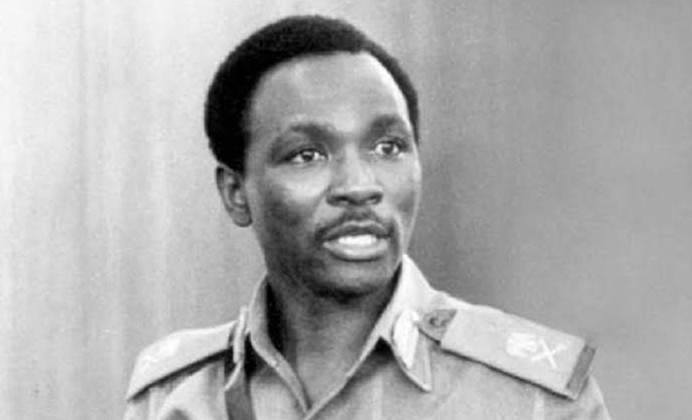
For over half a century, General Yakubu Gowon’s proclamation of “No Victor, No Vanquished” at the close of the Nigerian Civil War in January 1970 has been celebrated across diplomatic circles and history textbooks as a masterclass in post-conflict magnanimity. Packaged alongside the “Three Rs” – Reconciliation, Reconstruction, and Rehabilitation – the policy projected an image of a humane state eager to bind its self-inflicted wounds without triumphalism or punitive vengeance. Yet, official statecraft rarely captures the raw emotional ledger of the men who fought in the trenches. Chapter 8 of former President Muhammadu Buhari’s biography, Brothers at War: In Pursuit of One Nation, peels back the polite consensus of post-war historiography to reveal a profound psychological dissonance inside the federal officer corps: while Gowon’s clemency earned global applause, it was quietly resented by frontline commanders who felt that blanket absolution without accountability discounted the blood they had spilt to keep the republic intact.
Peace declared from a podium is tidy; peace absorbed by soldiers who buried their comrades in the mud is far more complicated.
To understand the roots of this quiet bitterness, one must examine the gulf between the strategic idealism of Dodan Barracks and the brutal daily attrition endured by federal infantry units between 1967 and 1970. For young officers like Buhari – who fought relentlessly from the initial push at Gakem and Ogoja through the gruelling Nsukka–Enugu corridor and the deadly Awka–Abagana–Onitsha axis – the war was not an abstract constitutional dispute. It was a visceral ordeal of physical deprivation, chronic logistical failure, and constant proximity to death. Frontline troops battled not only determined Biafran resistance, sniper fire, and ambush, but also acute ammunition shortages that at one point reduced the entire Nigerian Army’s reserve to roughly half a million rounds. They fought through malaria, typhoid, and hepatitis, rising at two or three in the morning to inspect attacked positions while watching battalion after battalion take staggering casualties.
Against that backdrop of sustained sacrifice, Gowon’s immediate pivot to unconditional reconciliation felt jarring to many men in uniform. In the moral economy of conventional warfare, victory carries an expectation of justice – an institutional reckoning for those who took up arms against the sovereign state and prolonged a conflict that claimed hundreds of thousands of lives. When Lagos opted instead for sweeping clemency, federal soldiers were effectively asked to swallow their grief and treat former adversaries as though the thirty-month catastrophe had been a mere misunderstanding. As the biography candidly records, many frontline officers who fostered fresh memories of fallen colleagues felt the lack of retribution undervalued their sacrifice.
Why, then, did these battle-hardened commanders not revolt against a policy that offended their sense of battlefield justice? The answer lies in the institutional discipline and the singular moral authority Gowon wielded. Even among officers who privately questioned the wisdom of his leniency, Gowon commanded genuine respect for his personal integrity, restraint, and adherence to military ethics. Subordinated by training and loyalty to the chain of command, commanders like Buhari suppressed their misgivings and maintained a dignified, disciplined silence. Their compliance was a triumph of military professionalism over personal grievance, yet it left an unresolved emotional residue that lingered beneath the surface of civil-military relations for decades.
This tension between institutional magnanimity and frontline scepticism was nowhere more visible than in how the Nigerian state handled both the property and the personnel of the defeated secessionist enclave. On the civilian front, the federal government moved remarkably fast to restore economic normalcy and reassure returning easterners that they retained a stake in the federation. Across northern cities, properties abandoned by Igbo residents during the crises of 1966 and 1967 were systematically inventoried, safeguarded, and returned to their rightful owners alongside accumulated rents. In Kaduna, Buhari’s nephew and confidant, Mamman Daura – then editor of the influential New Nigeria newspaper – actively participated in the administrative effort to ensure those properties were restored. It was an extraordinary gesture of civic restitution, rare in the annals of post-civil war societies, demonstrating that the state’s commitment to reintegration extended beyond mere rhetoric.
Within the military establishment, however, reintegration was far more guarded and fraught with suspicion. Following the formal surrender on 12 January 1970, surrendered Biafran officers were subjected to rigorous post-war interrogations to determine their roles in the January 1966 coup, the secessionist rebellion, and the conduct of the war. Unlike the immediate restoration of civilian property, the military hierarchy could not simply absorb erstwhile enemy commanders back into active command without jeopardising cohesion and morale among federal troops who had fought against them. Consequently, many former Biafran soldiers were dismissed or retired without full military honours or terminal benefits, relegated to an ambiguous limbo that satisfied neither the federal hardliners who wanted stricter penalties nor the eastern populace who took “No Victor, No Vanquished” at face value.
The long historical arc of this unresolved contradiction stretches across five decades of Nigerian political evolution, culminating in two remarkable acts of state redress led by former federal war commanders themselves. First, in 2000, President Olusegun Obasanjo – who had received Biafra’s surrender as commander of the 3rd Marine Commando thirty years earlier – formally commuted the dismissals of former Biafran military personnel into retirements, restoring their ranks and removing the stigma of treason from their service records. Second, decades later during his own presidency, Muhammadu Buhari – the very infantry officer who had endured the trenches of Nsukka and Onitsha and quietly wrestled with Gowon’s clemency – authorised the payment of long-overdue pensions and retirement benefits to those former Biafran soldiers and police officers.
That historical irony offers a profound lesson in statecraft and national maturation. It reveals that genuine reconciliation is never achieved by a single stroke of executive proclamation; rather, it is a slow, multi-generational negotiation between justice, memory, and political necessity. Gowon’s 1970 declaration prevented a vengeful bloodbath and preserved the territorial integrity of Nigeria at a moment when bitterness could easily have fractured the peace. Yet the quiet resentment of his frontline commanders serves as a vital reminder that policies imposed from above without addressing the psychological wounds of those who bear the brunt of national crises carry hidden costs.
A republic cannot sustain itself on selective amnesia or unexamined triumphalism. True national healing requires acknowledging both the statesman’s vision that ended the war and the soldier’s silent agony that paid for the peace. Only when Nigeria confronts the full, unvarnished complexity of its civil war memory – honouring sacrifice while institutionalising fairness – can the promise of a truly reconciled nation move from political slogan to enduring reality.