
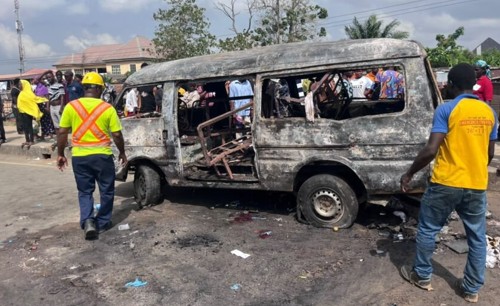
Six adult passengers were burnt beyond recognition, and 12 others sustained severe burn injuries on Thursday, 26 November 2026, after a commercial bus caught fire along the Lagos-Badagry Expressway. The tragedy occurred around the Checkpoint axis inward Magbon in Badagry, turning a routine morning commute into a fatal inferno. Emergency responders confirmed the casualties in an official statement signed by Lagos State Fire and Rescue Service Controller General Margaret Adeseye.
Preliminary findings indicate that a mechanical failure triggered the crash before stored fuel turned the cabin into a death trap. The fully loaded Mazda commercial bus, carrying registration number LSD 73 YL, reportedly suffered brake failure and somersaulted along the expressway. Investigators discovered that the driver had kept an extra five-litre keg of petrol inside the passenger compartment for refuelling, which ignited on impact and rapidly engulfed the overturned vehicle.
Rescue operations faced dangerous delays as emergency crews battled both intense flames and hostility at the scene. Fire service control rooms logged the distress call at 8:44 a.m., dispatching personnel from the Badagry Fire Station who arrived at 9:13 a.m. According to Adeseye, aggrieved bystanders initially attacked the responding firefighters and obstructed their equipment before crews pushed past the crowd to extinguish the blaze.
Four men and two women died inside the wreckage before help could reach them. Firefighters evacuated the 12 surviving adults, who suffered varying degrees of burns, and rushed them to Badagry General Hospital for urgent treatment. Traffic and security officers subsequently cleared the charred shell to restore movement along the busy international corridor.
Carrying loose jerrycans of petrol inside crowded commuter buses remains one of the deadliest habits on Nigerian highways. When drivers treat passenger cabins like mobile fuel depots, a single brake failure or minor collision instantly escalates into mass fatality. Enforcing strict bans on inflammable cargo inside public transport and educating bystanders not to assault first responders is essential to prevent routine breakdowns from becoming mass graves.