
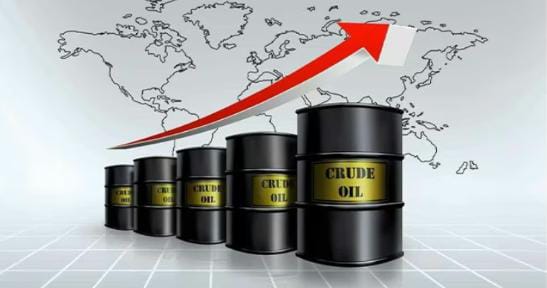
Crude oil prices rebounded on Thursday, 26 November 2026, reversing early morning losses after fresh attacks on Persian Gulf tankers and Saudi refining infrastructure renewed fears of a major supply squeeze. Brent crude futures gained 35 cents, or 0.37 per cent, to reach $94.96 a barrel in London midday trading, building on Wednesday’s sharp 3.5 per cent rally. Meanwhile, United States West Texas Intermediate crude dipped 76 cents to $84.44 a barrel in muted trading, with no formal settlement scheduled due to the American Thanksgiving holiday.
Renewed maritime hostility in the Strait of Hormuz directly threatens a fragile recovery in Middle Eastern oil shipments. Iran’s Islamic Revolutionary Guard Corps announced on Thursday that two vessels, including a supertanker loaded with over two million barrels of crude, caught fire after striking sea mines north of Oman’s Khasab port. The strikes followed claims by Yemen’s Iran-aligned Houthi militia that it hit Saudi Arabia’s Ras Tanura refinery—the kingdom’s largest refining and crude export complex—alongside Riyadh’s financial district.
Despite escalating flashpoints across the Gulf, broader economic headwinds continue to limit how high crude prices can climb. Market analysts note that expectations of an upcoming global supply surplus, paired with stubborn inflation that keeps interest rates high and strengthens the US dollar, create a firm ceiling around $97 a barrel for Brent. Even a smaller-than-expected 1.1-million-barrel rise in US commercial crude stocks and a refinery fire in Bangkok offered only modest upward support.
Attention now turns to Sunday, 29 November, when OPEC+ ministers convene online to decide their 2027 production policy amid deep internal friction. The producer alliance must navigate output quotas without the United Arab Emirates, which exited the group earlier this year, while managing fierce disputes from Iraq and Kazakhstan over their assessed production capacities. Given ongoing war disruptions and quota disagreements, delegates indicate the bloc is leaning toward rolling over its current output limits into January rather than making sweeping changes.
For non-Gulf oil exporters like Nigeria, conflict-driven price floors near $95 a barrel provide a welcome cushion well above national budget benchmarks. Yet geopolitical risk premiums can vanish just as quickly if diplomatic talks ease maritime blockades or global demand softens under high interest rates. Capturing value from elevated crude prices depends on securing domestic pipelines and export terminals rather than banking on sustained Middle Eastern turmoil.