
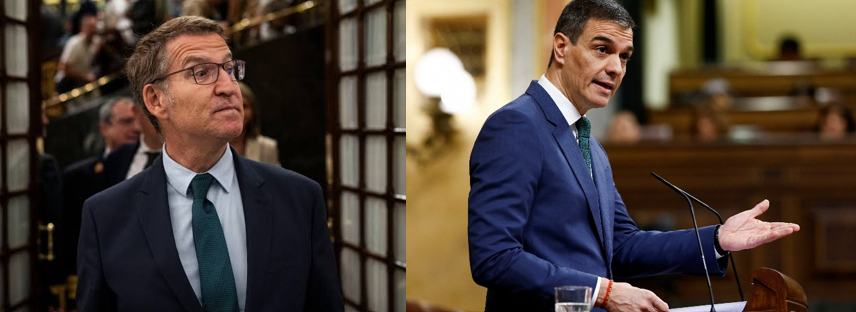
Spaniards began voting on Sunday, 29 November, in a snap general election that could bring the far right into national government for the first time since democracy returned after Francisco Franco. Socialist Prime Minister Pedro Sanchez called the early poll after parliament rejected his emergency decrees to tame a severe housing crisis. Polls suggest the conservative People’s Party (PP) will finish first, yet it will need support from the far-right Vox party to hit the 176-seat majority in the 350-seat legislature.
The arithmetic points toward a tricky marriage of convenience on the Spanish right. PP leader Alberto Nunez Feijoo pitches himself as a steady technocrat, but Vox demands hardline immigration curbs, tax cuts, and a rollback of climate and LGBTQ protections. The two parties already share power in four regional governments, making a national deal plausible despite tough haggling over cabinet seats.
Sanchez is gambling that his economic record can rescue his eight-year premiership from a string of political missteps. Spain boasts one of the European Union’s fastest-growing economies, aided by higher minimum wages and labour reforms that cut joblessness to a near two-decade low. Yet booming growth feels hollow to voters squeezed by soaring rents, steep energy bills, and rising consumer prices.
Migrants have powered much of Spain’s recent expansion, putting immigration at the centre of the campaign. Economists warn that right-wing plans to tighten borders, scrap mass amnesties, and deport convicted foreigners could choke off labour supply and stall growth. Sanchez has defended open migration as an economic engine, swimming against a broader European tide of border crackdowns.
Beyond the economy, a trail of scandals and operational failures has bruised the incumbent. Critics hammer Sanchez over corruption probes touching his inner circle, a divisive amnesty for Catalan separatists, two fatal train crashes, and a nationwide blackout. Even some Madrid voters who expect a Socialist win admit they fear the future because the government has solved too little.
Polling stations close at 1900 GMT, with initial results due an hour later. If no candidate wins parliament’s backing within two months of the first investiture vote, Spain will face another election. A Socialist defeat would leave only Denmark, Lithuania, and Malta with centre-left leaders in the European Union, confirming Europe’s sharp rightward drift.