
Amokachi, Mikel Slam Brahim Diaz After Costly Penalty Miss in AFCON Final
Former Nigeria internationals Daniel Amokachi and John Obi Mikel have delivered scathing assessments of Brahim Diaz’s decisive penalty miss in Morocco’s 1–0 defeat to Senegal in the 2025 Africa Cup of Nations final on Sunday night.
The Real Madrid forward, who had emerged as the tournament’s top scorer with five goals, saw what could have been a defining moment in his career turn into a nightmare when his audacious ‘Panenka’ chipped penalty was easily collected by Senegal goalkeeper Edouard Mendy in the eighth minute of second-half stoppage time.
The miss denied Morocco a golden opportunity to end a 49-year wait for continental glory, with their only previous AFCON triumph coming in 1976 in Ethiopia. Instead, Senegal held on and secured victory through Pape Gueye’s extra-time strike in the 94th minute, clinching their second title in four years.
Speaking on BBC Sport on Monday, Amokachi did not mince words in his assessment of the 25-year-old’s costly decision. “Brahim Diaz threw away all of his glorious moments, scoring five goals in this tournament,” the former Everton striker said.
Mikel, who captained Nigeria to AFCON glory in 2013, echoed the sentiment, predicting lasting emotional trauma for the forward. “It spoils everything Brahim Diaz has done well in this tournament. He is going to be devastated. This is going to be tough on him, for weeks, for months,” the former Chelsea midfielder stated.
Read Also: CAF Hails AFCON Morocco 2025 as Most Commercially Successful Tournament in African Football History
The penalty itself came amid extraordinary scenes at the Prince Moulay Abdellah Stadium in Rabat. After the spot-kick was awarded following a VAR review, the majority of Senegal’s players, including Mendy, marched off the pitch in protest, delaying the kick by approximately 17 minutes. When play eventually resumed, Diaz opted for the high-risk technique made famous by Antonin Panenka in the 1976 European Championship final—a delicate chip down the centre of the goal.
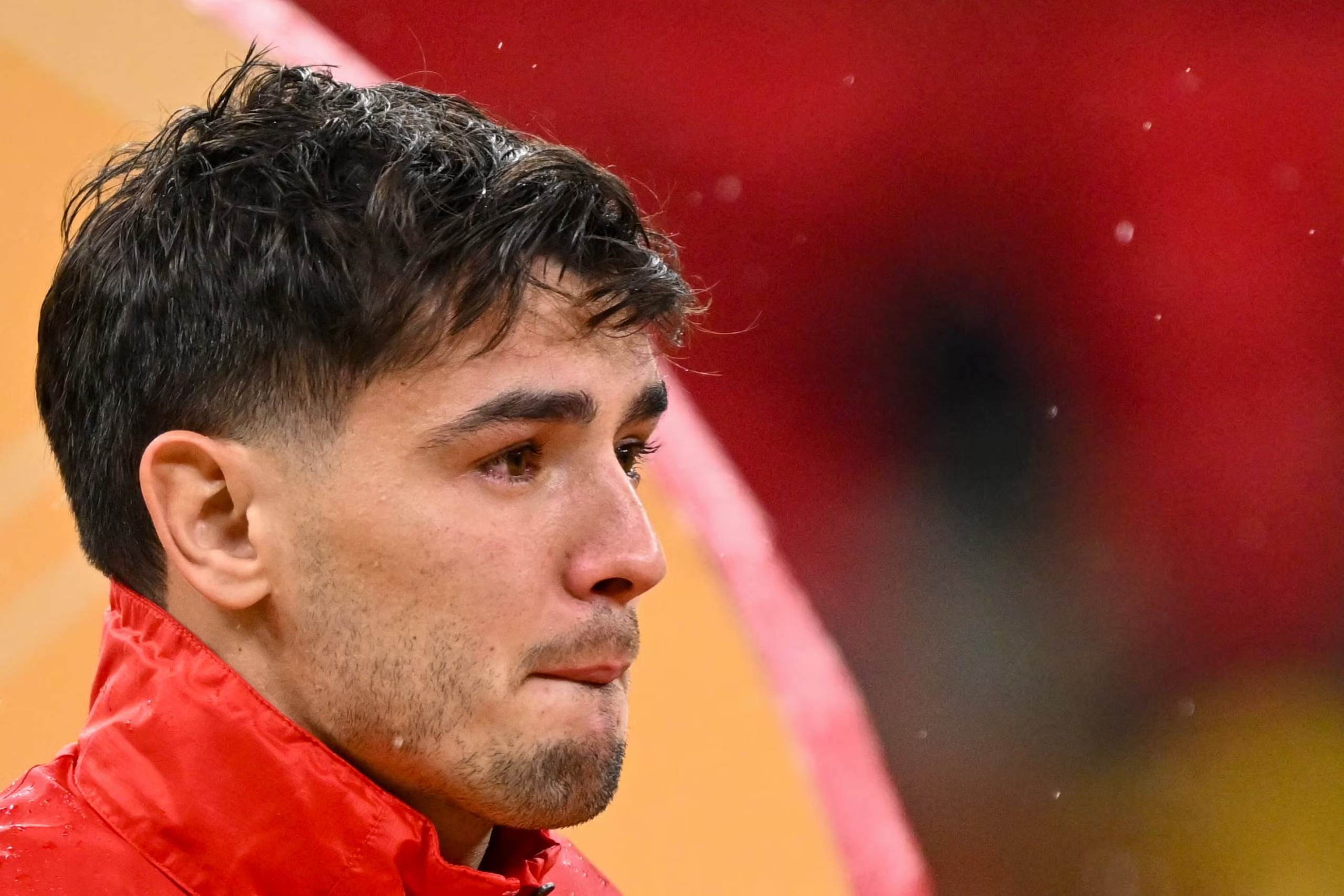
But Mendy, who remained rooted to his spot, calmly caught the ball without fuss, leaving the capacity crowd and millions watching across the continent in stunned silence. Television cameras later captured Diaz on the Morocco bench after his substitution in extra time, visibly emotional and holding back tears as the weight of his miss became apparent.
Former Morocco midfielder Hassan Kachloul also expressed sympathy mixed with criticism, telling BBC Sport: “I think Brahim Diaz is going to have a lot of nightmares in the coming days.”
Ex-Nigeria forward Efan Ekoku went further, describing the moment as “a moment he will never get over,” underlining the magnitude of the error on such a grand stage.
The miss has drawn comparisons to other infamous penalty failures in major tournament finals, including Italy’s Roberto Baggio in the 1994 FIFA World Cup final and England’s Gareth Southgate at Euro ’96. Such moments have historically defined careers, often overshadowing years of achievement with a single lapse in judgment or execution.
Diaz’s tournament had been remarkable up until that point. The former Manchester City academy product had been one of the standout performers of the competition, netting five goals across seven matches and playing a central role in Morocco’s run to the final. His performances had raised expectations that he could be the hero who would deliver the nation’s long-awaited second continental crown.
Read Also: Senegal Clinch Second AFCON Title With Extra-Time Victory Over Morocco in Rabat
The decision to attempt a Panenka penalty in such a high-pressure situation has sparked widespread debate across African football circles. While the technique, when executed successfully, is often celebrated for its audacity and composure, failures are met with harsh criticism for what is perceived as arrogance or misjudgment.
Morocco’s elimination from the tournament on home soil represents a painful conclusion to what had been a campaign filled with hope and optimism. The Atlas Lions had enjoyed strong support throughout, buoyed by their historic run to the semi-finals of the 2022 FIFA World Cup in Qatar, where they became the first African nation to reach the last four of football’s premier competition.
The defeat also means Morocco’s wait for a second AFCON title extends into a sixth decade. Since lifting the trophy in Addis Ababa in 1976, the North Africans have appeared in one other final—losing to Cameroon in 2004—and have endured periods of underachievement despite possessing technically gifted squads.
For Senegal, Mendy’s save and the subsequent victory further cemented his reputation as one of Africa’s most reliable and composed goalkeepers. The 32-year-old, who has previously played for Chelsea and now features for Al-Ahli in Saudi Arabia, was instrumental in Senegal’s 2021 AFCON triumph and delivered again when it mattered most.
Amokachi and Mikel’s comments reflect a broader sentiment within African football that individual brilliance, no matter how consistent, can be undone by a single moment of poor judgment. Both former players understand the weight of expectation that comes with representing one’s nation at major tournaments, having themselves experienced the highs and lows of international competition.
Amokachi, who was part of Nigeria’s 1994 AFCON-winning squad and famously scored twice in the Super Eagles’ memorable 1994 World Cup victory over Bulgaria, has long been a vocal analyst of African football. Mikel, meanwhile, remains one of Nigeria’s most decorated players, having captained the team to AFCON success in South Africa in 2013 and represented the nation at multiple World Cups.