
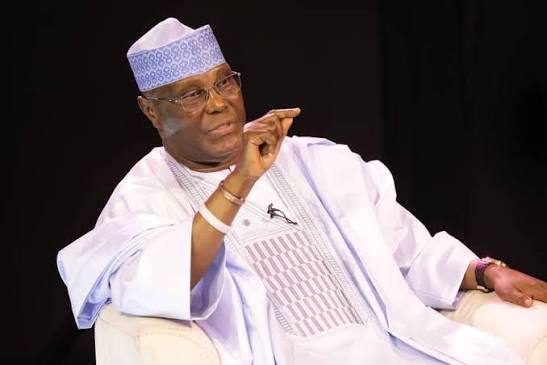
Nigeria’s three tiers of government are sharing more naira than at any point in the country’s history. Whether that has made anyone better off is the question former Vice President Atiku Abubakar put to the public this week, and his answer was no.
In a statement issued on Wednesday, September 9, 2026, by his media aide Phrank Shaibu, the African Democratic Congress presidential candidate described rising Federation Account Allocation Committee disbursements as an “illusion”, arguing that bigger nominal figures have masked a fall in real purchasing power. “That is not an economic miracle. That is money illusion,” he said.
The figures he drew on come from Agora Policy, an Abuja based think tank whose half year review of FAAC performance was published in early August 2026. That report found that gross FAAC revenue in the first half of 2026 reached N18.72tn, up from N4.43tn in the first half of 2021. Agora Policy put the six year increase at 323 per cent; Atiku’s statement cited about 322 per cent. The intervening half year figures were N5.53tn in H1 2022, N6.76tn in H1 2023, N13.46tn in H1 2024 and N17.43tn in H1 2025.
One clarification matters for readers trying to interpret those numbers. The N18.72tn is gross revenue entering the Federation Account, not the amount actually shared among the federal, state and local governments. According to the same Agora Policy report, N12.59tn, or 67 per cent, was distributed to the three tiers in H1 2026, while the remaining N6.13tn went to savings, interventions, refunds, transfers and the cost of collection. Distributable revenue rose 24.4 per cent year on year, from N10.12tn in H1 2025. Atiku’s statement referred to the gross series as disbursements, a conflation common in public commentary on FAAC data.
His central argument rests on a currency comparison rather than a naira one. He said FAAC distribution stood at roughly N7.85tn in 2019, worth about $25.6bn at the exchange rate then prevailing, and had risen on paper to about N21.9tn by 2025, worth roughly $14.6bn. “So while government parades almost three times as many naira, the underlying dollar value is more than 40 per cent lower,” he said. “Bigger numbers do not cancel smaller value.”
Those two figures are drawn from different measures. Agora Policy recorded gross FAAC revenue for the whole of 2025 at N35.81tn, meaning the N21.9tn Atiku cited for that year corresponds to distributable rather than gross revenue. His 2019 figure implies an exchange rate of about N307 to the dollar, consistent with the official rate at the time, while the 2025 figure implies a rate near N1,500. The dollar conversion is therefore an interpretation applied to the data by Atiku, not a finding published by the think tank whose naira figures he cited.
He extended the same arithmetic to wages. The N30,000 national minimum wage set in 2019 was worth about $83 at the time and roughly $65 by May 2023, he said, while the N70,000 minimum wage signed in July 2024 is worth about $53 at an exchange rate of N1,320 to the dollar. “The figure in your hand is bigger, but the value in your pocket is smaller,” he said.
The exchange rate he used is close to current market levels. Nigerian Foreign Exchange Market data put the official rate at about N1,322.72 to the dollar on September 10, 2026, with parallel market quotes around N1,380 to N1,390. Notably, the naira has been appreciating rather than weakening in recent months. It touched about N1,326.69 in early September, described in market reporting as a two year high, supported by improved dollar liquidity, stronger external reserves and higher formal remittance inflows.
Inflation data also complicates a straightforward reading. The National Bureau of Statistics reported headline inflation at 15.43 per cent in July 2026, down from 15.91 per cent in June and well below the 24.94 per cent recorded in July 2025. Part of the step down reflects the NBS rebasing of its consumer price index. But food inflation, the component households feel most sharply, moved the other way, rising to 20.31 per cent year on year in July from 17.52 per cent a year earlier, and to 5.56 per cent month on month from 3.75 per cent in June. Adamawa recorded the highest state level food inflation at 51.36 per cent, followed by Katsina at 30.84 per cent and Zamfara at 30.65 per cent. The Central Bank of Nigeria held its Monetary Policy Rate at 26.5 per cent in July.
That mixed picture, easing headline inflation and a firmer naira alongside stubborn food costs, is the terrain on which Atiku’s argument operates. He framed his case not around statistics but around household experience. “Nigerians do not eat FAAC figures. They do not pay school fees with percentages,” he said, adding that they “live in the real economy, and the real economy is measured by what their money can buy.”
He also pressed a series of questions about outcomes. “If FAAC is truly booming, then where is the boom?” he asked. “Where is it in the price of food? Where is it in transport? Where is it in electricity, healthcare, housing and jobs?” He questioned why states remain indebted despite record allocations, and called for closer scrutiny of tax concessions, import waivers, revenue exemptions and duplicated or abandoned projects. Fiscal discipline applied selectively, he argued, “is cruelty dressed up in economic grammar.”
The distribution data itself shows how unevenly the money lands. Agora Policy reported that Lagos State received the largest gross allocation in H1 2026 at N477.05bn, while Nasarawa received the least at N72.78bn. Twenty states received between N100bn and N300bn, and nine received under N100bn. Of the N12.59tn distributed, the Federal Government took N4.57tn, the 36 states shared N4.47tn and the 774 local government councils received N3.13tn.
No response from the Federal Government to Atiku’s statement had been reported at the time of writing.