
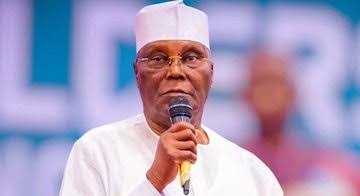
Former Vice President Atiku Abubakar has restated that he will bring back petrol subsidy if he wins the presidency in 2027, holding firm to one of his most contested promises even as a court ruling has thrown his candidacy into doubt. In a post on X on Monday, accompanied by a campaign video, the African Democratic Congress candidate said his position “has not changed and will not change,” and that he would restore subsidy to make life more affordable for Nigerians.
The video argued that petrol was selling for more than N1,300 per litre at home while citizens of other crude-producing countries, among them Libya, Iran, Venezuela, Kuwait and Saudi Arabia, paid far less. It said Atiku’s proposed support would be limited to petrol refined by local plants rather than imported fuel, and would run only until domestic refineries could stand without government help.
The claim lands at a moment of fresh pressure at the pump. The Dangote refinery raised its gantry price to N1,300 per litre at the start of November, lifting retail prices in Lagos towards N1,370 and leaving motorists in Abuja paying about N1,325 at NNPC outlets. Figures from the National Bureau of Statistics show the longer arc: the average pump price stood at N1,214.17 per litre in November 2024 before easing to N1,061.35 a year later, a fall of about 12.6 per cent, only to climb again through 2026 as refinery and crude costs shifted.
At the heart of the quarrel is the decision President Bola Tinubu announced at his inauguration on 29 May 2023, when he ended the decades-old subsidy and said the savings would go into infrastructure, education, healthcare and jobs. The move eased a heavy burden on public finances but pushed prices up several-fold, and Atiku has built much of his message around that pain. He has framed his own plan as a capped and audited production subsidy tied to locally refined fuel, not a return to the old import-based system his critics link to fraud.
Tinubu has rejected the idea, calling demands for a return to subsidy a sign of “serious ignorance” of governance and the economy, while his aides have asked who would pay and what the new pump price would be. The presidency maintains that removal was necessary and is already steadying the economy, pointing to inflation that has slowed from nearly 25 per cent a year earlier to about 15.4 per cent by July 2026.
The renewed pledge follows the ADC campaign flag-off in Sokoto on 4 November, where Atiku promised to restore subsidy, reopen the land borders for legitimate trade and tackle insecurity. The rally went ahead despite what the party called attempts by state authorities to deny it a venue, drawing large crowds that the campaign held up as proof of public frustration.
Yet the promise now sits under a legal cloud. On 5 November, a Federal High Court in Abuja sacked the David Mark-led leadership of the ADC and nullified the process that produced Atiku as the party’s presidential candidate, along with the nomination of his running mate, Rotimi Amaechi, and a long list of other candidates. The party has rejected the judgment, citing an earlier ruling by another judge of the same court that upheld the Mark leadership, and has appealed while seeking a stay of execution.
The timing is tight. INEC has fixed 16 January 2027 for the presidential and National Assembly elections, with governorship and state assembly polls on 6 February, leaving little room for a drawn-out appeal. For now the subsidy question remains the sharpest line between the two main camps: the government insists its reforms are working, while Atiku is betting that voters feeling the squeeze will reward a promise to bring prices down. Whether he will be on the ballot to make that case is, for the moment, a matter for the courts.