
The political landscape ahead of Nigeria’s 2027 general election continues to shift at a pace that is testing the stability of the country’s opposition structures, and few developments in recent weeks have illustrated this more clearly than the fracturing of the Peoples Democratic Party and the scramble to redefine loyalties that has followed.
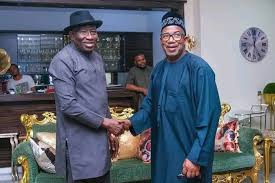
At the centre of one such episode is Bauchi State Governor Bala Mohammed, who has publicly distanced himself from reports linking him to a potential presidential ticket involving former President Goodluck Jonathan under a breakaway PDP faction.
The speculation emerged after Jonathan was adopted as the presidential candidate of a PDP faction led by Kabiru Turaki at a special national convention held in Abuja on Saturday. Jonathan did not attend the event in person. His certificate of return was received on his behalf by Fred Agbedi, a federal lawmaker representing a constituency in Bayelsa State, a detail that itself raised questions about the depth of the former president’s formal commitment to the faction’s project.
The claims connecting Mohammed to the ticket were amplified when Nuhu Sada, a chieftain of the African Democratic Congress, posted on X that emerging reports pointed to Mohammed as a possible running mate to Jonathan in the 2027 presidential race. The post spread quickly across Nigerian political circles, prompting the governor to respond directly.
Writing on his own verified X handle on Sunday, Mohammed was unambiguous. “Thank you for your interest in my political aspirations. However, for the sake of clarity, my focus remains firmly on contesting for the Bauchi South Senatorial District seat under the platform of the Allied Peoples Movement,” he stated, adding that any reports suggesting a different political direction “should be disregarded as speculative and inaccurate.”
The clarification carries added weight when placed against the broader context of Mohammed’s recent political moves. He departed the PDP not long ago, joining the Allied Peoples Movement amid what has become a prolonged and publicly damaging leadership crisis within the main opposition party. The PDP’s internal disputes have produced competing factions, parallel congresses, and rival claims to party authority, conditions that have accelerated defections and diluted whatever cohesion the party once projected nationally.
Mohammed’s decision to seek a senatorial seat rather than pursue a higher executive ambition also represents a notable recalibration. As a sitting governor who has been vocal on national issues including fuel subsidy removal and the economic pressures facing ordinary Nigerians, a move to the Senate rather than a presidential run signals either a strategic repositioning or a recognition of the fragmented state of opposition politics in the country.
The Jonathan faction itself remains a contested political entity. The PDP’s national leadership has not formally recognised the Turaki-led grouping, and Jonathan’s absence from his own adoption ceremony only deepened uncertainty about whether the faction commands the structure and reach necessary to mount a credible 2027 campaign.
With Nigeria’s 2027 election cycle already drawing fierce political activity more than a year ahead of the vote, the episode reflects how volatile and fluid the opposition space has become, and how quickly unverified speculation can take hold in an environment where political actors are repositioning rapidly and public trust in party institutions remains thin.