
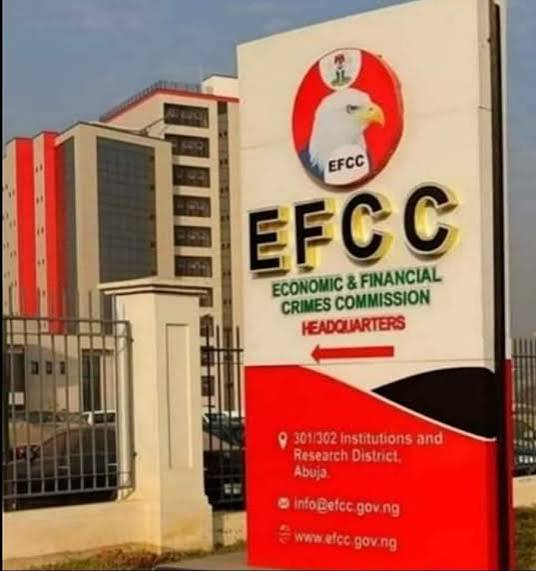
A dispute over billions of naira meant to put prepaid meters in millions of Nigerian homes has returned to the Federal High Court in Abuja, where the Economic and Financial Crimes Commission is trying to permanently seize more than ₦26bn from Ziklagsis Networks Limited. The case stalled again last week, a reminder of how long the money has sat unresolved.
Justice E. U. Akpan adjourned the matter to 15 December 2026 after counsel for the company asked for more time to complete his filings. The anti-graft agency wants the court to order the final forfeiture of the funds to the Federal Government, arguing that the firm collected public money but never delivered a mass metering contract first awarded in 2003 through the defunct National Electric Power Authority.
Ziklagsis rejects that account. The company insists the money was released to it under court judgments and agreements with the government, and that it amounted to a loan secured by bank guarantees rather than proceeds of crime. It argues that the forfeiture bid would also undercut separate litigation still pending over the same funds.
The commission’s version, set out in a counter-affidavit by one of its operatives, Naankus Panwal, filed on 12 November 2026, traces a long paper trail. It alleges that about ₦39bn was moved from an account with Polaris Bank to Providus Bank, which it says lacked the capacity to hold such a sum. According to the agency, the Central Bank of Nigeria directed that the money, being public funds, be placed in treasury bills and bonds rather than left idle.
The commission further alleges that the firm opened a separate account for interest earned on the investments, and that between July 2021 and March 2024 it drew about ₦22.64bn from that account and diverted it for private use. It says the company refused to refund the money after the contract was terminated, holding on to it to keep earning interest.
The company tells the story differently. In an affidavit deposed to in August by its managing director, Jones Listowel, Ziklagsis says it signed a tripartite agreement with the government and NEPA on 5 December 2003 to make, supply, install and maintain three million prepaid meters across 23 states. The deal was later revalidated, it says, to cover 3,315,820 meters, with about $196.8m approved for the work.
Ziklagsis claims the government never released the money, then frustrated its efforts to deliver. It says it went to arbitration in 2010, won an award, and that ₦32bn was eventually paid into its account following a court judgment in September 2015, on the condition that the funds were used only for the meter project. A 2017 compromise agreement, the company adds, provided for the release of about ₦39.17bn, made up of the ₦32bn and accrued interest, as a loan backed by guarantees. It says the Ministry of Power terminated the agreement in September 2025, days after a July 2025 ruling it reads as barring the government from scrapping the deal unilaterally.
The quarrel matters beyond the courtroom because the meters at its centre were never installed, and the gap they were meant to close remains wide. As of August 2026, about 4.7 million electricity customers were still without meters, with the national metering rate at roughly 63 per cent, according to figures from the Nigerian Electricity Regulatory Commission. Unmetered households are billed by estimate, a practice that has drawn years of complaints and deepened distrust of the distribution companies.
The ₦32bn at the root of the matter has been tied up almost from the start. The Minister of Power, Adebayo Adelabu, has said the sum was paid for three million meters in 2003 and remained in the company’s accounts, moving from one bank to another, while the meters went undelivered. Ziklagsis, for its part, took the government to court early in 2025 over the termination and the withdrawal of the funds, insisting the collapse of the project was not its fault.
For now, neither side has given ground. The commission maintains that the source of the money was the Federal Government and that keeping it without delivering the meters amounts to criminal misappropriation. The company maintains that the transaction was commercial, lawful and already the subject of binding judgments. When the court returns on 15 December, it is expected to take the pending applications together, including the firm’s claim of ownership and the push for forfeiture. The outcome will decide who controls a fund that was meant, more than two decades ago, to light up Nigerian homes.