
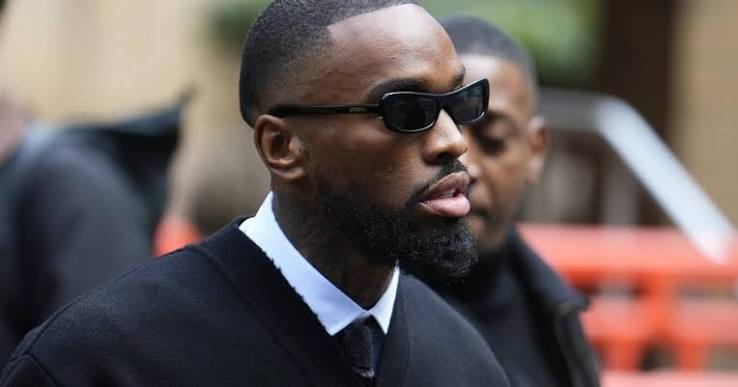
England striker Ivan Toney will wait more than 19 months to clear his name after a London judge on Thursday fixed his assault trial for June 12, 2028. The 30-year-old Al-Ahli forward pleaded not guilty at Southwark Crown Court to a charge of assault occasioning actual bodily harm. He is accused of headbutting and punching a man, Saber Da Silva, at the 100 Wardour Street club in Soho, central London, on December 6, 2025.
The hearing lasted about five minutes. Judge Christopher Hehir set the provisional date and offered the footballer an unusual apology for the wait. “That’s a long way in advance and I’m sorry about that,” the judge said, adding that the crown courts were “operating under a great deal of pressure” with “a massive backlog of work for various reasons.” Toney was released on unconditional bail.
The prosecution’s account of the incident was given at an earlier hearing. According to prosecutor Tom Heslop, the two men “squared up to each other” during a confrontation, before Toney allegedly “lunged forward and headbutted the complainant, followed by a few punches.” Toney denies the allegation. His spokesperson said the player was naturally shocked by the charge and looked forward to the opportunity to clear his name in court.
The road to a 2028 trial began at Westminster Magistrates’ Court on October 1, when Toney first entered his plea. District Judge Briony Clarke ruled that the case could be heard by magistrates, but Toney elected for trial before a judge and jury at the Crown Court. That choice, available to defendants facing offences that can be tried in either court, has placed him in one of the most congested parts of the justice system in England and Wales.
The judge’s apology reflects what official data show. Ministry of Justice figures put the Crown Court backlog at 80,829 outstanding cases at the end of June 2026, a record. The figure stood at 80,203 at the end of 2025 and at about 38,000 in 2019, before the pandemic, meaning the queue has more than doubled in seven years. Cases open for at least a year reached a record 21,002 in December 2025, up 27 per cent from 16,584 a year earlier.
Long waits like Toney’s are no longer unusual. Court listing records obtained under freedom of information laws showed that, as of January 29, 2026, some 2,600 Crown Court trials in England and Wales were not listed until at least 2028, with 29 not due to be heard until 2030. Courts minister Sarah Sackman has warned that the Crown Court is “on the brink of collapse”, and the government has proposed scaling back jury trials in some cases to ease the pressure. Critics, including the Criminal Bar Association, argue that restricting juries will do little to cut delays.
For Toney, the timing lands in the middle of what has been the most productive spell of his career. He joined Al-Ahli from Brentford in the summer of 2024, after scoring 72 goals in 141 appearances for the London club. Saudi Pro League records show he scored 32 goals in 32 league appearances in the 2025-26 season, finishing one goal behind Al-Qadsiah’s Julián Quiñones in the Golden Boot race. Al-Ahli finished third in the league and won a second successive AFC Champions League Elite title, and Al-Ahli’s media centre recently marked his 80th goal in his first 100 games for the club.
That form earned him a recall to Thomas Tuchel’s England squad for the 2026 World Cup, his first, after he had played only two minutes of international football since moving to Saudi Arabia. He has 10 caps and one goal for England and was part of the squad that reached the Euro 2024 final. He was not named in England’s latest Nations League squad.
This is not Toney’s first brush with the authorities. In May 2023, the Football Association banned him for eight months and fined him £50,000 after he accepted 232 breaches of its betting rules while at Brentford. He returned in January 2024 and was in England’s Euro 2024 squad months later.
The assault charge is a criminal matter, and Toney remains entitled to the presumption of innocence until the case is decided. With the trial date set provisionally, it could still move if court schedules change. Unless it is brought forward, the case will hang over him for roughly two and a half years from the night of the alleged incident to the first day of trial.