
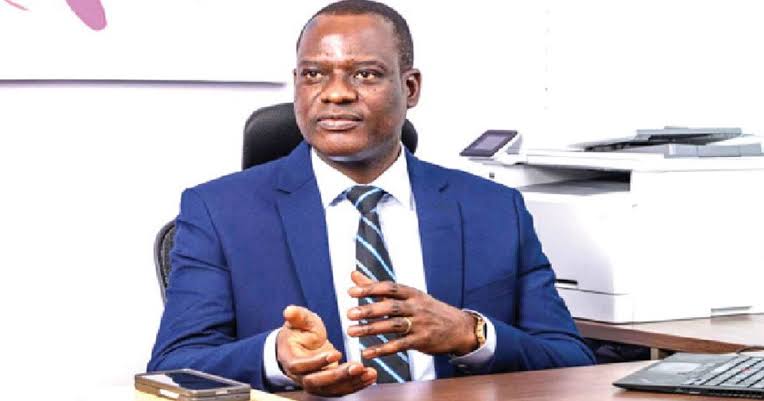
The Federal Government has moved to shut down a fast spreading narrative that it quietly spent trillions of naira outside the approved budget, insisting that reports crediting the claim to the International Monetary Fund misrepresent what the Fund actually said. The pushback came on Sunday in a statement from the Minister of Finance and Coordinating Minister of the Economy, Taiwo Oyedele, who described the allegation as inaccurate and capable of misleading the public about how public money is managed in Nigeria.
At the centre of the storm is the IMF’s 2026 Article IV Consultation Report and remarks by the Fund’s Resident Representative in Nigeria, Christian Ebeke. Speaking to business executives in Lagos, Ebeke observed that public spending equivalent to about two per cent of Gross Domestic Product had not been captured in recent official budgets. “So far we think that there are about two per cent of GDP of expenditure that were not reported that should be reported and should be recorded, so that this statistical discrepancy will disappear,” he said. Against a nominal GDP of roughly ₦441.5tn, that two per cent works out to about ₦8.83tn, the figure that has since dominated headlines and political commentary.
Ebeke tied the gap to large government projects executed off-budget, explaining that the omission made Nigeria’s fiscal deficit appear smaller than the country’s true borrowing requirement. He added that incomplete reporting complicates coordination between fiscal and monetary authorities, and that Nigerian officials had already begun revising budget laws to capture previously unrecorded spending, though updated implementation reports were still needed.
Oyedele, in his rebuttal, drew a firm line between what the IMF flagged and what critics allege. “The Federal Government does not operate a ‘shadow budget’ or expend public funds outside the constitutional and statutory framework established for public finance,” he said. He anchored the position on Sections 80 to 83 and 162 of the 1999 Constitution (as amended), which restrict withdrawals from public funds to spending authorised by the National Assembly. All federal expenditure, he stressed, is backed by duly enacted Appropriation Acts, Supplementary Appropriation Acts or other statutory authorisations.
The minister argued that multi-year capital projects spanning several budget cycles, statutory transfers, first-line charges and intervention mechanisms established by law are legitimate features of public financial management, not secret spending. “These expenditures are neither secret nor illegal. They are established by law, disclosed in various fiscal reports, and subject to applicable oversight, audit and accountability mechanisms,” he said, adding that differences in how such items are presented under international reporting standards should not be read as proof of unlawful expenditure.
He also rejected the suggestion that the sum represented a wider deficit. “A fiscal deficit is determined by the relationship between total government revenues and total government expenditures. Whether a capital project is financed through annual appropriations, supplementary appropriations, statutory transfers, approved intervention mechanisms, or other lawful financing arrangements does not, by itself, increase the fiscal deficit,” Oyedele said. He challenged those making the allegations to name specific projects allegedly executed without appropriation and to provide credible evidence.
The controversy did not stay in the realm of accounting for long. It has fed directly into an already tense fiscal debate. Opposition leaders were quick to seize on the IMF’s observation. Former Vice President Atiku Abubakar called on the Economic and Financial Crimes Commission, the Independent Corrupt Practices and Other Related Offences Commission, the National Assembly and the Auditor-General of the Federation to investigate what he put at about ₦8.8tn in off-budget spending. Former Anambra State governor Peter Obi described the report as evidence of “grand corruption,” insisting the money fell outside legislative oversight and demanding greater transparency.
The timing sharpens the stakes. The 2026 Appropriation Act, signed by President Bola Tinubu in April, is Nigeria’s largest ever at ₦68.32tn, resting on projected revenue of ₦36.87tn and a fiscal deficit put at ₦31.46tn, with debt servicing alone consuming ₦15.81tn. Total public debt stood near ₦159.28tn as at December 2025. In that context, any doubt over the true size of the deficit carries weight for investors already demanding higher yields, and for a Central Bank that retained its Monetary Policy Rate at 26.5 per cent in May while headline inflation climbed to 15.93 per cent, its third straight monthly rise.
Notably, the government did not treat the underlying reporting concern as baseless. Oyedele recalled that during the presentation of the 2026 budget on December 19, 2025, Tinubu had himself urged the National Assembly to end the practice of running multiple and overlapping budgets and adopt a single, harmonised framework. The minister said ongoing reforms in budget credibility, revenue administration, treasury management and the digitalisation of financial processes had already been acknowledged by the IMF, multilateral institutions, credit rating agencies and investors, and that Nigeria, like many countries, was working to align its budget presentation with international standards.
For now, the dispute turns less on whether the spending happened than on how it should be classified and disclosed. The IMF frames the issue as one of transparency and presentation; the government frames it as lawful spending misread as scandal; the opposition frames it as concealment demanding investigation. How that distinction is resolved, and whether the promised single budget framework materialises, is likely to shape confidence in Nigeria’s fiscal numbers well into the second half of 2026.