
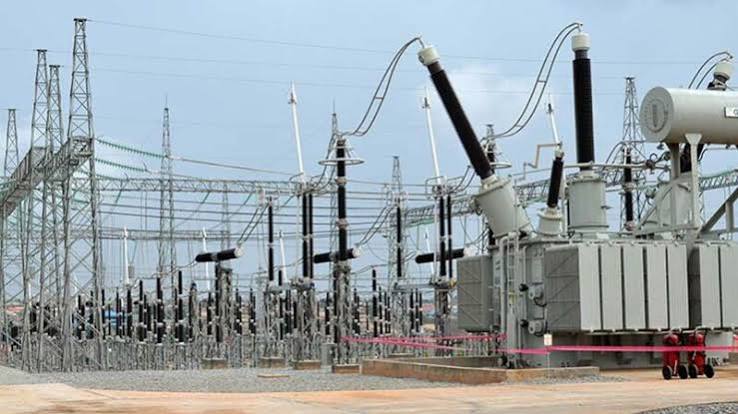
Nigeria’s electricity distribution companies ended 2025 with a curious paradox on their books. They pumped out more power, banked record revenue and connected more meters than ever before, yet quietly watched more than a million paying customers walk away.
Fresh figures from the National Bureau of Statistics, drawn from data compiled by the Nigerian Electricity Regulatory Commission and contained in the Nigeria Electricity Report for the fourth quarter of 2025, show that the total customer base of the eleven distribution companies fell from 13.30 million in the fourth quarter of 2024 to 12.16 million in the same period of 2025. That amounts to a year on year loss of 8.52 per cent, or 1,133,390 customers, even as the sector recorded improvements on nearly every other performance line.
The report noted that the numbers actually rose slightly on a quarterly basis. “Total customer numbers in Q4 2025 stood at 12.16 million, up from 12.03 million in Q3 2025, representing a 1.11 per cent quarter-on-quarter increase. On a year-on-year basis, the number of customers declined by 8.52 per cent, from 13.30 million recorded in Q4 2024,” it stated.
What makes the decline striking is that it happened while the Discos were selling more electricity. Supply climbed by 6.76 per cent, rising from 6,207.85 gigawatt-hours in the last quarter of 2024 to 6,627.56 gigawatt-hours in the corresponding period of 2025. Revenue moved even faster. Collections jumped 23.75 per cent year on year to N630.93bn in the fourth quarter, up from N509.84bn a year earlier, while full-year revenue rose from N1.69tn in 2024 to N2.32tn in 2025. Ikeja Electricity Distribution Company posted the highest annual earnings at N440.86bn, followed by Eko Disco with N420.57bn and Abuja Disco with N375.95bn.
Metering, long the sore point of the sector, also recorded genuine progress. The number of metered customers grew by 12.18 per cent within the year, from 6.21 million to 6.97 million. Prepaid coverage rose from 46.71 per cent in December 2024 to 57.27 per cent a year later, and estimated billing fell sharply as the pool of unmetered customers dropped by 26.67 per cent, from 7.09 million to 5.20 million.
The pain was not evenly spread. Benin Electricity Distribution Company shed the most customers at 379,616, followed by Kaduna Disco with 341,150 and Yola Disco with 311,527. Ibadan Disco lost 199,409, with Port Harcourt, Kano, Eko and Jos Discos also recording drops. A handful bucked the trend, with Enugu Disco adding 245,129 customers, Abuja Disco 146,378, and Ikeja Disco 22,016.
The exodus fits a pattern that has been building for some time. The electricity tariff shake-up of April 2024 introduced cost-reflective pricing for Band A customers, whose rate has hovered above N200 per kilowatt-hour, far higher than the heavily subsidised bands below them. That gap has driven better-off consumers and industries to weigh the grid against alternatives. Punch had earlier reported that 24 bulk consumers secured licences in 2024 to leave the grid and generate their own power, while another 22 entities obtained off-grid permits with a combined capacity of about 289 megawatts. Roughly 250 manufacturers and tertiary institutions have also exited Disco networks in favour of self-generation.
The financial weight of that shift is showing up in company accounts. Firms listed on the Nigerian Exchange spent N400.83bn on alternative energy in the first quarter of 2026, a 3.66 per cent rise from N386.67bn in the same period of 2025, according to Punch findings. Companies that separately disclosed power costs recorded an 81.50 per cent jump, reflecting both higher tariffs and continued reliance on diesel and gas.
The supply picture, meanwhile, remains fragile. NERC’s first quarter 2026 report showed that average available generation capacity fell by 17.45 per cent to 4,457.96 megawatts, while the national grid suffered a total collapse on 23 January 2026 and a partial collapse four days later. The Federal Government also paid out N358.32bn in electricity subsidy during the quarter, having kept tariffs frozen at July 2024 rates for most bands.
Against that backdrop, the Minister of Power, Chief Joseph Tegbe, has sought to reassure the public. He stated that electricity supply would improve significantly before the end of the year, adding that the Federal Government was implementing difficult but necessary reforms to address decades of underinvestment and poor management in the sector.
For now, the data tells a sobering story of a sector earning more from fewer people, as the cost of staying connected pushes a growing number of Nigerians to look elsewhere for their power.
electricity distribution companies, NBS electricity report, power sector Nigeria, Band A tariff, NERC, off-grid generation, metering, national grid collapse, Joseph Tegbe, energy costs