
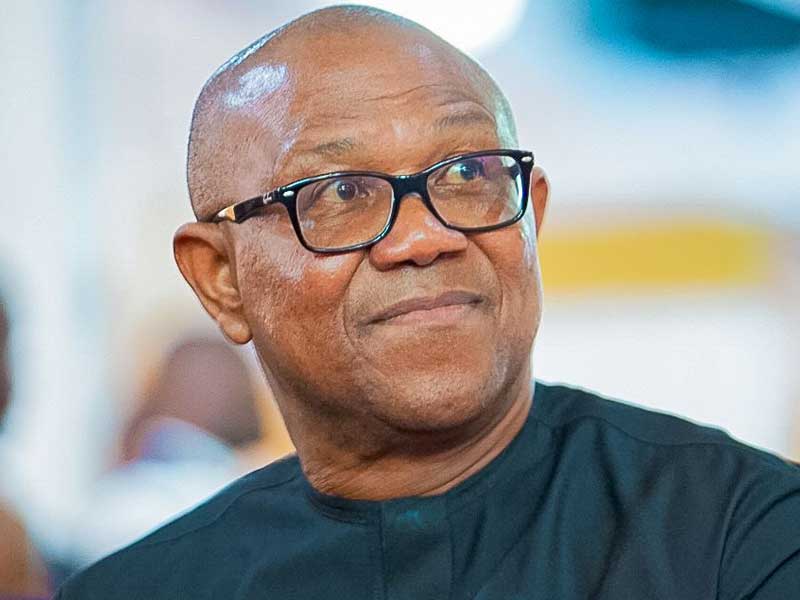
Peter Obi has returned to the argument that has defined his political brand for close to a decade, that Nigeria’s fortunes turn on the quality of the people who govern it, choosing this time a policy forum in the German capital to press the case ahead of the 2027 general election.
The presidential candidate of the Nigeria Democratic Congress made the remarks in a post on his official X handle on Tuesday, following his participation in a high level roundtable, “Nigeria in 2027 and Beyond,” hosted by the European Council on Foreign Relations at its Berlin office. According to Obi, the session brought together policymakers, diplomats, development experts, business leaders, representatives of international organisations and members of the international media to weigh Nigeria’s democratic trajectory, development cooperation and the strategies needed to deepen bilateral partnerships.
“During the discussions, I reiterated my unwavering belief that Nigeria possesses all the human and natural resources required to become a prosperous, secure, and globally competitive nation,” the former Anambra State governor wrote. He argued that the missing ingredient was governance, insisting that the country needed “competent, accountable, and compassionate leadership that prioritises investment in people, education, healthcare, productive enterprise, the rule of law, and strong institutions over politics of consumption.”
He framed the choice before voters in the language of transition that has become his signature. “Nigeria’s future is bright, but only if we make the deliberate choices that will move our country from consumption to production, from poverty to prosperity, and from division to unity,” he said, adding that fiscal responsibility and productive partnerships with the international community could “build an economy that works for all Nigerians and restores our nation’s standing among the comity of nations.”
The message is not new. Obi built his 2023 candidacy on the same production versus consumption framing, presenting himself as a manager and wealth creator rather than a conventional politician. What has shifted is the weight of the numbers behind the rhetoric, and the arithmetic now cuts in more than one direction.
The most recent World Bank Nigeria Development Update, released in Abuja in April 2026, put the share of Nigerians living below the poverty line at 63 percent in 2025, roughly 140 million people, up from 61 percent in 2024 and 56 percent in 2023. Strikingly, that deterioration occurred even as price pressures eased. Figures from the National Bureau of Statistics show headline inflation falling from 34.80 percent in December 2024 to 15.15 percent in December 2025, while food inflation dropped from 39.84 percent to 10.84 percent over the same window. The disconnect, the World Bank noted, reflects a recovery that has not yet reached household incomes, with rural poverty estimated near 72 percent against about 42 percent in urban centres.
On the macroeconomic side, the administration of President Bola Tinubu points to stabilisation. The economy grew by about 4.0 percent in 2025, driven largely by services, information technology, finance and real estate, while gross external reserves closed the year around 45.5 billion dollars. The government has also argued that its debt position is improving in relative terms, with the International Monetary Fund’s 2026 Fiscal Monitor placing Nigeria’s debt to GDP ratio at 32.3 percent, down from 35.5 percent a year earlier.
Yet the absolute debt stock frames Obi’s fiscal argument. The Debt Management Office reported total public debt of 159.28 trillion naira as of 31 December 2025, an increase of nearly six trillion naira in a single quarter and equivalent to roughly 724,000 naira for every citizen. The 2026 budget, raised by the National Assembly to about 68.30 trillion naira, carries a substantial deficit and heavy debt servicing provisions, keeping questions of borrowing, revenue and value for money at the centre of the pre election debate.
The Berlin engagement also underlines how far Obi’s political vehicle has travelled. His route to the NDC ticket has been unusually winding: from the All Progressives Grand Alliance in Anambra, to the Peoples Democratic Party, where he was Atiku Abubakar’s running mate in 2019, to the Labour Party, on whose platform he finished third in 2023 with 25 percent of the vote on the back of the youth driven Obidient Movement. He left Labour for the African Democratic Congress at the close of 2025, then moved again in May 2026 to the Nigeria Democratic Congress, a party that only secured registration earlier in the year. He emerged as its sole presidential aspirant and was declared candidate at a special convention in Abuja, arriving at the venue alongside former Kano State governor Rabiu Kwankwaso, who joined the party with him and has been widely tipped for the running mate slot, though the ticket’s full composition has been the subject of competing reports.
The 2027 contest is shaping into a rematch of the three way race that dominated 2023. Obi will again line up against President Tinubu of the All Progressives Congress and Atiku of the ADC, the latter recently recognised by the Independent National Electoral Commission alongside hundreds of ADC candidates. The realignment of opposition figures across the ADC and NDC, and the unresolved debate over north south power rotation, mean the coalition arithmetic remains fluid.
Obi’s decision to make his pitch from a European foreign policy platform fits a broader pattern of opposition engagement with international audiences, coming at a time when diplomatic attention on Nigeria is rising, including a planned visit by French President Emmanuel Macron confirmed by France’s ambassador. It also lands against a domestic backdrop that lends force to his governance and security messaging, from the recent wave of school abductions in Oyo and Kogi to persistent concerns about insecurity that Obi invoked in his own convention speech when he declared that “no nation can thrive when citizens can no longer sleep with their eyes closed.”
Whether the leadership argument, sharpened by hard poverty and debt data, translates into votes will depend on factors still taking shape, among them the final structure of the opposition, the direction of the economy through 2026, and the credibility each contender brings to promises of reform. For now, Obi has restated his thesis on an international stage, and the figures ensure it will be tested against evidence rather than sentiment.