
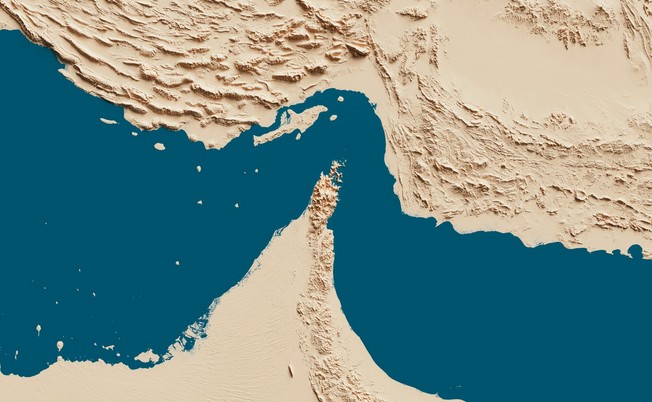
Tehran dashed hopes of a swift reopening of the Persian Gulf on Wednesday, 26 August 2026, declaring the Strait of Hormuz firmly shut despite agreeing to a temporary transit route with Oman. Iranian Deputy Foreign Minister Kazem Gharibabadi insisted that a technical maritime corridor with Muscat will not restore normal commercial navigation on its own. He demanded that the United States first honour the stalled June memorandum of understanding, end military strikes, and lift its naval blockade. The announcement followed high-level talks in the Iranian capital between Foreign Minister Abbas Araghchi and his Omani counterpart, Sayyid Badr Albusaidi. Both coastal neighbours agreed to coordinate a phased traffic channel and clear underwater mines together. Yet Tehran views geography as its sharpest bargaining chip against Western pressure. Washington cannot buy maritime peace with partial diplomatic gestures. Regional passage remains hostage to broader geopolitical demands.
The diplomatic friction exposes a sharp divide between bilateral technical agreements and the political realities of naval war. Omani envoys hoped that a joint traffic management plan would ease the paralysis choking international tanker routes. Nearly six months of military conflict have stopped roughly a fifth of global petroleum and gas shipments from leaving regional ports. Asian refiners and European utilities now face severe delivery delays running late into autumn. Mr Gharibabadi warned that Iranian coastal batteries will bar all foreign military vessels from entering the channel. He stressed that Iranian authorities will inspect and monitor every commercial hull that seeks passage. Muscat wants commercial quiet, but Tehran demands total sanctions relief. Paper corridors cannot shield tankers from real coastal guns.
Across the Atlantic, the White House responded with contradictory claims of military control and fresh economic coercion. President Donald Trump asserted that American warships had already cleared all naval mines from international waters in the strait. He warned that American forces would systematically destroy any Iranian vessel that attempts to lay fresh ordnance. Iranian officials dismissed the American claim as cheap wartime propaganda. Mr Gharibabadi warned that Iranian units will target foreign minesweepers the moment they enter contested waters. Meanwhile, United States Treasury Secretary Scott Bessent unveiled secondary sanctions designed to isolate Iran from global commerce. Coercive economic measures often stiffen political resistance rather than force quick surrender. Washington discovers the hard limits of naval bluster.
The Islamic Revolutionary Guard Corps framed the American sanctions push as proof of military failure. Revolutionary Guard spokesman Sardar Mohebi declared that economic warfare reflects Washington’s inability to win on the battlefield. Iranian commanders know that maritime closure inflicts immediate pain on Western allies and energy markets. Every week of closed sea lanes drains commercial oil inventories and drives transport costs higher. Tehran uses this economic pain to force regional states into lobbying Washington for a ceasefire. The Iranian parliament has already backed proposals to levy heavy transit fees on permitted merchant ships. Belligerents rarely surrender strategic chokepoints without securing firm economic returns. Tactical leverage matters far more than international goodwill.
Regional intermediaries now find themselves walking an increasingly narrow diplomatic tightrope. Pakistan’s army chief, Field Marshal Asim Munir, and Interior Minister Mohsin Naqvi concluded intensive security consultations in Tehran this week. Pakistani officials reported meaningful progress toward reviving the original diplomatic memorandum. Islamabad coordinates closely with Muscat to prevent direct military clashes between Iranian forces and American naval fleets. Yet a White House official told reporters that Washington is not currently holding direct talks with Tehran. American Defence Secretary Pete Hegseth also reiterated that kinetic military strikes remain on the table. Mediators cannot fix a dispute when the main fighters refuse to talk. Shuttle diplomacy achieves very little without direct negotiations.
The widening conflict in Yemen adds another combustible layer to the regional deadlock. The Iran-backed Houthi movement recently tore up a long-standing truce with the Saudi-backed government, reopening southern battlefields. Tehran now explicitly ties the reopening of Hormuz to a broader settlement of the Yemeni war. This tactical linkage multiplies the political concessions that Washington and its regional partners must deliver. Gulf monarchies fear that a protracted maritime blockade will exhaust their domestic export capacity. Saudi Arabia and the United Arab Emirates cannot move all their crude through overland pipeline bypasses. Prolonged shipping disruption threatens the core economic stability of the entire Gulf. Unresolved proxy wars always spill back into critical trade arteries.
Energy markets face a perilous autumn as the prospect of a negotiated settlement recedes. Major international tanker operators refuse to send vessels into the Persian Gulf without clear security guarantees. War-risk insurance premiums remain prohibitively high for commercial fleets operating near the strait. The refusal of the International Energy Agency to release emergency crude reserves leaves global prices exposed to sudden shocks. Developing economies with thin foreign reserves face severe fuel shortages and rising inflation. Tehran understands that time works against import-dependent consumers across the world. Iran will keep the gate locked until it extracts its price. The global economy must brace for a long season of expensive energy.