

Iraq Reports Deadliest Day Since Regional Conflict Erupted
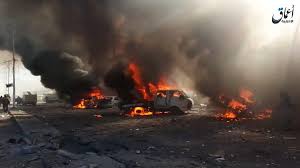
Iraq has become dangerously entangled in the widening Middle East conflict, with an air strike killing 15 members of a former paramilitary coalition in the deadliest attack on the group since the Iran war began, while separate missile fire claimed the lives of six Kurdish security personnel elsewhere in the country.
The Hashed al-Shaabi coalition, officially part of Iraq’s regular armed forces but comprising brigades with ties to Iran-backed groups, has accused the United States of conducting the strike that killed a senior commander and 14 other fighters. Meanwhile, in autonomous Iraqi Kurdistan, authorities blamed Iran for a ballistic missile attack that killed six peshmerga forces, marking the first such deadly assault on the region since hostilities commenced.
Neither Washington nor Tehran has issued public comments on the respective accusations, maintaining silence as Iraq finds itself increasingly drawn into the broader conflict that erupted after Israel and the United States launched strikes against Iran on February 28, triggering a regional conflagration that has since spread across multiple countries.
The Hashed al-Shaabi, also known as the Popular Mobilisation Forces, confirmed in an official statement that the overnight strike targeted its operational headquarters at a military base in the western Anbar province, an area bordering Syria that has long served as a theatre for counter-insurgency operations against the Islamic State group. Among those killed was a top provincial commander, according to the coalition’s announcement.
The organisation characterised the attack as a “treacherous American attack that targeted the operation headquarters,” representing the most lethal single strike against Iraqi forces since the Iran war began. The base in Anbar province has historically been central to ongoing security operations in a region that remains vulnerable to extremist activity despite the territorial defeat of the Islamic State.
The Hashed al-Shaabi emerged in 2014 as a coalition of volunteer militias formed to combat the Islamic State group during its rapid territorial expansion across Iraq. Following the jihadists’ defeat in 2017, the coalition was formally integrated into Iraq’s state security apparatus, gaining significant influence within the country’s military and political structures. Several of its constituent factions developed substantial political representation, including seats in parliament, while also establishing considerable economic interests across various sectors.
Since the outbreak of the current Middle East war, pro-Iran armed groups affiliated with the coalition have claimed responsibility for dozens of drone and rocket attacks targeting American military personnel and interests throughout Iraq and the wider region. These attacks have intensified following the joint US-Israeli strikes on Iran, with armed factions framing their operations as retaliation for Western intervention.
Last week, the Pentagon publicly acknowledged that American combat helicopters had conducted strikes against pro-Iran armed groups operating in Iraq during the ongoing conflict, confirming direct US military engagement against these forces. The admission marked a significant escalation in American involvement within Iraqi territory.
On Tuesday, the Popular Mobilisation Forces issued a statement calling on “political forces to take responsibility and confront these repeated American violations,” signalling growing frustration with what the coalition views as unauthorised foreign military operations on Iraqi soil. Baghdad has repeatedly condemned attacks on the Hashed al-Shaabi throughout the current conflict, finding itself caught between its security partnership with Washington and domestic political pressures from Iran-aligned factions.
On a separate front, Iraqi Kurdistan’s regional defence ministry reported that six Iranian ballistic missiles struck peshmerga forces, killing six fighters and wounding 30 others. Kurdish authorities branded the attack as “hostile, treacherous,” representing a dramatic shift in Iran’s approach to the semi-autonomous region.
The Kurdish Regional Government has historically maintained close relations with the United States while carefully balancing ties with neighbouring Iran. In recent years, Kurdistan had experienced warming relations with Tehran, making the deadly missile strike particularly significant as it marks the first such Iranian attack on Kurdish forces since the war began.
Despite their strategic alliance with Washington, Iraqi Kurdish authorities have attempted to maintain neutrality in the Iran war, seeking to avoid becoming targets in the broader regional conflict. The missile attack may complicate these efforts, potentially forcing Kurdistan to reassess its diplomatic positioning as violence spreads.
Iraq’s geographic position between Iran and Syria, combined with the presence of American military personnel and Iran-backed militias on its territory, has made the country particularly vulnerable to spillover violence from the regional war. The Iraqi government has repeatedly called for de-escalation and respect for its sovereignty, though it has limited capacity to prevent foreign powers from conducting military operations within its borders.
The dual attacks underscore Iraq’s precarious situation as a battleground for competing regional and international interests, with Iraqi forces caught in the crossfire of a conflict that shows no signs of abating.