
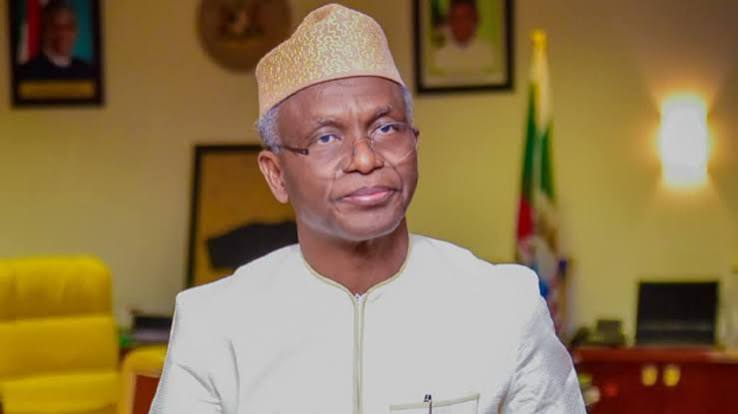
Former Vice President Atiku Abubakar has waded into the protracted detention of former Kaduna State Governor Nasir El-Rufai, warning that bail conditions which are practically impossible to satisfy could erode public confidence in the justice system and amount to punishment before trial.
Atiku, in a statement issued on Wednesday by his Senior Special Assistant on Public Communication, Phrank Shaibu, described the Federal High Court’s refusal to review El-Rufai’s bail terms as troubling, arguing that conditions impossible to meet amount to a “constructive denial of bail.”
“The law is settled that an accused person remains innocent until proven guilty. Bail exists to preserve that constitutional protection. It was never designed to become a sophisticated instrument for punishment before conviction,” the African Democratic Congress presidential candidate said.
He questioned bail requirements that compel a defendant to produce a serving Grade Level 17 federal civil servant who owns verifiable property in Abuja’s Maitama or Asokoro districts. “Nigerians are entitled to ask a simple question: is the objective to grant bail or to ensure that bail remains unattainable?” he asked.
The intervention follows months of legal wrangling. El-Rufai’s detention began on February 16, 2026, after he honoured an invitation by the Economic and Financial Crimes Commission, and he has remained in custody since being taken in by the Department of State Services and later the Independent Corrupt Practices and Other Related Offences Commission.
On May 18, he was granted bail by Justice Joyce Abdulmalik over alleged wiretapping of the phone of National Security Adviser Nuhu Ribadu, but could not meet conditions requiring a surety resident in Maitama or Asokoro who would deposit the original Certificate of Occupancy of a landed property.
The former governor is battling charges across multiple courts. Before the Federal High Court in Kaduna, the ICPC filed a 10-count charge alleging he received N289,826,998.12 as severance allowance against a lawful entitlement of N20,013,245, and that he received $797,900 into a domiciliary account believed to be proceeds of unlawful activity.
A separate ICPC case before the Kaduna State High Court accuses him of inducing the state government in 2016 to approve an N11 billion payment for a light rail project that was never executed.
On April 14, 2026, Justice Rilwan Aikawa admitted him to bail in the sum of N200 million with two sureties, describing the conditions as “strict and extensive,” and ordered that he remain in ICPC custody until the terms were met.
The dispute over the wiretapping bail came to a head this week. After the DSS closed its case having called just two witnesses, El-Rufai’s lawyer, Paul Erokoro, signalled that the defence would file a no-case submission, while the trial judge declined to vary the bail conditions, holding that the applicant had not provided cogent reasons for a variation.
The Federal High Court in Abuja adjourned the matter to September 22, 2026, by which date he would have spent 217 days in custody since his detention.
Atiku stressed that he was not commenting on the substance of the allegations. “The question of guilt or innocence is entirely for the courts to determine. What concerns every patriot is whether constitutional safeguards are being faithfully upheld,” he said, adding that “the right to liberty, the presumption of innocence, and the right to fair hearing are not privileges to be dispensed at convenience.”
He warned that the implications stretch beyond one man. “Today it is El-Rufai. Tomorrow it could be any citizen whose liberty depends not on the law but on whether he can satisfy conditions that few Nigerians can ever meet,” he said.