


Middle-East War Threatens Global Economy, IMF Chief Warns
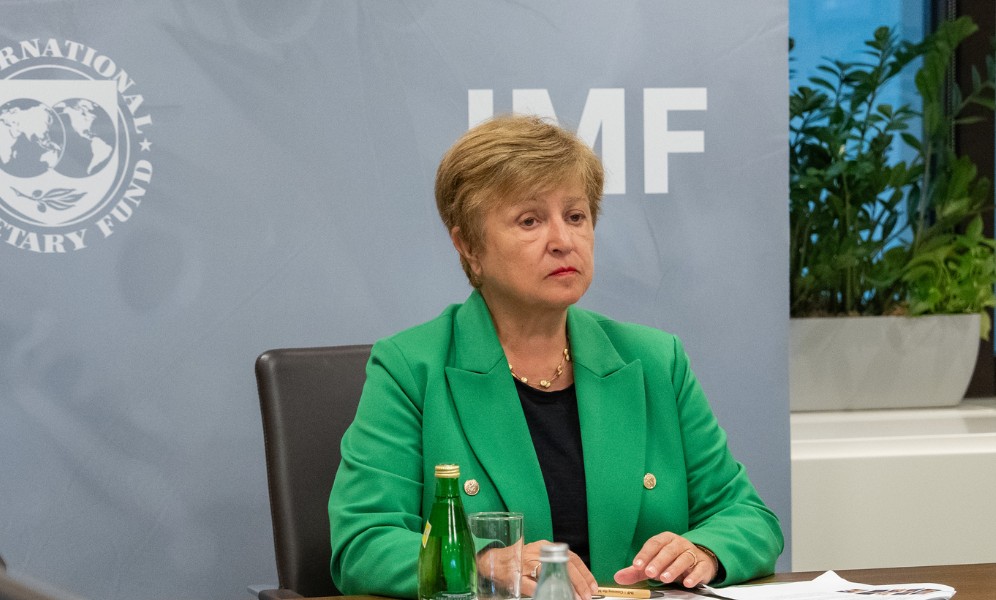
The assassination of Iran’s Supreme Leader has plunged global markets into a “prolonged period of flux,” the head of the IMF warned on Thursday. Kristalina Georgieva told the “Asia in 2050” conference in Bangkok that the escalating conflict between Iran, Israel, and the United States is a severe test of global economic resilience. Brent crude has already surged above $85 per barrel following the weekend’s decapitation strike in Tehran. This volatility threatens to reignite inflation and derail the fragile recovery of major economies.
Energy security is the primary casualty of the weekend’s hostilities. Iran’s retaliation has already disrupted shipping through the Strait of Hormuz, a chokepoint for 20% of the world’s oil. Markets have behaved like a “roller coaster” as traders price in the risk of a wider regional conflagration. Georgieva noted that uncertainty is now the “new normal” for a global membership already weary of geopolitical shocks. For Asia, which relies heavily on Middle Eastern crude, the stakes are existential.
The conflict began on 28 February when a joint American-Israeli air operation struck the heart of Tehran. The strike killed Supreme Leader Ali Khamenei and several high-ranking military officials, including the Defence Minister. President Donald Trump described the operation as a necessary move to topple a “wicked dictatorship.” Iran’s government has since declared 40 days of mourning and launched missile barrages at Israel and several Gulf states. These retaliatory strikes have hit commercial targets, including a prominent hotel in Dubai.
Read Also: Cooking Gas Prices Soar as Iran Conflict Chokes Supply
Investors have reacted with a massive sell-off in technology-heavy indexes across South Korea and Taiwan. European markets followed suit, with the DAX and FTSE 100 closing sharply lower on Tuesday. The IMF is currently quantifying the regional and global ramifications for its upcoming World Economic Outlook in April. Policymakers are being urged to maintain agility as supply chains face fresh interruptions. The price of natural gas in Europe has already doubled, reviving fears of a winter energy crisis.
The economic pain is reaching pump prices across the globe. In the UAE, fuel rates for March were adjusted upward almost immediately to reflect the “war tax” of rising crude. Analysts warn that if the Strait of Hormuz remains effectively shut, oil could easily breach the $100 mark. Such a spike would force central banks to keep interest rates high for longer, stifling growth. The Fund’s message is clear: the longer the “calamity” lasts, the more permanent the damage becomes.
The Fund is pushing for deeper regional integration as a shield against these external shocks. Georgieva praised Asian economies for strengthening their financial systems since the 1990s but warned that institutional strength alone cannot offset a total energy blockade. Countries must now focus on what is within their control, such as reducing trade barriers and securing alternative energy routes. For now, the world remains at the mercy of the next move in the Persian Gulf.