


Military Kills 22 Terrorists and Seizes 82 SIM Cards
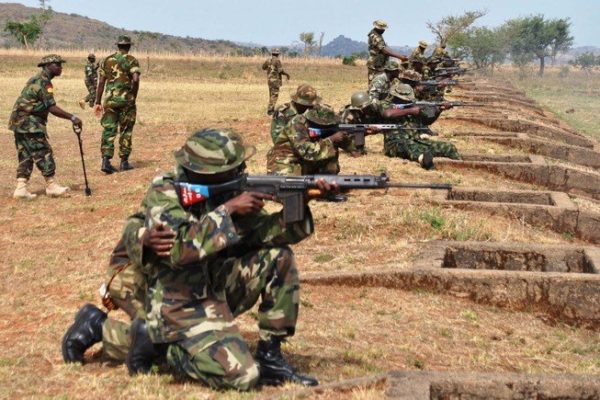
The Nigerian military has neutralised a high-value jihadist commander and 21 other insurgents in separate strikes across the north. Major General Michael Onoja, Director of Defence Media Operations, confirmed on Friday that troops killed Abu Yusu, the “Munzir” of Dursula, during a botched ISWAP raid in Yobe State. Meanwhile, a patrol in Benue State uncovered a sophisticated mobile communication cache including dozens of SIM cards and bank hardware.
The Yobe engagement occurred on 11 March 2026, when ISWAP fighters launched a multi-directional night attack on a military base in Goniri. Supported by close air assets, Sector 2 troops repelled the assault, leaving more than 20 terrorists dead. The death of Abu Yusu is a significant blow to the group’s local leadership structure. Soldiers recovered a variety of improvised explosive devices and small arms from the battlefield following the retreat of the surviving insurgents.
In the North-Central theatre, troops of Operation Whirl Stroke intercepted a criminal cell in the Katsina-Ala Local Government Area of Benue. Two suspects were killed in the ensuing firefight on 9 March. Beyond the standard recovery of an AK-47 and a motorcycle, the discovery of 82 SIM cards and multiple ATM cards suggests the cell was heavily involved in kidnapping and digital extortion.
The sheer volume of telecommunications equipment found in Benue points to a wider criminal network. Intelligence officers are currently analysing the SIM cards to trace the identities of accomplices and the origins of the bank accounts. These tools are the lifeblood of the ransom economy that has plagued the Middle Belt for years. Modern banditry in Nigeria is as much about logistics and finance as it is about kinetic force.
The military appears to be regaining momentum after several well-publicised setbacks earlier in the year. General Onoja emphasised that these operations are part of a broader strategy to secure the volatile border regions of Benue, Taraba, and Nasarawa. Restoring stability to these areas is essential for the resumption of farming activities, which have been stifled by constant threats of cattle rustling and communal clashes.
While the “neutralisation” of 22 combatants is a tactical success, the root causes of the insurgency remain stubborn. The military high command has reaffirmed its commitment to working with local authorities to prevent these “pockets of criminal elements” from reforming. For the residents of Goniri and Katsina-Ala, these victories offer a reprieve in a long, exhausting conflict.