
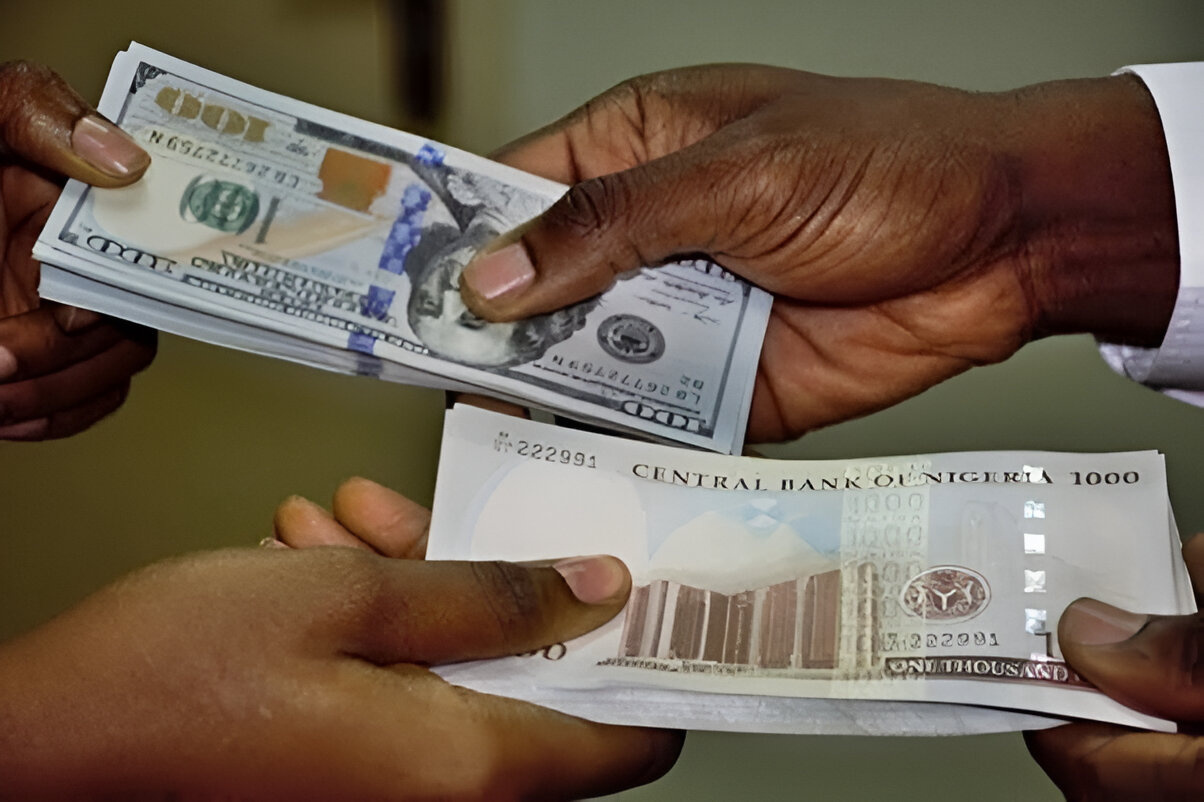
Nigeria’s naira held steady in early trade on Friday, 23 October 2026, exchanging at N1,330.95 against the American dollar on the official foreign exchange market. Screen-based trades opened within a tight range of N1,330.95 to N1,332.00 per dollar, giving commercial lenders in Lagos a welcome respite from wild price swings. Tight monetary policy preserves brittle calm. The central bank continues to choke domestic borrowing through high benchmark interest rates, which rewards foreign portfolio investors who park hot money in short-term government debt bills while domestic industrial borrowers shoulder suffocating credit charges.
Street money tellers tell a rather different story across major commercial centres in Lagos, Kano, and Abuja. Parallel market dealers and bureau de change operators quoted buying rates between N1,360 and N1,365, while selling prices reached between N1,375 and N1,380 per greenback. Dual exchange rates breed arbitrage schemes. The stubborn fifty-naira spread proves that retail buyers, small merchants, and self-sponsored overseas students still abandon commercial bank desks to buy cash notes on street pavements without filling tedious regulatory forms.
The price disparity turns routine trade settlement into a painful calculation for domestic businesses that import intermediate goods from Asian suppliers. Exchanging one hundred dollars through formal banking windows yields N133,095, whereas street merchants demand nearly N138,000 for the identical paper stack. Heavy retail demand drains cash reserves. Small traders who cannot secure commercial letters of credit absorb those extra costs directly, which inevitably feeds through into higher shelf prices for imported food, engine parts, and consumer electronics in open markets.
Central bank governor Olayemi Cardoso credits steady diaspora worker remittances and sustained foreign capital inflows for stabilising the official trading band over recent weeks. Hot portfolio capital remains remarkably fickle. Foreign asset managers buy high-yielding domestic treasury bills because the returns easily beat regional peers, yet this speculative cash will flee the moment political risk rises ahead of the next national election cycle. The monetary authorities cannot manufacture permanent exchange rate stability with foreign portfolio loans while oil production struggles to hit statutory targets.
True currency stability requires substantial non-oil exports and reliable domestic petroleum refining rather than cosmetic interventions in the interbank market. Paper reforms solve very little. Until industrial workshops in Ikeja and Aba can buy raw materials without scouring parallel markets for expensive cash notes, the naira will remain vulnerable to sudden global trade shocks. The government must fix basic port logistics and rural transport links to lower domestic production costs, because high interest rates alone cannot shield an import-dependent economy from external currency pressure.