
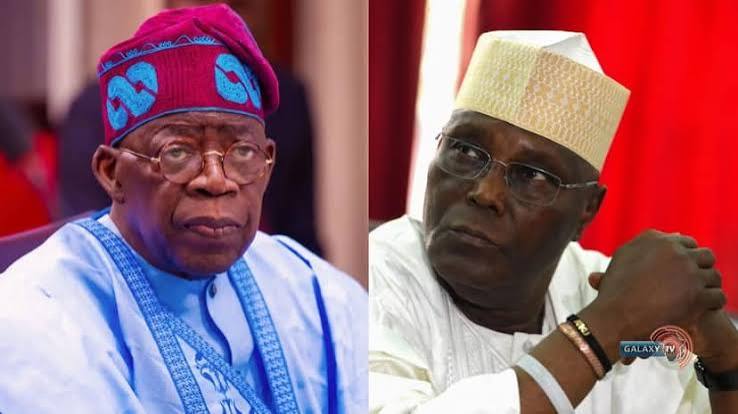
The All Progressives Congress Presidential Campaign Council says the ₦10 billion President Bola Tinubu approved for Ebola preparedness in June has not been spent, as Nigeria’s first confirmed Ebola case in 12 years turns into a fresh flashpoint in the 2027 campaign. The council’s spokesperson, Dele Alake, said in a statement in Abuja on Thursday that the Nigeria Centre for Disease Control and Prevention, the Federal Airports Authority of Nigeria and other agencies had funded the response from other available resources. He accused former Vice President Atiku Abubakar of politicising a public health emergency.
Alake was replying to a statement issued a day earlier by Atiku, the presidential candidate of the African Democratic Congress, demanding an account of the fund. “Where is the money?” Atiku asked, insisting that a press statement was no substitute for an audit. He also questioned why the Presidential Task Force set up in June was chaired by the President’s Chief of Staff, Femi Gbajabiamila, arguing that medical experts should lead the response.
The Atiku statement carried a title that rhymed the President’s first name with Ebola, and Alake took exception to it. “We believe linking and rhyming President Bola Tinubu’s name to Ebola only risks turning a serious health concern into a vehicle to ridicule the President,” he said. “A responsible opposition will applaud the Task Force for being responsive. But the Atiku camp always goes for cheap shots at the government.”
The fund itself dates back to June 9, when the President ordered the immediate release of ₦10 billion to strengthen preparedness against Ebola and other emerging health threats. That approval came weeks after an outbreak of the Bundibugyo strain was declared in the Democratic Republic of Congo in May. The same order created the task force now at the centre of the dispute.
Much of the argument turns on timing. The Federal Ministry of Health and Social Welfare confirmed on October 20 that a woman who flew in from Uganda had tested positive after receiving care for several days at a private hospital in Abuja. Atiku said she arrived on October 5, fell ill on October 7 and sought treatment on October 11, leaving a nine-day gap before public confirmation. The World Health Organisation’s account puts her arrival at October 3, though it agrees on the dates her symptoms began and she sought care.
Alake defended the handling of the case on medical grounds. “For anyone infected with the virus, the incubation period ranges from two to 21 days, with symptoms typically appearing eight to 10 days after exposure,” he said, adding that an infected person cannot transmit the virus before symptoms begin. He credited the surveillance network with alerting the government to the case and supporting the tracing of 44 contacts, who include health workers, patients, caregivers and fellow travellers.
The strain involved raises the stakes. The Coordinating Minister of Health and Social Welfare, Professor Muhammad Ali Pate, has confirmed that there is no licensed vaccine or specific treatment for Bundibugyo virus disease. The WHO regional director for Africa, Mohamed Janabi, said on Thursday that the continent now faced a more complex outbreak, with the virus reaching West Africa for the first time in this epidemic.
Pate’s briefing on Thursday offered some reassurance. He said the patient was recovering, with laboratory results showing significant improvement, and that high-risk contacts had been fully quarantined in a facility. He added that there was no evidence the virus had entered the wider community.
The briefing also addressed Atiku’s most political charge, that the ministerial press conference was designed to keep Nigerians away from campaign rallies and polling units. Pate ruled out any immediate suspension of campaigns or large public gatherings, though he said restrictions could be considered if the situation changed. Alake described Atiku’s allegation as speculative, saying the briefing only urged Nigerians to comply with the task force’s protocols.
Nigeria has been here before. In 2014, after a Liberian-American traveller brought the virus into Lagos, the WHO recorded 20 cases and eight deaths in the country, and health authorities monitored 894 contacts. The WHO declared Nigeria Ebola free on October 20, 2014, exactly 12 years before the latest case was confirmed, and credited rapid contact tracing for containing the outbreak.
Several questions remain open. Pate said additional resources had been released to support the response but did not give a figure, and no breakdown of spending so far has been made public. With the incubation period running up to 21 days, the monitoring of the 44 contacts over the coming weeks will show whether the Abuja case remains isolated.