
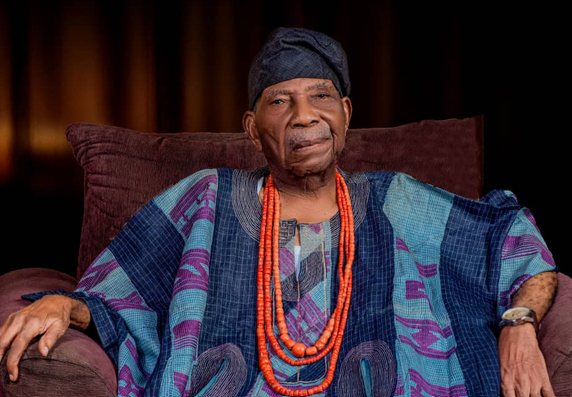
The family of late Afenifere patriarch Reuben Famuyide Fasoranti announced in Akure on Thursday, 22 October 2026, that his funeral service and final interment will take place on 17 December at St David’s Cathedral, Ijomu. The centenarian statesman died peacefully at his Ondo State residence on Tuesday, 20 October, closing a century of principled public engagement that shaped south-western regional thought through decades of military rule and civilian governance. Integrity remains a rare political currency. Ondo State Government Secretary Taiwo Fasoranti released the official schedule on behalf of the household, confirming that the rites will begin with a Christian wake at the patriarch’s residence inside Omolere School compound on Wednesday, 16 December, before a final thanksgiving service on 20 December.
Governor Lucky Aiyedatiwa led top regional officials to console the family in Akure, praising the former finance commissioner whose disciplined management of public funds under Adekunle Ajasin during the Second Republic built public schools and rural clinics without piling debt onto future generations. Frugal administrators leave clean ledgers behind. Obafemi Awolowo’s progressive movement found its moral compass in men like Fasoranti, who shunned flashy displays of wealth while building durable regional institutions that protected local interests against federal excess. President Bola Tinubu and former President Olusegun Obasanjo sent glowing tributes to Akure, recalling how the Afenifere leader offered wise counsel during difficult political moments without compromising his core democratic principles.
The seven-week interval before the December interment gives federal ministers, state governors, and regional socio-cultural groups ample room to organise an elaborate state send-off for the revered teacher and political thinker. Big funerals invite heavy state spectacle. Traditional leaders and civil society figures from across the federation plan to gather in the quiet provincial capital to honour a man who defended fiscal federalism, constitutional devolution, and honest public accounting until his final days. Politicians across the south-west will deliver long speeches praising his legendary modesty, yet few current officeholders show any appetite for the selfless public service that defined his entire career.
His departure creates a deep intellectual void within the pan-Yoruba political movement at a volatile moment when rising living costs and bitter partisan rivalries divide regional leaders. Shrewd elders keep ambitious factions united. Fasoranti spent his twilight years mediating between competing camps that fought for control of Afenifere, using his personal prestige to prevent total rupture even when partisan squabbles damaged the group’s national standing during recent general elections. Younger politicians now scramble to capture the moral authority that departed with the centenarian, but respect cannot pass down through party press releases or political backroom deals.
The funeral in December will draw thousands of mourners to the streets of Akure, turning a private family loss into an important national reflection on the slow decay of Nigeria’s founding political values. True public service demands real sacrifice. Current political leaders who gather at St David’s Cathedral will face the quiet challenge of Fasoranti’s austere century, which proved that public men can hold high executive office without looting state coffers or betraying the common folk. South-western politics will test whether a new generation can preserve that austere standard of public duty or abandon it entirely for the cheap rewards of transactional governance.