
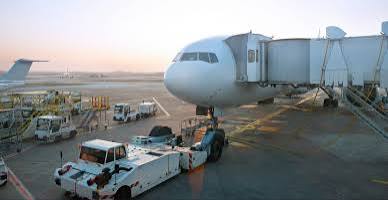
Nigeria sends about 90 per cent of the insurance premiums covering its aviation and maritime assets to foreign underwriters every year, a dependence that industry estimates put at roughly N500 billion, or about $360 million, in annual capital flight. The money leaves the country because local insurers have long lacked the capital to carry the large, high-value risks that airlines, shipping lines and port operators must insure.
The weakness sits awkwardly beside the sector’s headline numbers. Nigeria’s insurance industry generated N1.98 trillion in premiums in 2025 and held total assets of N4.4 trillion by the second quarter of that year, according to the National Insurance Commission. Yet insurance penetration, the value of premiums measured against the size of the economy, remains stuck at about 0.5 per cent, far below the African average of around three per cent.
Nigerian ships, airlines, cargo handlers, oil tankers, offshore rigs and port infrastructure routinely place their cover with Lloyd’s of London and other European and American firms. NAICOM figures show the country operates a fleet of several thousand vessels, while the Minister of Aviation and Aerospace Development, Festus Keyamo, has put the combined aircraft held by scheduled and private operators at several hundred, most of them insured offshore. Hull and liability values on a single aircraft can run from $50 million to $200 million, a level of exposure few local firms can absorb alone.
The practice persists despite a legal framework that requires Nigerian risks to be offered to local insurers first. The Nigerian Insurance Industry Reform Act, signed into law in 2025, consolidated older insurance laws and raised minimum capital sharply, taking non-life insurers to N15 billion, life firms to N10 billion and reinsurers to N35 billion, with a transition window that closed in 2026. NAICOM is counting on the recapitalisation to expand the capacity of operators, more than sixty of which had previously proved too thinly capitalised to underwrite complex aviation and marine risks.
The commission rejects the view that offshore placement reflects local failure. Its head of corporate affairs, Abba Halil, has argued that using foreign reinsurance to spread risk is standard global practice rather than a sign of weakness, and that Nigerian insurers already take part in high-risk business by retaining a share and ceding the rest to larger international reinsurers.
Maritime researchers see a deeper structural problem. Dr Eugene Nweke of the Sea Empowerment and Research Centre notes that Nigeria exports largely on a free on board basis and imports on a cost, insurance and freight basis, an arrangement that leaves the insurance decision in foreign hands at both ends of the trade. He estimates the maritime sector alone loses at least $60 million, about N82 billion, each year, and argues that treating local insurance as a question of economic security would help keep premiums, jobs and foreign exchange within the country.
For aviation, the cost of weak cover is both financial and human. The chief executive of Nigame Aircraft Consultancy, Femi Adeniji, estimates that the country loses between $200 million and $400 million a year to offshore aviation premiums, driven by a thin capital base, limited foreign reserves and weak international credit ratings. Analysts add that penetration in the sector still sits below one per cent even as industry assets have passed N3 trillion.
The stakes were laid bare almost twenty-one years ago. When Sosoliso Airlines Flight 1145 crashed at Port Harcourt on 10 December 2005, killing about 60 students of Loyola Jesuit College, Abuja, among others, the DC-9 did not carry enough insurance to meet the $100,000 minimum that the International Civil Aviation Organisation sets for each victim. The airline offered families $10,000 each, an amount regulators rejected. Nearly twenty-one years on, some of those families remain in court over compensation.
Whether the current reforms change that picture will depend on how quickly recapitalised insurers can build the capital, expertise and claims infrastructure to compete with established global players, and on how firmly regulators enforce the local-first rule. For now, the premiums, and the control that comes with them, still largely sit abroad.