
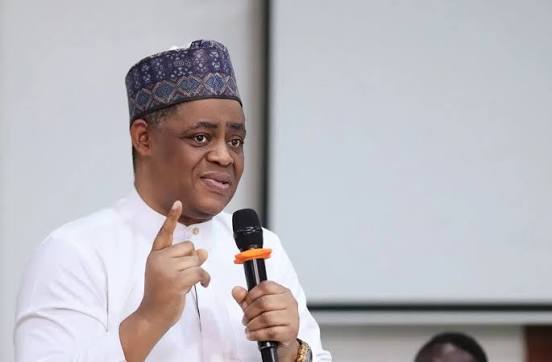
Nigeria’s High Commissioner to South Africa, Femi Fani-Kayode, has warned that rising xenophobic hostility towards Nigerians and other African nationals is straining the bond the two countries built during the struggle against apartheid. Speaking at the inaugural Nigerian Fair at the country’s consulate in Johannesburg, he said frustration within the Nigerian government over the killing and harassment of its citizens was growing, and that patience in official circles was wearing thin.
His remarks come after a turbulent year in which waves of anti-immigrant protests, shop closures and targeted attacks have swept through South African cities. Groups such as Operation Dudula have pushed migrants away from clinics, schools and markets, and fresh ultimatums ordering foreigners to leave have deepened the alarm among African communities.
Fani-Kayode, a former aviation minister who took up the posting in late October and is also accredited to Lesotho and Eswatini, has kept the safety of Nigerians at the centre of his early mission. He has previously put the number of Nigerians killed in South Africa at more than 100 between 2022 and September 2026, including over 30 he said died at the hands of the police and the defence force. A Nigerian cleric and another migrant were killed in Johannesburg within days of each other in early September, pushing this year’s toll, by his count, to eight.
The envoy anchored his appeal in history. He recalled that Nigeria was among the firmest backers of the anti-apartheid movement, arguing that South Africa’s freedom was never the work of its black population alone but a cause carried by frontline African states and supporters across the world. He urged South Africans to meet hostility with the spirit of Pan-Africanism, mutual respect and cooperation.
Much of that solidarity carried a real price. Nigeria set up the Southern Africa Relief Fund in 1976, widely remembered as the Mandela Tax, through which civil servants surrendered a share of their salaries while schoolchildren gave up lunch money to support the African National Congress and other movements. Nigeria also offered scholarships to South Africans, sheltered exiled leaders, campaigned at the United Nations and enforced an oil embargo estimated to have cost it about $41 billion in lost revenue.
The figure most often cited for Nigeria’s total contribution is around $61 billion between 1960 and 1994, an estimate traced to the South African Institute of International Affairs covering financial, economic and diplomatic support over more than three decades. Independent fact checkers have described it as broadly consistent with the historical record, though the exact sum cannot be confirmed. That history sits against a grim backdrop that included the Sharpeville massacre of 1960, when security forces killed 69 people protesting against apartheid pass laws.
Fani-Kayode said the attacks reflected a minority driven by Afrophobia rather than the will of most South Africans, and he appealed to Nigerians not to answer violence with reprisals. He ruled out any severing of economic ties, insisting the continent’s two largest economies must keep working together even as grievances are addressed, and gave assurances that the government would do all it could to protect Nigerians in the country.
The warning lands on an already tense relationship. Earlier in the year Nigeria summoned South Africa’s envoy in Abuja, issued a set of demands for stronger protection and faster prosecutions, and repatriated close to 1,500 citizens as the violence spread. For now, the two governments remain caught between a shared liberation history and a present marked by fear, with the work of rebuilding trust falling, in part, to the diplomat now making that case in Johannesburg.