
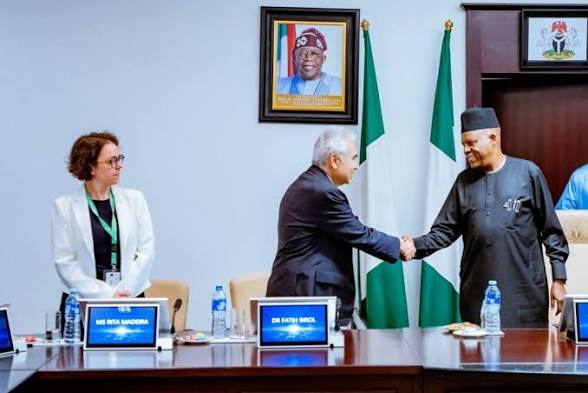
Nigeria signed a comprehensive Joint Work Programme with the International Energy Agency in Abuja on Thursday, 3 September 2026. The bilateral pact seals the country’s formal entry as an Association Country of the Paris-based body, following unanimous board approval in July. Speaking on behalf of President Bola Tinubu, Vice-President Kashim Shettima hailed the partnership as proof that the administration’s market reforms command global respect. The deal commits the energy watchdog to help Abuja build verified data systems, shape gas markets, and attract fresh capital. Nigeria becomes the first member of the Organisation of the Petroleum Exporting Countries to take up association status with the agency. Western capitals want reliable partners as Middle Eastern wars squeeze international energy trade. Good data must now replace political guesswork in national planning. Reliable numbers attract serious money.
IEA Executive Director Fatih Birol stated that the initiative aims to double total energy investment flowing into Nigeria within five years. Upstream oil and gas spending across the continent slumped from $68 billion in 2016 to $37 billion in 2025. That steep drop hit regional treasuries hard, leaving major African producers starved of long-term development capital. Birol argued that Nigeria holds the natural gas and solar resources needed to reverse this decline. The agency pledged to train local experts and provide technical advice on methane abatement, clean cooking, and renewable grids. Yet international lenders remain wary of allocating long-term funds without clear balance sheets. Investors demand policy consistency before they release billions for deepwater extraction. Promises of capital require bankable legal frameworks on the ground.
The pact addresses a long-standing weakness in domestic policymaking: the absence of reliable, verified sectoral data. Energy Commission Director-General Mustapha Abdullahi admitted that past planning efforts proceeded without a formal institutional framework. Civil servants in Abuja routinely draft national master plans using outdated estimates and unverified industry surveys. The Joint Work Programme embeds agency statisticians directly alongside local regulators to build credible tracking mechanisms. Transparent numbers on flaring, grid losses, and domestic gas consumption will expose systemic inefficiencies across the state-run petroleum company. Foreign capital shuns opaque environments where crude output tallies remain contested state secrets. Accurate data forms the primary foundation for investor confidence. Transparent accounting leaves corrupt middlemen nowhere to hide.
The agreement also signals a delicate geopolitical rebalancing by the Tinubu administration. Nigeria maintains its traditional loyalties inside the OPEC cartel while seeking closer technical ties with Western consumer nations. Minister of State for Petroleum Resources Ekperikpe Ekpo led negotiations with the agency’s governing board to secure unanimous backing from America, Japan, Britain, and Germany. Ambassador Sola Enikanoaiye, speaking for Foreign Minister Bianca Odumegwu-Ojukwu, stressed that Nigerian envoys in Paris worked to protect sovereign economic interests. Abuja wants to secure Western climate funds and infrastructure loans without surrendering its sovereign right to exploit domestic fossil reserves. Western donors frequently lecture African states on rapid decarbonisation while burning coal at home. Nigeria needs gas revenues to industrialise its economy today. Pragmatism guides modern foreign policy.
Natural gas and clean cooking initiatives form the immediate core of the bilateral work agenda. Tens of millions of Nigerian households still cook over open firewood fires, destroying southern forests and breathing toxic fumes. The partnership establishes binding metrics to cut methane leaks across obsolete pipeline corridors. Recapturing flared gas provides an immediate commercial supply for domestic fertiliser plants and gas-to-power turbines. Local industrial users continue to face chronic power cuts while oil fields burn off billions of cubic feet of usable fuel. Linking technical planning to physical pipeline connections will test the administrative resolve of the petroleum ministry. Good intentions mean nothing without steel pipes laid in the dirt. Real progress requires actual gas deliveries to local stoves.
The push to double energy investment collides with brutal domestic operating realities. Armed oil theft syndicates in the Niger Delta siphon off substantial crude volumes each day, scaring away foreign offshore drillers. The Manufacturers Association of Nigeria warned this week that basic industrial utilities shrank by over ten per cent in the second quarter. Power distribution firms still leave four million grid customers without physical meters, encouraging billing fraud and non-payment. International energy companies will not pour equity into regional projects if domestic utilities cannot collect retail revenue. The presidency must fix broken transmission grids before courting global solar consortia. Foreign technical assistance cannot substitute for domestic structural discipline. Broken wires defeat the best economic master plans.
The success of the Joint Work Programme will depend on whether local agencies implement its data frameworks. Nigerian ministries have a long history of signing international cooperation charters only to let the files gather dust in bureaucratic cabinets. The state must subject its national oil company and power regulators to independent, verifiable data audits. Central bank authorities must also ensure that foreign investors can repatriate earnings without facing long delays at official currency desks. Subnational governments need to align state energy laws with federal transition roadmaps to avoid regulatory conflict. The IEA partnership gives the administration a rare international platform to clean up its energy ledgers. Abuja has secured a prestigious seat at the global policy table. Turning international goodwill into cheap, reliable electricity remains the real test.