
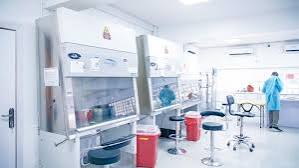
Nigeria’s ambition to achieve greater independence in medical research, vaccine development and disease surveillance continues to face infrastructure and funding challenges, with the country still sending a considerable number of biological samples overseas for genomic sequencing.
The Director General of the Nigerian Institute of Medical Research (NIMR), Prof John Obafunwa, disclosed this at the institute’s 2026 Annual International Science Week Conference in Lagos, where he called for increased investment in laboratories, computing facilities and scientific manpower.
Obafunwa also disclosed that financial constraints had stalled the establishment of a major laboratory complex proposed for 2025, underscoring the difficulties facing research institutions seeking to expand their capacity.
Speaking on the conference theme, “Health Research in the Era of Advanced Technology,” he said Nigeria must develop the infrastructure and expertise required to benefit from advances in genomics, molecular diagnostics and other emerging medical technologies.
Genomic sequencing enables scientists to examine the genetic composition of organisms, identify disease variants and investigate inherited medical conditions. Its applications extend to cancer research, infectious disease surveillance, drug development and personalised medicine.
Obafunwa cautioned that purchasing sophisticated equipment without adequately trained personnel and supporting facilities would do little to address Nigeria’s research limitations. He also stressed the importance of protecting sensitive medical information generated through research.
“Health data from Nigerian patients and samples is a national asset,” he said.
Nigeria’s current challenges persist despite significant achievements in genomic research during the COVID-19 pandemic. Following the confirmation of the country’s first coronavirus case on February 27, 2020, Nigerian scientists successfully produced Africa’s first SARS-CoV-2 genome sequence through collaboration involving NIMR, the Nigeria Centre for Disease Control and the African Centre of Excellence for the Genomics of Infectious Diseases at Redeemer’s University, Ede, Osun State.
Data from the World Health Organisation (WHO) show that Nigeria had only two laboratories with sequencing capacity before the pandemic. By February 2022, the country had expanded its network to four laboratories, with the capacity to complete approximately 500 sequences monthly.
However, subsequent research revealed significant geographical disparities in genomic surveillance. A scientific study published in 2025, which examined 7,759 Nigerian COVID-19 sequences collected between February 2020 and March 2023, found that 42.7 per cent originated from the South West, 27.2 per cent from the North Central and 23.6 per cent from the South South.
The North East, North West and South East collectively accounted for approximately 6.4 per cent of the samples analysed. Eleven states contributed no more than 10 sequences each throughout the study period, illustrating the uneven coverage of genomic surveillance during the pandemic.
The figures relate specifically to COVID-19 surveillance rather than Nigeria’s entire genomic research capacity, but they provide an indication of the historical disparities in sample collection and scientific coverage across the country.
Another milestone was recorded in November 2024 when researchers at Redeemer’s University successfully sequenced an entire human genome locally. The achievement demonstrated Nigeria’s growing technical capabilities beyond infectious disease research.
Nevertheless, dependence on overseas laboratories can expose research institutions to additional transportation expenses, foreign exchange costs and delays in obtaining results. Obafunwa did not disclose the number of samples currently sent abroad annually or the financial cost of outsourcing their analysis.
The conference chairman and Chancellor of Ekiti State University, Dr Tunji Olowolafe, said Nigeria should have developed sufficient scientific and manufacturing capacity to produce vaccines domestically.
He acknowledged NIMR’s contributions to the country’s response to Ebola and COVID-19, arguing that indigenous research institutions must become central to efforts to strengthen pharmaceutical manufacturing and preparedness for emerging diseases.
His position comes against the background of wider continental efforts to reduce dependence on imported vaccines. Africa CDC has set a target for the continent to manufacture 60 per cent of its vaccine requirements by 2040.
Delivering the keynote address on behalf of the Chief Medical Director of Lagos State University Teaching Hospital, Prof Adetokunbo Fabanwo, Prof Adebowale Adekoya identified molecular diagnostics, genomic medicine, robotics, telemedicine and advanced computing among technologies capable of improving healthcare delivery.
He advocated dedicated funding for research implementation, closer partnerships between universities, hospitals and industries, and the establishment of centres that would help convert scientific discoveries into treatments and other practical medical interventions.
For Nigeria, the challenge extends beyond establishing laboratories. Sustained funding, reliable infrastructure, equitable access to research facilities and the retention of skilled scientists will remain important to expanding domestic capacity and reducing dependence on foreign institutions.