
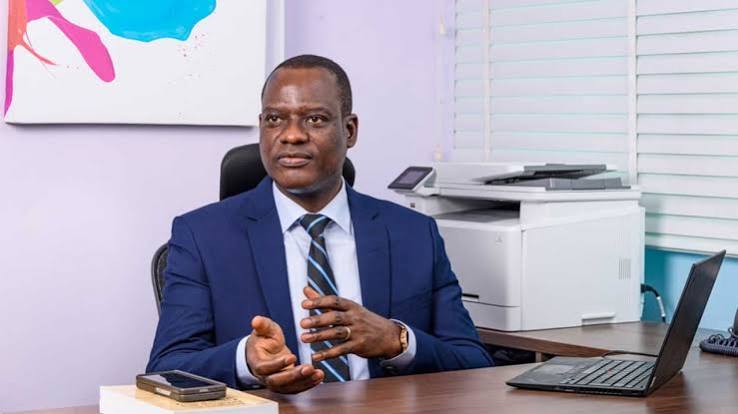
The Minister of Finance and Coordinating Minister of the Economy, Taiwo Oyedele, has said the Federal Government has no plan to impose a tax on fuel, describing claims to the contrary as “fake news”. His denial comes as Nigerians pay about ₦1,400 for a litre of petrol and as organised labour presses the government to bring pump prices down. It follows days of public reaction to remarks he made in a television interview abroad.
In a post on X on Tuesday, Oyedele said, “In my interview with ARISE News, I was clear: a fuel tax is not on the table.” He added, “Having removed the fuel subsidy, it would be insensitive for government to impose a fuel tax at this time.” The minister said some online reports had twisted his message, and urged Nigerians to ignore the headlines and watch the interview for themselves.
The interview took place on the sidelines of the 2026 annual meetings of the IMF and the World Bank in Bangkok, Thailand. Oyedele argued there that a fuel tax would have been pointless while petrol was subsidised, because the government would effectively have been paying the tax itself. A recording of the same interview, however, shows him saying such taxes could come later. “At the appropriate time, when the economy has stabilised and income level will be able to accommodate it, those taxes will come. Not because we want to impose taxes,” he said.
His post on X rejected a fuel tax “at this time”. It did not say whether that position would hold once incomes improve, the condition he set out during the interview. The government has not issued any further statement on its long-term stance.
The subject has a sensitive history. In September 2025, while chairing the Presidential Committee on Fiscal Policy and Tax Reforms, Oyedele said on Channels Television that a 5 per cent surcharge on fuel was first enacted in 2007 but never implemented because the government was subsidising petrol. He argued at the time that the surcharge, when implemented, would help fund road infrastructure. Labour unions and civil society groups opposed it, warning it would deepen hardship.
For now, the government is giving up revenue on petrol rather than collecting it. On October 8, Oyedele said the Federal Government had waived taxes and duties on petrol worth more than ₦3.3 trillion in the year to September 30, 2026. He also announced a 30-day discount at NNPC stations, under which NNPC Retail sells at cost with priority for public transport operators. That arrangement ends on October 31, while the government negotiates a ₦1,350 per litre ceiling on the landing cost of petrol, to be reviewed monthly.
The pressure on motorists is easy to measure. Petrol sold for under ₦200 per litre before the subsidy regime ended in May 2023. It cost about ₦830 in parts of the country before the Middle East conflict escalated in February 2026 and pushed crude oil above $100 per barrel. At around ₦1,400 today, the price is roughly 69 per cent higher than it was eight months ago. Dangote Petroleum Refinery’s gantry price has stood at ₦1,350 since September 12.
Official figures show prices rising more slowly, though food remains a strain. The National Bureau of Statistics put headline inflation at 14.63 per cent in September 2026, down from 15.39 per cent in August and 20.98 per cent a year earlier. Food inflation, however, stood at 19.59 per cent, while core inflation, which strips out farm produce and energy, was 12.95 per cent. Lagos recorded the highest food inflation of any state at 34.40 per cent.
Oyedele used the Bangkok interview to set out his broader view of the problem. “Instead of trying to suppress prices, think about how to grow income faster than prices rise,” he said. Labour is pushing a different remedy. The Nigeria Labour Congress gave the government two weeks from October 9 to cut petrol prices to the level prevailing when the ₦70,000 minimum wage was signed in 2024, and to begin new wage negotiations before the end of October.
Three dates now frame the debate. The NLC ultimatum runs out around October 23, the NNPC discount expires on October 31, and the first monthly review of the landing cost ceiling is due after that. How the government handles each will show whether the minister’s assurance on fuel tax eases public anxiety over petrol prices.