
Archaeologists excavating an 11,000-year-old Neolithic village in eastern Turkey have unearthed the world’s oldest known stone narrative relief, offering a rare glimpse into the beliefs of early settled humans.
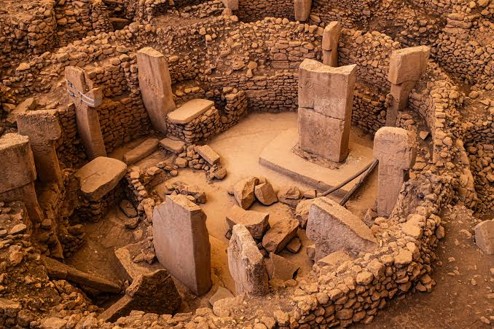
Deep within the foothills of the Taurus Mountains in eastern Turkey, a series of remarkable archaeological discoveries is reshaping the scientific understanding of early human civilisation. For decades, residents in the quiet village of Sayburç unwittingly repurposed ancient, T-shaped stone pillars from surrounding fields to build ordinary garden walls. Today, ongoing excavations reveal that those very stones belonged to a complex pre-agricultural settlement built roughly 11,000 years ago, marking the dawn of settled human existence.
Excavations led by the Şanlıurfa Museum and Istanbul University archaeologist Eylem Özdoğan have uncovered approximately 70 Neolithic structures at the site. The findings reveal a tightly integrated community featuring both individual dwellings and communal gathering spaces. Equipment designed for grinding grain alongside large stone basins suggests that these early hunter-gatherers were actively processing crops and potentially brewing early forms of beer, providing tangible evidence of the transition from nomadic foraging to permanent village life.
World’s Earliest Narrative Relief
Among the vast array of artefacts recovered at Sayburç, a horizontal stone carving embedded into a communal bench stands out as an unprecedented historical milestone. The artwork depicts a linked narrative scene featuring human and animal figures interacting in dramatic sequence. On the left side of the panel, a profile of a massive bull with prominent horns faces a crouching human male figure whose six-fingered left hand is raised in a gesture of engagement.
To the right, a central male figure carved in high relief faces forward with pronounced eyes and thick lips, standing calmly between two snarling leopards with visible teeth and curled tails. The central figure holds his erect phallus, an image widely associated with prehistoric concepts of virility, survival, and communal continuity across the broader region. While neighbouring Stone Age sites such as Göbekli Tepe and Karahan Tepe feature isolated animal statues and individual human depictions, the Sayburç relief represents the oldest known example of a progressive, sequential story carved in stone.
Deciphering the Ancient Message
The exact meaning of the carved narrative remains a subject of active scholarly discussion. Various researchers have proposed that the artwork depicts a dramatic encounter with wild beasts, a formal rite of passage for young hunters, or a symbolic tale centred on fertility and group survival.
Dr. Özdoğan emphasises that pinpointing a single interpretation is less vital than understanding how the public artwork functioned within the society. In an oral culture lacking written language, large public carvings served as visual anchors to reinforce social rules, preserve collective memory, and transmit shared cultural values across generations.
Rituals of Life and Death
The excavation of residential structures at Sayburç has also provided crucial insights into how early settled humans related to mortality. Residents frequently buried deceased relatives beneath the floors of their homes, keeping them physically integrated into daily household life.
Recent digs uncovered a small carved figurine depicting a human face with its mouth explicitly sealed shut. Elsewhere, mixed deposits of human and animal bones, combined with regional artistic motifs showing scavenging birds alongside headless human bodies, suggest that the community may have practised forms of excarnation or sky burials, allowing nature to process the deceased before final interment.
Work is currently underway to transform the Sayburç archaeological site into an open-air museum, protecting the prehistoric structures while allowing visitors worldwide to witness the origins of human storytelling.