
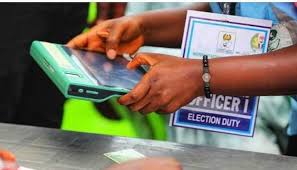
Only 75 of 342 registered voters had been accredited and cast their ballots at Ojude Ala I polling unit in the Iperin Registration Area of Ila Local Government Area of Osun State as of 12:40pm on Saturday, after repeated glitches with the Bimodal Voter Accreditation System, BVAS, slowed the voting process.
The figure means only about 22 per cent of registered voters at the polling unit had completed accreditation and voting by that time, leaving more than 260 voters waiting to cast their ballots.
The development was reported by Vanguard during the ongoing Osun governorship election. The affected polling unit is one of several units in the Iperin Registration Area, which has historically been part of Ila’s electoral structure.
A member of the local chapter of the National Road Transport Workers’ Union, Comrade Olaniyan Bamiduro, said the BVAS device had malfunctioned three times since accreditation began.
“The BVAS has broken down three times. If not for this problem, I believe everybody would have been attended to by now,” Bamiduro said, according to Vanguard’s report.
An INEC ad hoc official at the polling unit also confirmed that the technical problem was causing delays, saying efforts were being made to resolve the issue and attend to voters whose accreditation had not been completed.
The situation has placed the spotlight once again on the reliability of BVAS, which is central to INEC’s voter accreditation process.
The 75 accredited voters represented approximately 21.9 per cent of the 342 registered voters at the polling unit.
Put differently, about 267 registered voters had yet to complete the accreditation and voting process at the time the figure was recorded.
The number should not, however, be interpreted as the final turnout at the polling unit because voting was still ongoing when the figures were reported. The more important question is whether the affected voters would eventually be accredited and allowed to vote before the close of the exercise.
The incident also illustrates why raw turnout figures recorded during voting must be treated differently from final election results. A low number of accredited voters at midday may reflect delays rather than low voter interest.
BVAS is designed to verify voters through biometric and facial authentication. The system has become a central component of Nigeria’s efforts to strengthen voter accreditation and reduce the possibility of impersonation.
INEC’s previous election records show that Osun has used thousands of polling units in past elections. Its 2023 general election report lists 3,763 polling units in the state, underlining the scale of the logistical challenge involved in deploying and maintaining electoral technology across the state.
A technical failure at one polling unit may affect only the voters assigned to that location. Repeated failures across multiple polling units, however, could create wider delays and raise questions about equipment readiness, technical support and contingency arrangements.
That distinction will be important in assessing the overall performance of BVAS in Saturday’s election.
The Ila incident is not the first time BVAS problems have attracted attention during an Osun election.
Reports from the 2022 Osun governorship election documented instances of BVAS malfunctioning at polling units, although election observers also reported that the technology worked successfully in the overwhelming majority of locations they monitored.
Yiaga Africa reported after the 2022 election that BVAS functioned properly in 92 per cent of the polling units it observed. It recorded malfunctions in 7 per cent of the units, where the machines were subsequently repaired, while 1 per cent involved replacement of malfunctioning devices.
The historical figures do not establish that the current problems have the same cause or scale. They do show, however, that technical reliability has remained an important operational issue in the deployment of electoral technology.
The immediate concern for voters at Ojude Ala I is whether the technical problem will be resolved quickly enough for those waiting to vote.
Beyond the polling unit, the eventual assessment of the election will need to establish how widespread similar BVAS failures were across Osun.
Among the key questions will be how many polling units experienced technical difficulties, how many voters were affected, how quickly faulty equipment was repaired or replaced and whether any voters were unable to vote because of accreditation problems.
The Electoral Act 2022 provides a legal framework for dealing with technological failures during accreditation. Consequently, the significance of a malfunction cannot be determined simply from the fact that a BVAS device stopped working. The circumstances, response by election officials and effect on voting must also be established.
For the voters at Ojude Ala I, the immediate issue remains straightforward. Hundreds of people were still waiting at the time the 75 accredited voters were recorded.
Whether they eventually voted will provide a more meaningful measure of the impact of the glitch than the midday figure alone.