
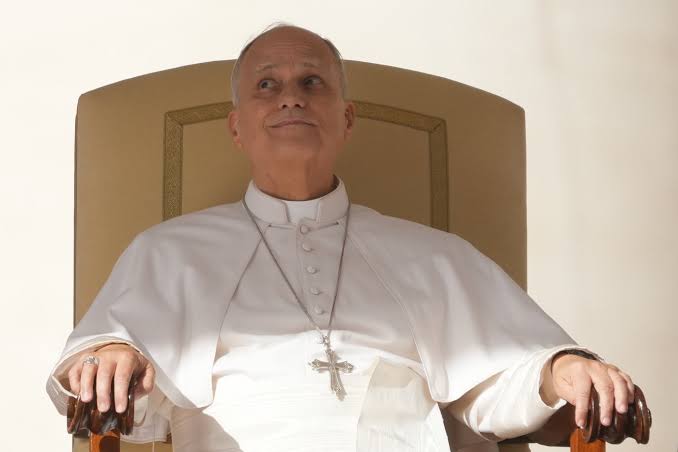
Pope Leo XIV will not need chemotherapy, radiotherapy or any other further treatment after surgery to remove a cancerous tumour from his right lung, his doctors said on Wednesday. The 71-year-old pontiff’s medical team said final tests showed the cancer had not spread beyond the tissue removed. The update, released by the Holy See Press Office, came hours after Leo held his first general audience in St Peter’s Square since the operation.
The statement was signed by the pope’s personal physician, Dr Luigi Carbone, and Professor Stefano Margaritora, head of thoracic surgery at Rome’s Agostino Gemelli University Hospital, who led the surgical team. They said final histological and molecular biology tests had confirmed that the tumour was a pulmonary adenocarcinoma and that “the disease was localised”. According to the doctors, “a subsequent oncological evaluation confirmed that no further treatment is necessary.”
The diagnosis caught the Catholic world by surprise. Leo told the faithful on October 11 that he would undergo surgery to remove a nodule from his lung. Margaritora later explained that the nodule was discovered by chance during routine abdominal examinations, the kind of incidental finding doctors often encounter in imaging done for other reasons.
The operation took place on October 13. According to his doctors, the pope spent about three hours in the theatre, with the procedure itself lasting roughly 90 minutes. Surgeons removed the lower lobe of his right lung using a minimally invasive, video-assisted technique, and the Vatican said there were no complications.
Leo was discharged on October 17 and returned to the Vatican. On Sunday, he told pilgrims he would resume his duties gradually. He has also said he intends to go ahead with a long-planned visit to Uruguay, Argentina and Peru from November 6 to 17, a trip with personal meaning for a pope who spent much of his ministry in Peru.
Adenocarcinoma is the most common form of lung cancer, accounting for about 40 per cent of cases. Lung cancer itself is the world’s leading cancer killer. Data from the International Agency for Research on Cancer show that about 2.5 million people were diagnosed with the disease in 2022, while about 1.8 million died from it, close to one in every five cancer deaths globally.
How early the disease is caught makes a large difference to survival. Figures from the United States National Cancer Institute show that roughly two in three patients whose lung cancer is found while still confined to the lung survive at least five years. That figure drops below 10 per cent once the disease has spread to distant organs, which is why doctors place great weight on the localised finding in the pope’s case.
The news offers relief to a Church that has spent much of the past decade watching its leaders’ health closely. Leo’s predecessor, Pope Francis, had part of a lung removed as a young man in Argentina. He spent 38 days at Gemelli in early 2025 with double pneumonia and died on April 21 that year, weeks after his discharge. Benedict XVI resigned in 2013, citing his declining strength, while John Paul II’s long illness shaped the final years of his papacy.
Gemelli has become closely tied to papal health over the decades. John Paul II was rushed there in 1981 after he was shot in St Peter’s Square, and returned several times during his pontificate. Francis also underwent colon surgery there in 2021 and abdominal surgery in 2023.
Leo, born Robert Francis Prevost in Chicago, was elected on May 8, 2025, becoming the first pope from the United States. Before his election, he served as a missionary in Peru, later becoming Bishop of Chiclayo, and acquired Peruvian citizenship. He leads a Church of about 1.4 billion members, roughly one in five of whom live in Africa, including Nigeria, which has one of the largest Catholic populations on the continent.
Whether the planned South American tour goes ahead in full will be the first major test of his recovery. Margaritora has said recovery from this type of surgery usually takes a couple of weeks. The Vatican has not yet released a detailed programme for the November visit, and doctors have not said whether any changes to the pope’s schedule will be needed.