
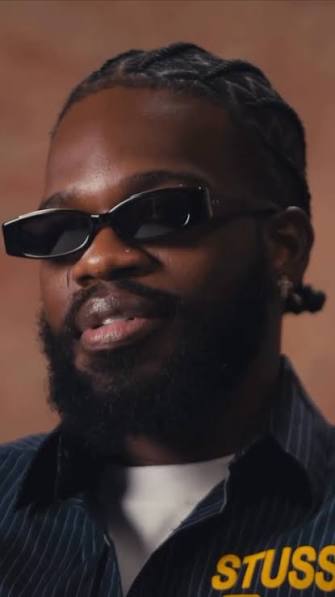
Seven months after a stray bullet struck his hip and pulled him away from the screen, comedian and actor Samuel Perry, better known as Broda Shaggi, has given his fullest account yet of the shooting. In a video posted on his YouTube channel on Wednesday, the 33-year-old said the incident left him unconscious, unable to move one leg and unsure whether he would survive. “All that was in my mind was just to survive, I didn’t want to die,” he said.
Shaggi said the shooting happened on March 9, 2026, after he and his team had finished a brand activation and were driving away. “It was just a normal day, a day I will go out for any brand activation, until the devil decided to show up,” he recalled. He said he heard a loud bang, the car fell silent, and he touched his hip to find blood.
Accounts that circulated in March placed the incident near the Sango-Ota bridge in Ogun State, where he was said to have been filming a skit on a Sunday afternoon. His own version differs on what he was doing, and the date he gives fell on a Monday. At the time, the Ogun State Police Command said it could not confirm that the shooting happened within its jurisdiction, and its spokesperson, Oluseyi Babaseyi, cautioned against spreading unverified claims while investigations continued. No official account has since identified who fired the shot.
The comedian said he only regained awareness at the first hospital, where he received first aid before doctors decided he needed to be moved. He was initially taken to a private hospital in Alakuko, Lagos, and later transferred to Duchess Hospital in Ikeja. “Minutes later, everything was calmed, but then I could not move my leg, that was when it dawned on me that what happened could change everything,” he said.
He underwent surgery in Nigeria but was told he needed further treatment and physiotherapy, which took him to Dubai for another operation. For an entertainer whose brand rests on loud, physical comedy, the fear went beyond his health. “I was worried how do I do ‘Oya hit me’ without my leg,” he said, referring to one of his best-known routines.
Shaggi said he later tried to make sense of the months away from work, noting that he had barely taken a break since 2018. He can now stand and walk without crutches, though he still uses them for support. “It is a new reality, and I have not fully recovered yet,” he said, adding that he was grateful the bullet hit his hip and not a more vital part of his body.
His case is the most high-profile in a steady run of Nigerians hit by bullets not meant for them this year. On January 27, a commercial motorcyclist, Nwanchor Uwaezuruike, died in Abakaliki, Ebonyi State, after a police officer on patrol near the Spera-in-Deo flyover allegedly fired into the air. On April 4, a young girl was killed in the Ngomari area of Maiduguri when vigilantes attached to a local government chairman’s escort allegedly fired shots at a wedding, and troops of Operation Hadin Kai arrested five suspects.
In September, the rights group MOTION Apapa demanded an independent probe after an 11-year-old girl, Mistura Murtala, and an elderly man, Sodiq Aremu, were allegedly shot by police officers who tried to stop a naming ceremony in the Orile area of Lagos. This week, the family of a 26-year-old security guard in Ogun State demanded justice after he died from a gunshot wound to the neck on October 14, allegedly fired by a police officer during a robbery alarm. A representative of his employer described the shooting as an accidental discharge, and said the officer had been detained.
Measuring the problem is difficult because Nigeria keeps no public, centralised record of stray bullet injuries or accidental discharges. Most cases surface only when victims, families or rights groups speak out, and outcomes of investigations are rarely published. The wider pool of weapons adds to the risk: the Geneva-based Small Arms Survey estimated in 2017 that Nigerian civilians held about 6.2 million firearms, many of them unregistered.
For Shaggi, the focus now is a return to work. He told fans that several projects are lined up as he continues his recovery. “Throughout this period, one thing I keep saying is that I am grateful because it could have been worse,” he said.