
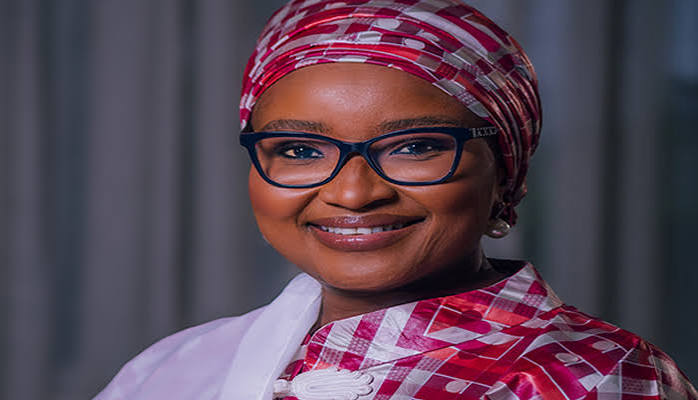
Nigerian paediatrician and cancer campaigner, Dr Zainab Shinkafi-Bagudu, has taken office as President of the Union for International Cancer Control (UICC), becoming the first African to lead the Geneva-based organisation since it was founded in 1933. She was formally welcomed into the role on Tuesday, October 20, at the UICC General Assembly, which met virtually under the chairmanship of her predecessor, Ulrika Årehed Kågström of Sweden. The Nigerian Cancer Society (NCS), which announced the development in Abuja, described it as a landmark for Nigeria, Africa and the global cancer community.
Her presidency was two years in the making. UICC members elected her President-elect at their General Assembly on October 8, 2024, after she had spent six years on the organisation’s Board of Directors. At Tuesday’s meeting, members also elected a new board for the 2026 to 2028 term and chose Dr C. S. Pramesh, Director of Tata Memorial Hospital in India, as the next President-elect.
The UICC carries considerable weight in global health. It moved its headquarters to Geneva in 1948 to sit close to international health bodies, and it maintains the TNM classification that doctors around the world use to stage tumours. The organisation also founded the International Journal of Cancer in 1966 and leads the annual World Cancer Day campaign every February 4.
Born in Lagos in 1968, Shinkafi-Bagudu founded the Medicaid Cancer Foundation in 2009, with a focus on awareness, screening and support for patients in underserved communities. She served as First Lady of Kebbi State while her husband, Abubakar Atiku Bagudu, was governor between 2015 and 2023. By the time she stood for election in 2024, she had practised medicine for three decades and run a diagnostic centre for 18 years. Only four women held the UICC presidency before her, beginning with Canada’s Mary Gospodarowicz in 2012.
The NCS President and Chief Executive Officer, Prof. Abidemi Omonisi, described her emergence as “the culmination of years of dedicated service, strategic leadership, and tireless advocacy”. The Society said her tenure offered a chance to amplify the voices of patients and survivors, strengthen cancer organisations and push for a system in which survival is not decided by income or location. It pledged to work with national, regional and international partners on public education, research, capacity building and access to care.
The figures at home explain why her new platform matters to Nigerians. According to the International Agency for Research on Cancer (IARC), Nigeria recorded 127,763 new cancer cases and 79,542 cancer deaths in 2022. That is roughly six deaths for every ten new diagnoses, a ratio that health workers have long linked to late presentation, high treatment costs and limited facilities.
Women carry the heavier load. IARC’s GLOBOCAN 2022 data show 79,667 new cases among Nigerian women against 48,096 among men, with deaths at 46,637 and 32,905 respectively. Breast cancer alone accounted for 32,278 new cases, a quarter of all diagnoses in the country, while prostate cancer made up 37.5 per cent of new cases among men.
The wider regional picture is similar. Sub-Saharan Africa recorded 847,974 new cases and 558,878 deaths in 2022, a death to case ratio of about 66 per cent. Globally, IARC estimated about 20 million new cases and 9.7 million deaths in the same year, meaning fewer than half of those diagnosed worldwide died, compared with nearly two thirds in the region.
The outlook points to growing pressure on Nigeria’s health system. IARC projections put the country’s burden at 166,379 new cases and 104,709 deaths by 2030, increases of about 30 and 32 per cent on the 2022 figures. A World Health Organisation analysis published in February 2026 estimated that 37 per cent of all new cancer cases worldwide in 2022 were linked to preventable causes, with cervical cancer driven almost entirely by the human papillomavirus. Nigeria introduced the HPV vaccine into its routine immunisation programme for girls aged nine to 14 in October 2023.
Shinkafi-Bagudu’s term runs until 2028. She has framed her central task as finding ways for scientific progress to reach people whose geography, income or health system currently places it beyond reach. The NCS said the milestone should serve as a call to action for governments, healthcare institutions, development partners and advocacy groups, particularly in underserved communities.