

The First to Fifty: Ishowspeed’s Historic Milestone Reached On A Lagos Roadside
The First to Fifty: Ishowspeed’s Historic Milestone Reached On A Lagos Roadside
by Oma Ukariwo
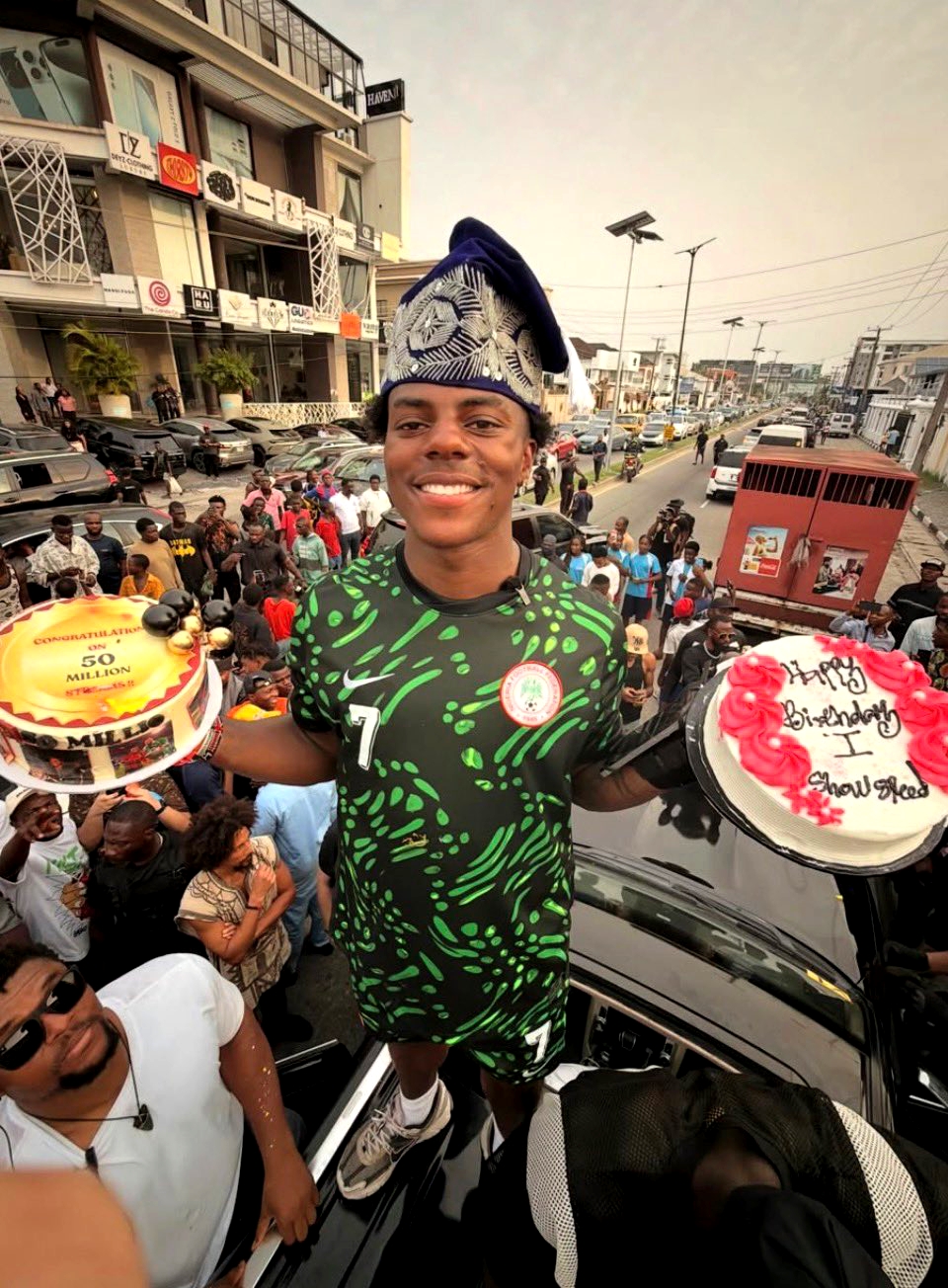
When IShowSpeed’s subscriber count ticked past 50 million during a live stream in Nigeria, it was one of those moments that history almost treated as small, no red carpet, no formal announcement, just a young American streamer, Nigerian streets, Nigerian energy, and the internet watching carefully in real time. Yet that moment deserves more than a passing headline because what happened wasn’t just about IShowSpeed hitting a milestone; it was about Nigeria announcing itself as a content capital, not just a content consumer.
IShowSpeed didn’t treat Nigeria like a backdrop or novelty stop. His streams were messy, loud, spontaneous, exactly how real content is born. From street encounters to conversations with fans, musicians, and vendors, Nigeria wasn’t staged; it was alive, and that aliveness translated. The milestone happened amid the unpredictability of Nigerian streets: power outages, noise, excitement, interruptions. Experiences that global algorithms usually reject became the elements that made the stream irresistible. This proves what Nigerian creators have known for years: authenticity beats artificial perfection.
As the count approached 50 million, Nigerian fans became instant collaborators. People waved at cameras, shouting greetings, teenagers crowded around phones, and vendors paused their work. Every interruption added to the sense of being in a place breathing alongside the creator. Speed chasing children playing football, sampling suya at roadside stalls, turning ordinary interactions into extraordinary content.
This isn’t about crowning IShowSpeed as some saviour. Nigeria has never needed saving. This moment validates something the global internet has benefited from while refusing to name it: Nigeria drives culture. From Afrobeats dominating charts to Nigerian slang shaping internet language, from comedy skits to fashion and dance trends crossing borders overnight, Nigeria exports culture at scale. But often, credit and control remain elsewhere. Speed’s milestone flipped the lens; it happened because of Nigeria, not despite it. The energy, the fans, the unpredictability that kept viewers glued. Nigeria wasn’t just watching; it was co-creating.
One underestimated aspect of Nigeria in global digital conversations is scale. Over 200 million people, a youth population living online, and a culture of active participation rather than passive consumption. When Nigerians find something they love, they amplify it—clipping, remixing, debating, memeing, defending, making it trend. Social media exploded with clips of Speed dancing with locals and reactions from viewers worldwide. Comments flooded in from the United States, Canada, and beyond, asking how Nigeria could feel so alive. Speed tapped into a multiplier effect that only a few places offer. Nigeria is one of them.
For too long, global creators have treated Nigeria as a place to “tap into” for quick engagement, brief appearances, surface-level collaborations, assuming value flows one way. Speed’s experience challenges that. Nigeria didn’t just provide eyeballs; it provided content infrastructure; real people, real reactions, real moments which no script could replicate. Raw materials, the modern internet thrives on. Nigeria functioned as Los Angeles did for Hollywood, Atlanta for hip-hop, or Seoul for K-pop: not just a location, but a generator.
Nigerian creators have been producing global-level content with far fewer resources for years. Shooting skits on phones with cracked screens, streaming through unstable internet and power, turning everyday frustration into viral gold. Yet algorithms rarely frame these as part of a content capital. They’re seen as impressive despite their environment, not powerful because of it. Speed’s milestone forces reconsideration: maybe the environment is the advantage.
What made the streams compelling was how unfiltered they were—no attempt to smooth edges or explain Nigeria for foreign comfort. Viewers saw what Nigerians live with daily: joy, chaos, humour, confrontation, generosity, and curiosity. This challenges the belief that African stories need packaging for global acceptance. They don’t. They need honest, bold telling.
If brands, platforms, and investors were paying attention, this moment should sound an alarm. Nigeria isn’t just a market to advertise to; it’s a market to build with. There’s a generation of creators here who understand virality instinctively, who hold attention without overproduction. They create moments powerful enough to carry global milestones. The question isn’t whether Nigeria can produce global content; it’s whether the global system is ready to decentralize power enough to let that happen fully.
Speed hitting 50 million subscribers on Nigerian streets has already shifted perception, revealing that major internet moments don’t need to originate from usual hubs. But symbolism isn’t enough. The real work is structural: better infrastructure, fairer monetization for African creators, platform policies recognizing local contexts, investment in creator education, and protection. If Nigeria is to be a content capital, it needs intentional systems, not accidental moments.
Perhaps the biggest myth this corrects is that Nigeria is catching up to global digital culture. The truth? Nigeria has been ahead in spirit, just not recognized in power. Speed didn’t bring internet culture to Nigeria; he met it there. When his count hit 50 million in that environment, it felt like confirmation. The internet finally looked our way, not out of charity or curiosity, but because it had to. Nigeria wasn’t watching history. Nigeria was in history.