
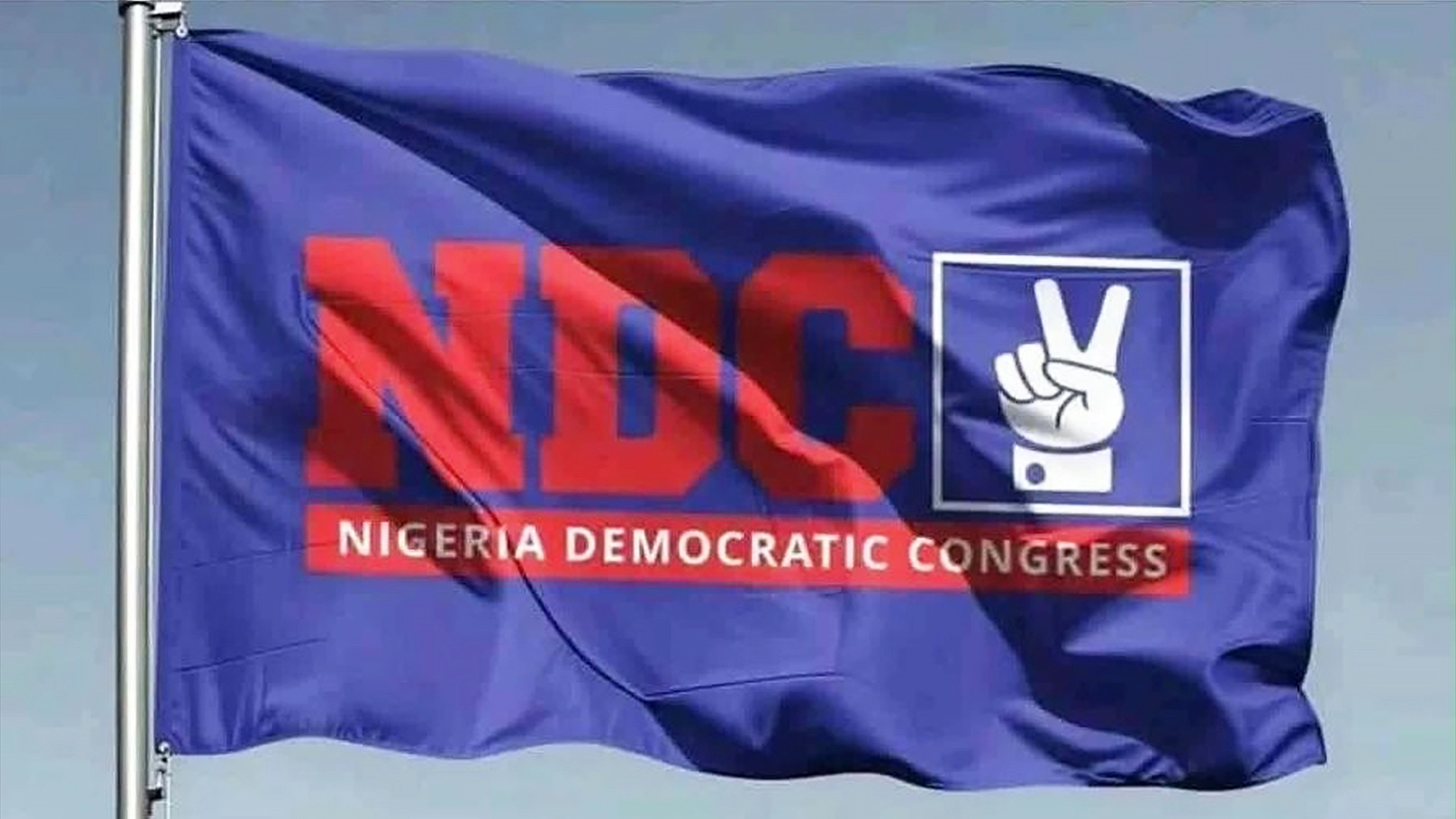
The Nigeria Democratic Congress in Ebonyi State suffered a major blow on Monday as its Deputy Chairman, Comrade Okey Idenyi, Secretary Barr. Chinedu Adum, Welfare Officer Cyril Ajah, Youth Leader Anthony Nwofe and several other state executives resigned together, citing corruption, financial fraud, and disputes over the party’s recently concluded primaries.
Addressing journalists in Abakaliki, the former officials said the walkout marked the collapse of the party’s structure in the state and predicted that the NDC would not win a single House of Assembly seat in the forthcoming general elections.
Idenyi said the structure foundation members built in Ebonyi “even before Peter Obi joined the party” had been hijacked by corrupt elements who entered “through the back door,” sidelining the original membership. He alleged that aspirants were charged ₦100,000 for House of Assembly, ₦300,000 for House of Representatives, ₦500,000 for Senate, and ₦750,000 for governorship nomination, only for the funds to be mismanaged and the promised consensus arrangement abandoned for contested primaries.
“We were told there would be consensus, but later all aspirants were asked to go for primaries. What we witnessed was a shambles and a disgrace,” he said.
Adum accused the National Working Committee of failing to act despite repeated petitions over the alleged hijacking and claimed aspirants who bought forms for over ₦3 million were later asked to pay additional millions before screening. He further accused former Governor Sam Egwu of running the party as a personal structure.
Nwofe described the primaries as “the worst” among the parties, while Ajah said he had withdrawn support for the party and its presidential candidate, Peter Obi.
The resignations deepen a crisis that has trailed the NDC since it conducted nationwide primaries on May 29, 2026. The party is a newcomer to Nigeria’s political landscape. It was officially registered by INEC on February 5, 2026, after years of legal disputes dating back to a 2017 application, and held its inaugural national convention on May 9, 2026, in Abuja.
Obi formally joined the party in early May 2026 alongside former Kano State Governor Rabiu Kwankwaso after exiting the African Democratic Congress, which he had joined the previous December. The NDC subsequently adopted Obi as its consensus presidential candidate for the 2027 general elections.
The Ebonyi turmoil is not isolated. The same primaries triggered protests in Abuja, where supporters of Christian Asaga Nwali, popularly known as C-Sagas, claimed he won the Ebonyi Central senatorial primary with 1,517 votes against his opponent’s 136 and warned against any move to hand the ticket to Prof. Bernard Odoh.
At the national level, Kwankwaso, the party’s vice-presidential candidate, reportedly threatened to quit over disputes concerning the Kano candidates’ list, a crisis that persisted despite reconciliation efforts led by National Leader Senator Seriake Dickson.
The party has consistently denied wrongdoing. Its National Secretary, Ikenna Enekweizu, maintained that the national secretariat never imposed candidates, identified Sam Egwu as the recognised caucus leader in Ebonyi, and described the criticism as stemming from a misunderstanding of the party’s guidelines.
With the 2027 elections approaching and the opposition fragmented across the NDC, ADC, PDP and Labour Party, internal stability in newer political platforms is increasingly tied to their ability to consolidate structures before campaigns begin. Whether the Ebonyi exits widen further may depend on how decisively the national leadership addresses the grievances raised by the departing officials.