
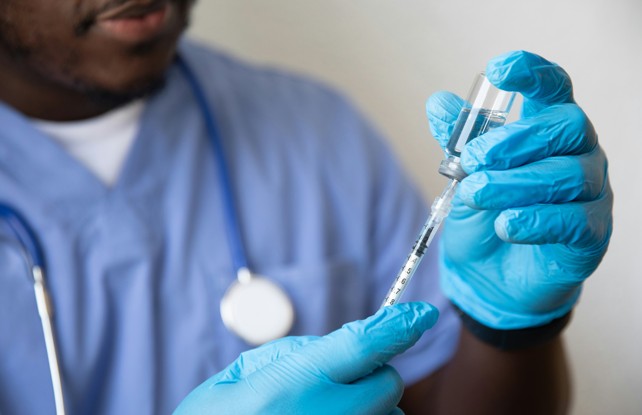
Uganda has launched Africa’s first clinical trial of an mRNA vaccine targeting the rare Bundibugyo strain of Ebola, which is driving a severe outbreak in the neighbouring Democratic Republic of the Congo. The state-run Uganda Virus Research Institute announced on Friday, 27 November 2026, that it is conducting the Phase I study in collaboration with United States biotechnology firm Moderna, manufacturer of the candidate shot (mRNA-1469). Following an initial adult safety trial launched in Canada in August, the Ugandan study marks the first human testing of the vaccine on African soil.
Designed to evaluate safety and immune response, the trial aims to enrol 224 healthy volunteers—and breaks new ground by including children aged one year and older alongside adults up to 65. Richard Hatchett, chief executive of co-funder Coalition for Epidemic Preparedness Innovations, noted that children frequently suffer the worst outcomes during Ebola outbreaks yet are routinely the last group cleared to receive new immunisations.
The clinical launch comes as the Bundibugyo outbreak in the eastern DRC has become the world’s second-largest Ebola epidemic on record. Official Congolese health figures released Thursday confirmed at least 12,021 infections and 5,904 deaths since mid-May 2026, with armed conflict displacing health workers and obstructing containment efforts. Uganda itself contained an earlier spillover on 28 July after recording 20 cases and two fatalities.
Parallel vaccine efforts are accelerating across the region to close the immunisation gap against the Bundibugyo species, which does not respond to existing vaccines designed for the Zaire strain. A rival adenoviral vector candidate (ChAdOx1), jointly developed by the University of Oxford and India’s Serum Institute, begins testing inside the DRC on Monday, 30 November. Anticipating early 2027 trial readouts, Gavi, the Vaccine Alliance, signed an advance purchase commitment last week for 1.5 million doses of the Oxford-Serum Institute shot so hundreds of thousands of jabs can deploy immediately upon regulatory approval.
Testing an mRNA candidate directly in East Africa, and including toddlers from day one, compresses the dangerous lag that traditionally leaves vulnerable populations waiting years for outbreak tools. Securing advance manufacturing commitments alongside human trials ensures that scientific breakthroughs can move rapidly from clinic to frontline communities once safety data clears.