
US Approves $413 Million For Counter-Insurgency Operations In Nigeria, Other African States
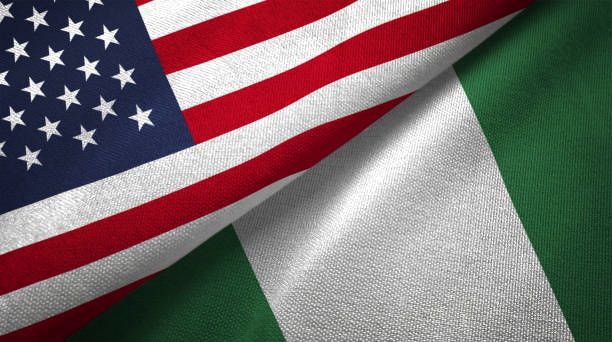
The United States has approved $413.046 million (about ₦587 billion) for counter-insurgency and security operations in Nigeria and other African countries in 2026, amid worsening insecurity across West Africa and renewed geopolitical competition on the continent.
The allocation is contained in the United States National Defense Authorization Act (NDAA) for Fiscal Year 2026, obtained on Thursday. The funds were approved under Title XLIII – Operation and Maintenance for the US Africa Command (AFRICOM).
The security funding follows recent US military actions in the region, including Christmas Day airstrikes on terrorist hideouts in Sokoto State and the delivery of military equipment to Nigerian security agencies earlier this week to support ongoing operations.
The NDAA 2026 authorises a total of $901 billion in US military spending, including a four per cent pay rise for American troops. AFRICOM requested $413.046 million, which was fully approved, although the Act did not provide a detailed breakdown of how the funds would be spent.
President Donald Trump signed the Act into law on December 18, 2025, marking the 65th consecutive annual defence authorisation by the United States.
The funding comes as West Africa continues to battle insurgency, banditry and violent extremism. In Nigeria, Boko Haram and Islamic State West Africa Province (ISWAP) insurgency persists in the North-East, while banditry and kidnapping remain widespread in the North-West. Piracy and other maritime crimes also continue to threaten security in the Gulf of Guinea.
Beyond Nigeria, Mali remains under sustained attacks by jihadist groups, while northern Benin has recorded spillovers of violence from the Sahel.
Other commands listed under the operation and maintenance category of the NDAA include the US European Command with $385.744 million, US Southern Command with $224.971 million, US Forces Korea with $77.049 million, Cyberspace Operations with $331.467 million, and Cybersecurity with $550.089 million. The subtotal for operating forces stands at $39.999 billion.
The Act also mandates the establishment of an Assistant Secretary for African Affairs within the US Department of State, alongside a Bureau of African Affairs, to oversee US foreign policy and assistance to sub-Saharan Africa.
According to the Act, the Assistant Secretary will be responsible for coordinating policy implementation, maintaining continuous oversight of African affairs, and advising the Secretary of State through the Under Secretary for Political Affairs.
In addition, the legislation requires a comprehensive assessment of Russia’s military strategy, force posture and overseas basing that affect African countries. This includes an evaluation of Russia’s logistics capabilities and infrastructure used to project power on the continent, as well as the implications for US contingency plans under AFRICOM, US Central Command and US European Command.
Read Also: Strategic Target in Nigeria’s North-West — Expert Analyzes U.S. Drone Strike Rationale in Sokoto.
Commenting on the development, security analyst and Chief Executive Officer of Beacon Consulting, Kabir Adamu, said the funding and policy initiatives reflect growing geopolitical rivalry in Africa, driven largely by economic interests rather than military concerns.
According to him, Africa — particularly West Africa and the Sahel — has become a strategic arena due to insecurity, weak state control and the presence of critical resources.
Adamu said Russia and China have expanded their influence across the continent through military cooperation and economic engagement, forcing the United States to reassess its posture.
He noted that access to critical minerals, including lithium and uranium, remains a major driver of global interest in the region, adding that Nigeria offers strategic advantages for monitoring developments in neighbouring Sahelian states.
Read Also: US Boosts Nigeria’s Security Efforts with Fresh Military Supply Delivery
Adamu also dismissed narratives suggesting US intervention is aimed at protecting Christians in Nigeria, describing such claims as misleading and unsupported by recent security developments.
Another security analyst, Chidi Omeje, said evolving Nigeria-US relations should be viewed strictly through the lens of partnership and collaboration.
Omeje noted that Nigeria’s security challenges are linked to transnational terrorist networks operating across the Sahel and Lake Chad Basin, making international cooperation necessary.
He added that engagements with AFRICOM reflect mutual respect rather than dominance, stressing that partnerships based on dignity and collaboration remain critical to addressing Nigeria’s security threats.