
US Congress Urges Tougher Action As Nigeria Flagged In Global Religious Freedom Crisis
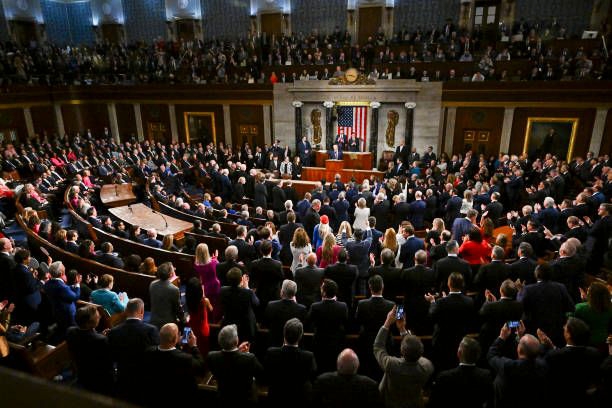
United States lawmakers have called on the federal government to take tougher and more decisive action against countries accused of violating religious freedom, with Nigeria singled out as a major concern, amid growing fears of escalating faith-based violence worldwide.
The call was made during a hearing of the U.S. House Foreign Affairs Committee, where witnesses warned that Nigeria risks sliding into widespread Christian–Muslim conflict if stronger international pressure is not applied.
Testifying before the committee, former U.S. Ambassador-at-Large for International Religious Freedom, Sam Brownback, described Nigeria as “the deadliest place on the planet to be a Christian,” citing persistent attacks, mass killings, displacement, and insecurity linked to extremist violence.
The hearing, jointly convened by the Subcommittee on Africa and the Subcommittee on the Western Hemisphere, examined worsening threats to global religious freedom and assessed whether current U.S. responses are sufficient.
Although the United States had previously designated Nigeria as a Country of Particular Concern (CPC) over alleged religious freedom violations, witnesses argued that the designation alone has failed to adequately protect vulnerable religious communities.
Read Also: US Conducts Secret Surveillance Flights Over Nigeria Amid Rising Security Tensions
Speaking at the hearing, Rep. Chris Smith, Chairman of the House Foreign Affairs Subcommittee on Africa, urged the U.S. government to move beyond symbolic actions and deploy stronger policy tools, including sanctions and economic penalties.
Smith acknowledged that Nigeria had taken limited steps to address religious violence but said those efforts remained insufficient. He praised the recent reinstatement of Nigeria’s CPC designation, calling it “necessary, long overdue, and bold,” but warned that more must follow.
He accused previous U.S. administrations of weakening pressure on Nigeria by removing it from the CPC list, a move he said effectively granted the Nigerian government a “free pass” amid ongoing attacks against Christians in the Middle Belt.
Smith referenced reports by Genocide Watch, which has described Nigeria as a “killing field of defenceless Christians,” and stressed that the CPC designation carries up to 15 enforcement tools under U.S. law, many of which have yet to be used.
He also expressed concern over Nigeria’s reported engagement of U.S. lobbying firms at multimillion-dollar costs to influence American lawmakers, warning that such efforts should not distract from the human rights crisis on the ground.
In a written submission ahead of the hearing, Brownback warned of early signs of a broader religious war spreading across Africa, with Nigeria at its epicentre. He further raised concerns about the influence of foreign actors, including China, Russia, Turkey, and Saudi Arabia, on Nigeria’s security landscape, saying their involvement complicates stability.
Lawmakers concluded the hearing by urging the U.S. State Department to release a full list of CPC designations and intensify diplomatic and economic pressure to safeguard religious freedom globally.