


US Court Jails Nigerian Cyber-fraudster for 90 Months
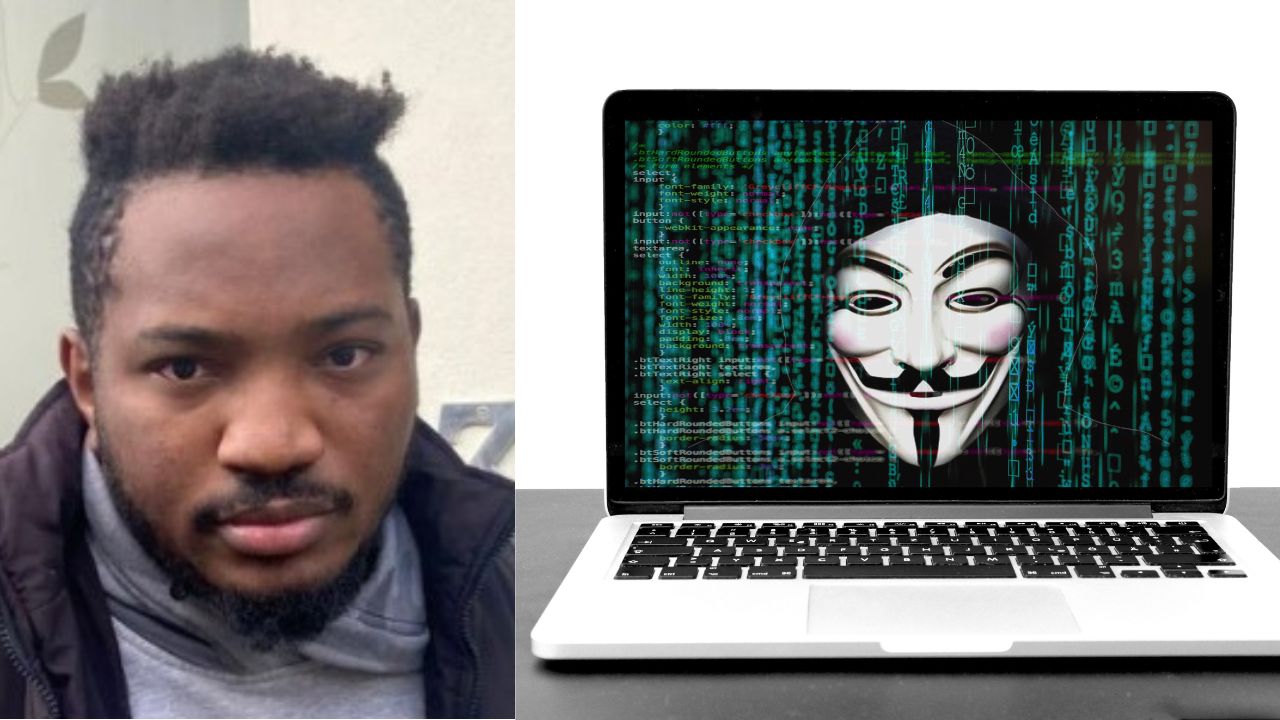
A United States court has sentenced James Junior Aliyu, a 30-year-old Nigerian national, to seven-and-a-half years in federal prison for orchestrating a massive business email compromise scheme. Aliyu, who was extradited from South Africa, led a syndicate that intercepted corporate communications to divert millions of dollars. Beyond the 90-month sentence, the court slapped him with a $1.2m forfeiture order and a $2.4m restitution mandate. Once his time is served, the US government will promptly deport him.
The sentence marks the conclusion of a sprawling international investigation led by Homeland Security Investigations (HSI) across Maryland and South Africa. Aliyu was the final kingpin in a group of eleven defendants who all pleaded guilty to wire fraud and money laundering. His operation relied on “spoofing” corporate email accounts to trick victims into sending funds to accounts he controlled. It was a clinical exercise in digital deception. By the time authorities closed in, Aliyu had directly managed over $1.1m in stolen funds.
The mechanics of the fraud were as disciplined as they were illegal. Between February and July 2017, the group hacked into business servers to monitor pending transactions. They then swooped in with fake wiring instructions that appeared to come from legitimate partners. The victims, believing they were settling standard invoices, unwittingly funded Aliyu’s lifestyle. The intended loss from his specific transactions topped $4.1m. Fortunately, the actual loss was contained to roughly $1.5m through banking interventions.
Money laundering was the second act of this criminal play. To scrub the “dirty” money, Aliyu and his co-conspirators moved funds through a network of “drop accounts.” They used cash withdrawals, cashier’s cheques, and complex transfers to mask the source of the assets. This layered approach was designed to frustrate investigators, but it ultimately provided a paper trail for federal agents. The Mid-Atlantic El Dorado Task Force eventually unpicked the web of transactions.
The legal process has been a long-haul effort involving three nations. A federal grand jury originally indicted Aliyu in 2019, but the case remained under seal until his arrest abroad in 2022. His co-conspirators, Kosi Goodness Simon-Ebo and Henry Onyedikachi Echefu, were also extradited to face the same music. US Attorney Kelly O. Hayes noted that the case highlights the scale of modern, cyber-enabled fraud. It is a warning that borders offer little protection to digital thieves.
This conviction settles a significant chapter for HSI and South African authorities. The collaboration between the South African Police Service and the US Department of Justice was pivotal in securing the extradition. For Aliyu, the 90-month sentence is a blunt end to a lucrative career in cybercrime. For the victims, the $2.4m restitution order offers a slim hope of recovery. The digital landscape remains dangerous, but the law is finally catching up with the hackers.