
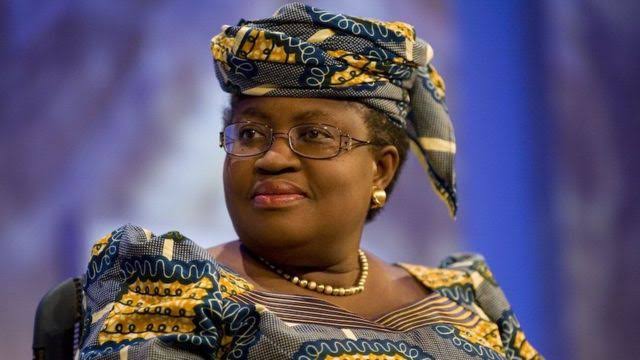
Director-General of the World Trade Organisation, Ngozi Okonjo-Iweala, has credited a deliberate public communication strategy for helping Nigeria secure the landmark Paris Club debt relief that cleared roughly 30 billion dollars in obligations during the administration of former President Olusegun Obasanjo.
Okonjo-Iweala made the remarks on Wednesday in Abuja at the public presentation of “The Pain and the Promise,” a new book by communications expert and public affairs analyst, Paul Nwabuikwu.
Reflecting on her tenure as Minister of Finance, she said she was brought in from the World Bank in 2003 to restore the country’s weak public finances, a task that included negotiating the elimination of an estimated 30 billion dollars owed to the Paris Club of creditors.
“I had been brought in from the World Bank to help straighten up and strengthen Nigeria’s weak finances, including getting rid of $30bn of the country’s debt owed to the Paris Club. To do this work, I knew Nigeria would have to undertake serious economic reforms of the type that would demand understanding and sacrifices from Nigerians,” she said.
She explained that the reform agenda hinged on strong communication, which informed her decision to recruit Nwabuikwu into the economic team. “One important component in my mind then was that we would need a crack communications person or team to help us reach Nigerians, to explain all of this in simple language. That is where Paul came in,” she said.
Describing him as “smart, articulate, compassionate, a terrific writer and communicator,” she said the outcome would have been weaker without his input. “I can say without fear of contradiction that we wouldn’t have had as much success with the reform programme if we had not had a masterful steering of communications from Paul,” she said, adding that reform in a democracy is “about persuading people, explaining trade-offs and building enough trust that governments can keep pushing through obstacles.”
The historical record supports her account. After Obasanjo’s re-election in 2003, a new economic team led by Okonjo-Iweala introduced an oil price based fiscal rule, an excess crude savings account, a fresh procurement system and the anti-graft agency, while the Central Bank under Charles Soludo consolidated the banking sector from 89 to 25 institutions. The Paris Club signalled readiness to negotiate on June 29, 2005, and a final agreement followed that October. Creditors cancelled about 18 billion dollars, some 60 percent of the roughly 30 billion dollars owed to 19 member nations, while Nigeria settled the balance through the first discounted buyback ever permitted within the club. The deal was completed on April 21, 2006, making Nigeria the first African country to fully exit Paris Club debt.
The WTO chief also lamented that ethnic, religious and regional divisions continue to slow national progress, arguing that durable prosperity depends on a shared national consensus. “Until Nigerians can overcome the ethnic, religious and regional divides embedded in our society to forge a social compact… I think Nigeria will find it difficult to move forward at the pace required,” she said. She urged citizens to place competence above sectional interest, insisting that “there’s no place in Nigeria that doesn’t have talented people.”
Reviewing the 300 page book, which spans 35 years of national life, she called it “a portrait of a generation in the life of the most interesting, if the most chaotic, country in the world,” and recommended it to young Nigerians.
Former Aviation Minister, Osita Chidoka, said the country needed critics who understand implementation and officials who respect criticism. “There is pain, and I must say we all know that much of it is self-inflicted… but there is also promise in our people,” he said.
The reflections arrive at a delicate fiscal moment. The Debt Management Office put Nigeria’s total public debt at 159.28 trillion naira as of December 31, 2025, up from 144.67 trillion a year earlier, reviving debate over borrowing two decades after the nation freed itself from the Paris Club.