


Nigerian Stock Market Crosses 200,000 Points
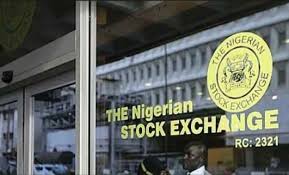
The Nigerian Exchange recorded an unprecedented milestone yesterday as the all-share index breached the 200,000-point threshold for the first time in the market’s history, driven by strong investor demand and broad-based gains across key sectors.
The benchmark index rose 1.55 per cent to close at 201,474.89 points, up from 198,407.3 points in the previous trading session, marking a historic achievement for Nigeria’s capital market. The month-to-date return reached 4.48 per cent while the year-to-date return climbed to 29.47 per cent, reflecting sustained market momentum.
Market capitalisation expanded to N129.33 trillion from N127.36 trillion recorded on Friday, representing a single-day gain of N1.97 trillion as large-cap stocks led the rally across multiple sectors.
Group Managing Director and Chief Executive Officer of Nigerian Exchange Group, Temi Popoola, described the milestone as evidence of growing confidence in the Nigerian capital market amid ongoing economic reforms.
“Nigeria’s ongoing reforms are strengthening domestic capital formation, and the market is responding positively. Increased participation by local investors, improving corporate fundamentals, and continued market modernisation are reinforcing the role of the capital market as a catalyst for long-term wealth creation and sustainable economic growth,” Popoola stated.
Chief Executive Officer of Nigerian Exchange Limited, Jude Chiemeka, attributed the breakthrough to sustained demand and active participation across market segments.
“Crossing the 200,000-point mark reflects strong investor engagement and consistent demand across key sectors. At Nigerian Exchange Limited, we remain focused on deepening market liquidity, enhancing trading infrastructure, and ensuring efficient price discovery to support a resilient and transparent marketplace,” Chiemeka said.
The achievement represents a major recovery for Nigeria’s equities market, which has experienced significant volatility over the past two decades. The Nigerian Stock Exchange, which rebranded to Nigerian Exchange Group in 2021 as part of a demutualisation process, has witnessed several boom and bust cycles since its establishment in 1960 as the Lagos Stock Exchange.
The market reached its previous peak in March 2008 when the all-share index hit 66,371.20 points before the global financial crisis triggered a devastating collapse that wiped out over 70 per cent of market value by March 2009. The index fell to approximately 20,827 points, erasing trillions of naira in investor wealth and sparking widespread panic that led to increased regulatory scrutiny and reforms.
The recovery from that crash was gradual and uneven, with the market struggling through macroeconomic headwinds including currency devaluation, oil price volatility, and persistent inflation. The index crossed 50,000 points in January 2021, buoyed by accommodative monetary policy and increased retail investor participation during the COVID-19 pandemic. It reached 100,000 points in July 2024, doubling within three years as foreign portfolio investors returned to Nigerian equities seeking higher yields amid global monetary policy shifts.
The current rally to 200,000 points within less than two years represents the fastest doubling in the market’s history, driven by several structural and cyclical factors. President Bola Tinubu’s economic reforms, initiated in May 2023, including the removal of petrol subsidies and the unification of foreign exchange windows, have been credited with attracting foreign capital and improving investor sentiment despite short-term inflationary pressures.
The Central Bank of Nigeria’s tight monetary policy stance, with the benchmark interest rate raised to 27.5 per cent as of February 2026 to combat inflation, has paradoxically supported equities as investors seek inflation-hedging assets with higher real returns than fixed-income instruments yielding negative real rates.
Corporate earnings have also improved significantly, with major listed companies reporting strong revenue growth driven by naira devaluation effects on dollar-denominated revenues, pricing power in inflationary environments, and operational efficiencies. Banking sector stocks, which constitute the largest weighting in the index, have posted record profits following windfall gains from foreign exchange revaluation and increased lending margins.
Trading activity yesterday remained robust, with total deals rising to 72,700 while investors exchanged 948.1 million shares valued at N49.15 billion. Financial services stocks dominated transactions by volume, reflecting heightened investor interest in the sector which has led year-to-date gains.
Among the top gainers were BUA Cement Plc, which rose 10 per cent to close at N297, Premier Paints Plc, which gained 9.79 per cent to close at N21.30, John Holt Plc, which climbed 9.52 per cent to close at N10.35, Guinea Insurance Plc, which advanced 9.38 per cent to close at N1.40, and FTN Cocoa Processors Plc.
Decliners included VFD Group Plc, which led the losers’ chart with a 10 per cent drop to close at N11.25, Royal Exchange Plc, which fell 9.63 per cent to close at N1.69, Omatek Ventures Plc, which declined 9.62 per cent to close at N2.35, Sovereign Trust Insurance Plc, which depreciated nine per cent to close at N1.92, and Regency Alliance Insurance Plc, which declined 8.94 per cent to close at N1.12.
At the close of trading, market breadth was positive with 38 advancing stocks surpassing 31 declining counters, indicating broad-based support for the rally rather than concentration in a few stocks.
Total volume rose 60.43 per cent to 948.212 million units valued at N49.173 billion and exchanged in 72,735 deals. Transactions in shares of Sovereign Trust Insurance topped the activity chart with 72.564 million shares valued at N147.12 million. Access Holdings followed with 69.856 million shares worth N1.759 billion, while First HoldCo traded 67.031 million shares valued at N3.354 billion. Zenith Bank traded 59.953 million shares valued at N5.957 billion, while Nigerian Breweries sold 55.029 million shares worth N4.032 billion.
The Nigerian Exchange currently lists over 150 companies across various sectors including banking, consumer goods, oil and gas, telecommunications, and insurance. The exchange operates multiple platforms including the premium board for large-cap stocks, the main board for mid-cap companies, and the growth board for small and medium enterprises seeking capital.
Despite the euphoria surrounding the 200,000-point milestone, market analysts have cautioned that valuation metrics are approaching stretched levels, with the average price-to-earnings ratio for the market exceeding 15 times compared to a historical average of 10 to 12 times. Some observers have warned that the rapid gains may not be sustainable without corresponding improvements in underlying economic fundamentals, particularly regarding inflation, which remained above 30 per cent in recent months, and foreign exchange liquidity challenges.
The rally has benefited retail investors who entered the market during the pandemic and recovery phases, with many recording substantial paper gains. However, the concentration of gains in large-cap stocks has meant that smaller companies and frontier sectors have lagged behind, raising questions about the inclusiveness of the current bull run.
Institutional investors, including pension fund administrators managing over N20 trillion in retirement assets, have increased their equity allocations in recent quarters, providing sustained demand and liquidity support. Foreign portfolio investors, who withdrew significantly between 2015 and 2020 during periods of currency controls and capital restrictions, have gradually returned, attracted by improved transparency, electronic settlement systems, and regulatory reforms.
The Nigerian Exchange has implemented several technological upgrades in recent years, including full dematerialisation of share certificates, real-time settlement through the Central Securities Clearing System, and enhanced surveillance systems to detect market manipulation. The exchange also launched a derivatives market in 2024, though trading volumes remain modest compared to equities.
The 200,000-point milestone positions Nigeria’s stock market among the best-performing equity markets globally in 2026, outpacing major African peers including South Africa’s Johannesburg Stock Exchange and Egypt’s EGX 30. The strong performance has attracted attention from international fund managers seeking exposure to African growth stories and alternative emerging markets beyond traditional Asian and Latin American destinations.
Popoola and Chiemeka’s statements emphasised the exchange’s commitment to sustaining the momentum through continued infrastructure development, regulatory enhancements, and investor education initiatives. The exchange has also prioritised listing of additional companies, particularly in technology, renewable energy, and manufacturing sectors, to diversify the market beyond its traditional banking and consumer goods dominance.
The broader economic implications of the milestone extend beyond wealth creation for investors. A vibrant capital market enhances corporate access to long-term financing for expansion and job creation, reduces dependence on bank lending, and provides government with alternative funding sources through sovereign bond listings. The market’s performance also influences consumer confidence and spending patterns, particularly among Nigeria’s growing middle class with equity investments.
However, challenges remain, including the need for deeper retail participation, improved corporate governance among listed companies, and greater regulatory capacity to supervise an expanding market. The Securities and Exchange Commission has intensified enforcement actions against market infractions and insider trading, but concerns persist about the effectiveness of penalties and prosecution timelines.