
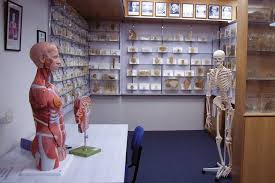
The Australian state of Tasmania has issued a formal parliamentary apology after an investigation confirmed that human body parts removed during autopsies were stored and displayed at a university museum for decades without the knowledge or consent of grieving families.
Health Minister Bridget Archer delivered the apology in parliament last Tuesday, with several affected families present in the chamber to witness the moment.
“Although these historical practices ended 35 years ago, the deep impact this has had on the families and loved ones of the deceased continues to this day,” Archer told parliament. “It’s important to remember that these were not just body parts or specimens or human remains. They were people.”
The investigation, led by Coroner Simon Cooper and formally launched in 2023, found that between 1966 and 1991, pathologists may have actively sourced at least 177 human specimens from coronial autopsies and transferred them to the University of Tasmania’s RA Rodda Pathology Museum in Hobart without authorisation from either families or the coroners overseeing those cases.
Cooper identified a now deceased forensic pathologist, Dr Royal Cummings, as the primary figure behind the transfers, but his findings made clear the problem extended well beyond one individual. “It also appears that his predecessors and successors also engaged in the practice,” he said. “It also appears that pathologists may have actively sourced specimens from coronial autopsies to give to the museum.”
Concerns about the museum’s collection first surfaced in 2016 when questions arose about bone samples held on its premises, eventually triggering the formal coroner led inquiry seven years later.
For families of the deceased, the revelations reopened wounds buried across half a century. Cheryl Springfield, whose brother died in 1976 at the age of 14, said learning what happened to his remains had been deeply traumatic. “It’s been absolutely a nightmare from that moment we were told,” she said, adding of the apology: “It’s in the right direction, but it’s not going to fix it all.”
John Santi, another affected relative, discovered that his brother Tony, who died in 1976 aged 19, was among those whose remains had been taken. “We buried him 50 years ago, only to find out 50 years later that these people had stolen his brain,” he said.
The University of Tasmania acknowledged the findings and expressed regret for the distress caused. Deputy Vice Chancellor Professor Graeme Zosky confirmed staff had engaged directly with affected families. “While we recognise an apology cannot fix the hurt and distress families have felt, we are sorry,” he said.
The RA Rodda Pathology Museum, which was established in 1966 for teaching and research purposes, removed all 177 disputed specimens from display in 2018 following early concerns about their origins.