


Morocco Awarded AFCON Title as Senegal Forfeit Final
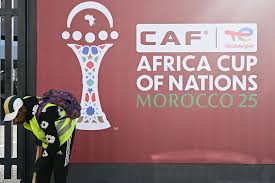
The Confederation of African Football has officially declared Morocco champions of the 2025 Africa Cup of Nations after the CAF Appeal Board overturned the result of the final against Senegal, awarding the hosts a 3-0 forfeit victory following a dramatic walkout by the Lions of Teranga in Rabat.
The decision, announced through a detailed ruling posted on CAF’s official social media channels, strips Senegal of what would have been the nation’s second continental title and brings to a controversial close one of the most disputed finals in the tournament’s 68-year history.
The CAF Appeal Board determined that Senegal violated Articles 82 and 84 of the Africa Cup of Nations Regulations when the team abandoned the field during extra time following a contentious Video Assistant Referee decision that awarded Morocco a penalty kick deep into stoppage time.
“The CAF Appeal Board decided that in application of Article 84 of the Regulations of the CAF Africa Cup of Nations, the Senegal National Team is declared to have forfeited the Final Match of the TotalEnergies CAF Africa Cup of Nations Morocco 2025, with the result of the Match being recorded as 3-0 in favour of the Fédération Royale Marocaine de Football,” the ruling stated.
The board confirmed that “the appeal lodged by the Fédération Royale Marocaine de Football is declared admissible in form and the appeal is upheld,” effectively setting aside the previous CAF Disciplinary Board decision and validating Morocco’s protest.
The controversy erupted during a heated moment deep into extra time stoppage when Morocco’s attacking midfielder Brahim Diaz went down inside the penalty area. While the on-field referee initially waved play on, a subsequent VAR review led to the penalty being awarded to the hosts, triggering a furious reaction from the Senegalese delegation.
Head coach Pape Thiaw instructed his players to return to the dressing room in protest, a walkout that lasted several minutes and ultimately led to the administrative forfeiture. The CAF Appeal Board found that “the conduct of the Senegal team falls within the scope of Articles 82 and 84 of the Regulations of the Africa Cup of Nations,” concluding that by leaving the field of play, Senegal had infringed tournament regulations.
The ruling further stated that “the Fédération Sénégalaise de Football, through the conduct of its team, infringed Article 82 of the Regulations of the Africa Cup of Nations,” resulting in the forfeit and the stripping of the trophy.
The decision crowns Morocco as AFCON champions for the second time in the nation’s football history. The Atlas Lions previously won the continental title in 1976 when they defeated Guinea 1-1 in the final before prevailing on penalties in Ethiopia. Morocco also reached the final in 2004, losing to host nation Tunisia, and have consistently been among Africa’s strongest footballing nations, with their national team reaching the semi-finals of the 2022 FIFA World Cup in Qatar, becoming the first African and Arab nation to achieve that feat.
For Senegal, the ruling represents a devastating loss of what would have been a second AFCON title. The Lions of Teranga won their first continental championship in 2021 when they defeated Egypt on penalties in Cameroon, ending decades of near-misses that included final defeats in 2002 and 2019. Senegal entered the 2025 tournament as defending champions and among the favorites to retain the title, boasting a squad featuring several European-based stars.
The 2025 tournament, hosted across multiple Moroccan cities, had been marked by passionate home support and strong performances from the Atlas Lions throughout the knockout stages. The final, held at a packed stadium in Rabat, was expected to be a showcase of African football excellence but instead descended into chaos and has now concluded in administrative resolution rather than sporting triumph.
Beyond the forfeiture ruling, the CAF Appeal Board issued several other decisions related to incidents during the final. Morocco midfielder Ismaël Saibari, who wore jersey number 11, received a partially upheld appeal regarding his conduct during the match. The board confirmed that Saibari “committed misconduct in violation of Articles 82 and 83(1) of the CAF Disciplinary Code,” but amended his sanction to a suspension of two official CAF matches, of which one is suspended. A previously imposed fine of 100,000 US dollars against Saibari was set aside.
The Moroccan football federation also faced financial penalties for several incidents during the final. The board confirmed that the FRMF was “responsible for the conduct of the ball boys during the aforementioned match,” reducing the fine for this incident to 50,000 dollars. A 100,000-dollar fine for “interference around the OFR/VAR review area” was confirmed and upheld, while a fine related to a laser incident was reduced to 10,000 dollars.
The use of VAR in African football has been a source of ongoing debate since its introduction to the continent’s premier tournament. While proponents argue that video technology reduces refereeing errors and enhances fairness, critics contend that its implementation has been inconsistent and has sometimes heightened tensions rather than resolving disputes. The 2025 AFCON final now stands as perhaps the most dramatic example of VAR-related controversy in African football history.
CAF’s disciplinary framework, outlined in its competition regulations, provides for forfeiture in cases where teams refuse to play or abandon matches. Article 82 addresses team conduct and responsibility, while Article 84 specifically covers scenarios involving match abandonments and forfeits, stipulating that teams failing to complete fixtures may be deemed to have forfeited with a 3-0 scoreline recorded against them.
The decision is expected to have significant ramifications for both federations and could potentially affect Senegal’s FIFA ranking and future tournament seeding. Morocco’s victory, though achieved through administrative means rather than on-field completion, officially adds a second AFCON title to the nation’s footballing honours and may influence the team’s preparations and confidence ahead of Morocco’s co-hosting of the 2030 FIFA World Cup alongside Spain and Portugal.
The Fédération Sénégalaise de Football has not issued an official response to the CAF Appeal Board ruling as of the time of this report. It remains unclear whether Senegal will pursue further legal recourse through the Court of Arbitration for Sport, football’s highest judicial body, or accept the decision as final.
Morocco’s football federation has similarly not released a formal statement celebrating the confirmation of the title, though the ruling represents a vindication of the protest lodged immediately after the final. The trophy presentation and official coronation ceremonies are expected to be scheduled in the coming weeks.
The 2025 AFCON will be remembered not for the quality of football displayed throughout the tournament but for the manner in which its conclusion was decided, raising questions about officiating standards, VAR protocols, and the conduct expected of competing nations at Africa’s most prestigious football competition.