
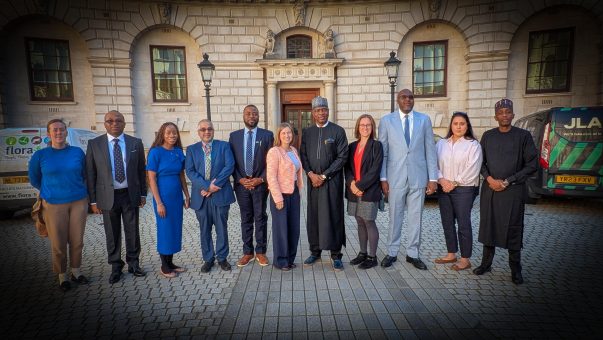
Nigeria and the United Kingdom have launched a customs cooperation pact to reconcile a staggering £1.2 billion discrepancy in bilateral trade figures. High-level talks in London on March 18 revealed that while the UK recorded £1.7 billion in exports to Nigeria in 2024, Nigerian records accounted for only £504 million. This massive “missing” sum points to systemic under-declaration, trade misinvoicing, and valuation gaps that have long drained Nigerian customs revenue.
The Comptroller-General of Customs, Bashir Adewale Adeniyi, met with HMRC’s Megan Shaw to establish a digital pre-arrival data exchange framework. By linking the digital platforms of both nations, customs officials hope to flag irregularities before goods even reach the quay. This real-time data sharing is designed to strip away the anonymity that allows importers to under-report the value of UK-origin goods.
The disparity highlights a significant failure in data integrity and compliance monitoring. For Nigeria, bridging this gap is not merely a statistical exercise but a vital fiscal necessity. The “lost” £1.2 billion represents a significant portion of potential duties that never reached the federation account. Resolving these “reporting methodologies” will provide the government with a clearer picture for economic planning and revenue assurance.
The UK delegation showcased AI-driven trade tools and digital verification systems during the summit. These technologies offer Nigeria a blueprint for its own customs modernisation programme under the “Renewed Hope” agenda. Knowledge transfer from HMRC could help the Nigeria Customs Service (NCS) detect fraud more efficiently through automated risk management. A joint technical mechanism will now oversee the integration of these digital standards.
Both nations are now drafting a Customs Mutual Administrative Assistance Framework to formalise operational support. This pact will likely target informal trade channels and the deliberate misclassification of industrial and consumer goods. Adeniyi noted that transparent trade flows are essential to boosting investor confidence, as businesses seek predictable and honest port operations.
Experts view this cooperation as a potential turning point for Nigeria’s trade competitiveness. Curbing misinvoicing does more than just fill government coffers; it levels the playing field for honest traders who currently face unfair competition from smugglers. As bilateral trade expands, the success of this digital bridge will determine if Nigeria can finally capture the full value of its international commerce.