
Nigeria Missing from World Cup Officials List
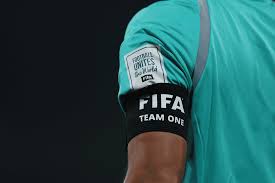
Nigeria’s absence from the officiating ranks of the 2026 FIFA World Cup is complete. When FIFA unveiled its full roster of match officials for the tournament on Thursday, not a single Nigerian name appeared among the 170 appointed, deepening a pattern of exclusion that has become increasingly difficult to ignore.
The global football governing body officially announced the list of match officials for the 2026 FIFA World Cup, which will run from June 11 to July 19, 2026, across Canada, Mexico, and the United States, with a total of 52 referees, 88 assistant referees, and 30 video match officials selected to officiate the tournament.
The officials were drawn from all six continental confederations, spanning 50 of FIFA’s 211 member associations, following a selection process that was three years in the making and tracked performances across domestic and international competitions.
The selection was based on FIFA’s long-standing “quality first” principle, with emphasis placed on consistent performances at both international and domestic levels.
FIFA’s Chief Refereeing Officer, Pierluigi Collina, defended the process. “The selected match officials are the very best in the world. They were part of a wider pool of officials that was identified and monitored over the past three years. Their performances in domestic and international matches were regularly assessed,” he said.
Collina also noted the scale of the officiating team required for the expanded competition, pointing out that FIFA Team One includes 41 more match officials than were appointed for Qatar 2022.
Six female match officials have also been selected, continuing a trend from the 2022 World Cup in Qatar, where female referees appeared at a men’s World Cup for the first time.
Africa secured seven refereeing slots in the final list. The Confederation of African Football’s representatives come from Algeria, Egypt, Gabon, Morocco, Mauritania, South Africa, and Somalia, with Mustapha Ghorbal, Amin Mohamed, Pierre Atcho, Jalal Jayed, Dahane Beida, Tom Abongile, and Omar Artan among the named officials. Ghorbal stands out as the most experienced, having officiated at both the 2018 and 2022 World Cup editions.
Nigeria, Africa’s most populous nation and a country with a storied football tradition, did not feature in any capacity across the three categories of appointments. According to analysts, the lack of Nigerian visibility in the latter stages of the CAF Champions League and the Africa Cup of Nations has proven central to their continued exclusion from World Cup officiating assignments.
The omission arrives as a broader setback for Nigerian football. The Super Eagles failed to qualify for the tournament itself after losing their World Cup play-off to the Democratic Republic of Congo. The Nigeria Football Federation subsequently filed a petition to FIFA alleging that DR Congo fielded up to six ineligible players in that decisive match, though FIFA is yet to issue a final ruling on the matter.
The officials will convene in Miami on May 31 for a ten-day preparatory seminar, with video match officials later relocating to Dallas, home of the International Broadcast Centre, while referees and assistant referees will remain in Miami for the duration of the competition.
Technology will play a central role during the tournament, with goal-line technology, an advanced semi-automated offside system, connected ball technology, and AI-powered referee body cameras all set to be deployed, the latter offering fans a live, on-field perspective for the first time in World Cup history.