
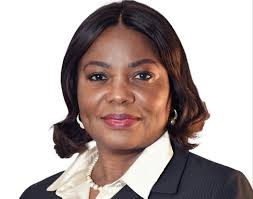
Developing economies including Nigeria continue to pay interest rates three to four times higher than advanced countries, a disparity driven by weak revenue structures and risk assessment methodologies that ignore long-term economic potential, the Director of the Intergovernmental Group of 24 (G-24), Dr. Iyabo Masha, has said.
Masha made the disclosure on Friday during a question-and-answer session on the sidelines of the 2026 Spring Meetings of the World Bank and International Monetary Fund in Washington, DC. She explained that lenders fix interest rates primarily on the basis of a country’s current tax revenue, which is what will be used to service the debt.
“Indeed, the research has shown that developing countries pay interest rates that are sometimes even three or four times more than those of advanced economies,” Masha said. “A creditor, when they decide to fix the interest rate, is looking basically at the income of the country. How much is this country pulling in from taxes? Because that is what you are going to use to service your debt.”
She noted that many developing countries, Nigeria included, struggle with low tax revenues and large informal sectors, which weaken their financial profile before lenders. “Many countries don’t have strong tax frameworks. A large part of the economy is informal and not taxed. So, when lenders base their judgement only on the income coming in, it leads to higher interest rates,” she added.
The G-24 director further stated that Nigeria may not qualify for meaningful debt relief in the near term, as its continued ability to meet debt obligations places it outside the category of distressed economies eligible for such interventions. She explained that global rules guiding debt relief programmes, including the principle of “comparability of treatment,” make it difficult for a single country like Nigeria to secure standalone forgiveness.
“For a global, generalised debt relief, it cannot apply to one country. There are standard laws,” Masha said, noting that Nigeria’s landmark debt relief under former President Olusegun Obasanjo was part of a wider programme targeting heavily indebted nations, not a special initiative for Nigeria.
She added that the landscape of global debt has shifted significantly, with countries now borrowing more from private creditors under varied contractual agreements that complicate any coordinated relief process. While the G20 Common Framework offers restructuring for bilateral debts, it does not cover multilateral debts owed to institutions like the World Bank or IMF, nor does it cover private creditors.
“A country has to declare that it cannot pay its debt before it can even get involved in relief. If a country does not make that declaration, it continues to pay its debt,” Masha said. “Nigeria is meeting its obligations. Nigeria is paying its debt. So that means it’s able to afford it.”
The comments come as Nigeria’s total public debt rose to N159.28 trillion as of 31 December 2025, according to data released by the Debt Management Office on 15 April 2026. The figure represents a quarter-on-quarter increase of N5.98 trillion, or 3.9%, from N153.29 trillion recorded in September 2025. Year-on-year, debt rose by N14.61 trillion, or 10.1%, from N144.67 trillion in December 2024. In dollar terms, the debt stock climbed to $110.97 billion.
Despite the rising debt profile, Masha said Nigeria remains attractive to international capital markets. “Nigeria is still attractive to the external market. They are still able to borrow. I think there was a report recently of a huge amount of borrowing. So, it is still a very attractive market,” she said.
The G-24 director noted that the G20 presidency under South Africa commissioned a study on high borrowing costs, while her organisation continues to advocate for broader participation from all categories of creditors in debt resolution frameworks.